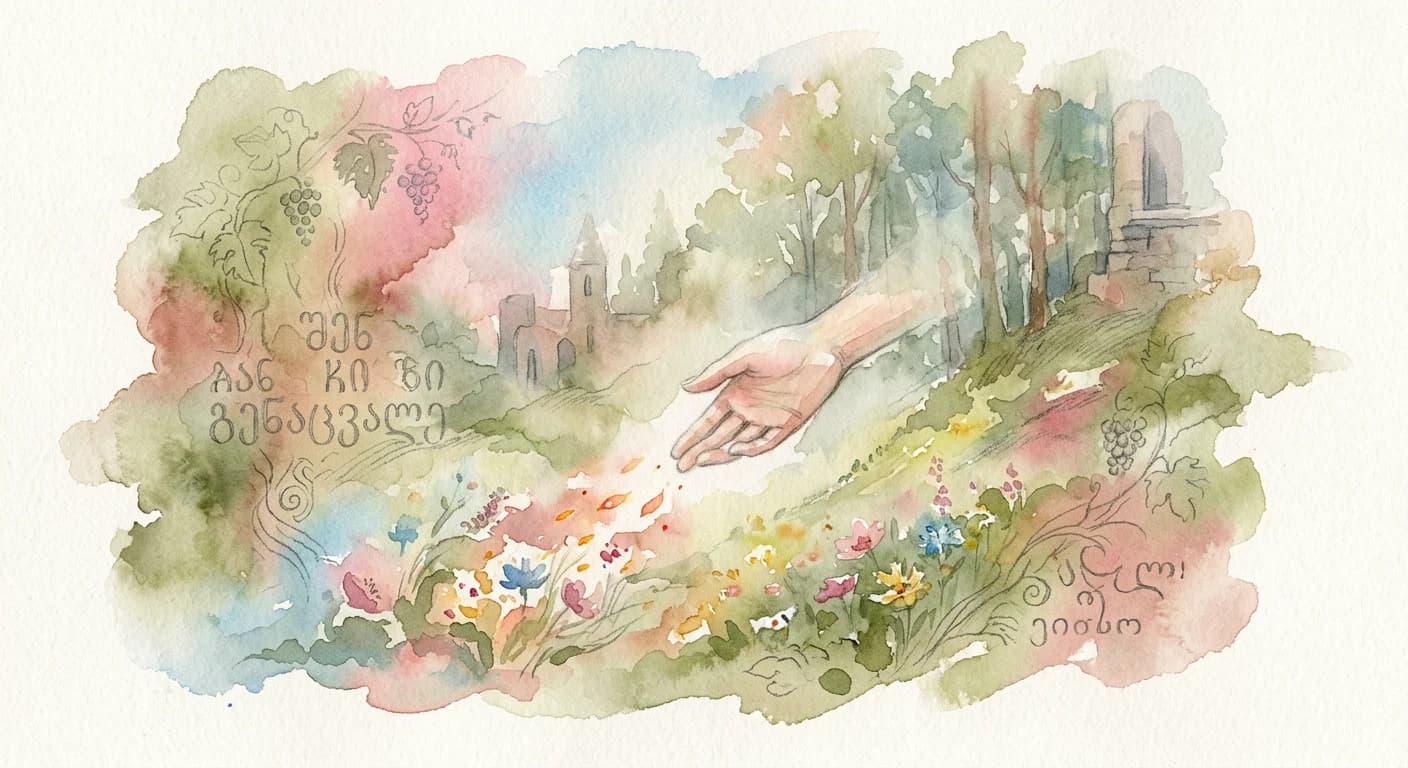
Shen genatsvale
/SHEN geh-naht-SVAH-leh/
Meaning
This profound Georgian expression, "Shen genatsvale," transcends a simple 'thank you,' embodying a deep spiritual wish for the other person's well-being and salvation. It's a heartfelt acknowledgment of benevolence, suggesting that the kindness you've offered will be divinely recognized and rewarded, perhaps even contributing to the redemption of your soul. More than just gratitude, it's a blessing and a testament to the Georgian cultural value placed on reciprocal kindness and the spiritual dimension of human interactions. It warmly expresses that the good you do is seen and cherished, with a wish that it returns to you in the most profound way.
Literal Translation
May your soul be saved/rewarded.
The Story Behind the Word
The phrase "Shen genatsvale" is deeply rooted in Georgia's ancient Christian heritage, reflecting a worldview where actions have spiritual consequences and communal well-being is paramount. For centuries, Georgian society has emphasized hospitality, generosity, and strong interpersonal bonds, often viewing acts of kindness as contributing to one's spiritual merit. This expression encapsulates the Georgian concept of 'kargi katsi' (a good person) – someone whose actions not only benefit others but also uplift their own soul. It speaks to a cultural philosophy where giving is not just a social exchange, but a spiritual investment, and receiving gratefully involves wishing divine favor upon the giver. It reinforces the idea that true wealth lies not just in material possessions but in the spiritual richness accrued through good deeds and heartfelt connections.
Experience It
Gift of Homemade Wine
After a long day helping with the harvest, a neighbor brings a fresh bottle of homemade Saperavi wine. Accepting the gift with a warm smile, the host places a hand over their heart and genuinely says, "Shen genatsvale," acknowledging the thoughtful effort and wishing blessings upon their friend.
Unexpected Help
A car breaks down on a rural road, and a passing stranger stops to help. After the repair, refusing payment, the stranger simply waves goodbye. The grateful driver, touched by the unsolicited generosity, murmurs, "Shen genatsvale," a silent blessing for the kind soul.
The Deeper Meaning
This phrase reveals a Georgian worldview deeply intertwined with spiritual reciprocity and the intrinsic value of human kindness. It posits that benevolence isn't just a social nicety but an act with profound cosmic implications, where the giver's soul is enriched. It underscores a philosophy where gratitude extends beyond mere acknowledgment, becoming an active wish for the benefactor's spiritual prosperity, reflecting a culture that values the soul's journey and interconnectedness.
Did You Know?
While literally meaning 'may your soul be saved/rewarded,' it's often used so warmly that it can be likened to saying 'bless your heart' in English, but with a deeper, more spiritual resonance.
How It's Used
Typically used as a response to receiving a gift, a compliment, or any act of kindness. It can also be used to express gratitude for someone's presence or support. It's a warm and heartfelt way to acknowledge good deeds and wish the giver well.