Hwyl
/Hoo-ill/
Meaning
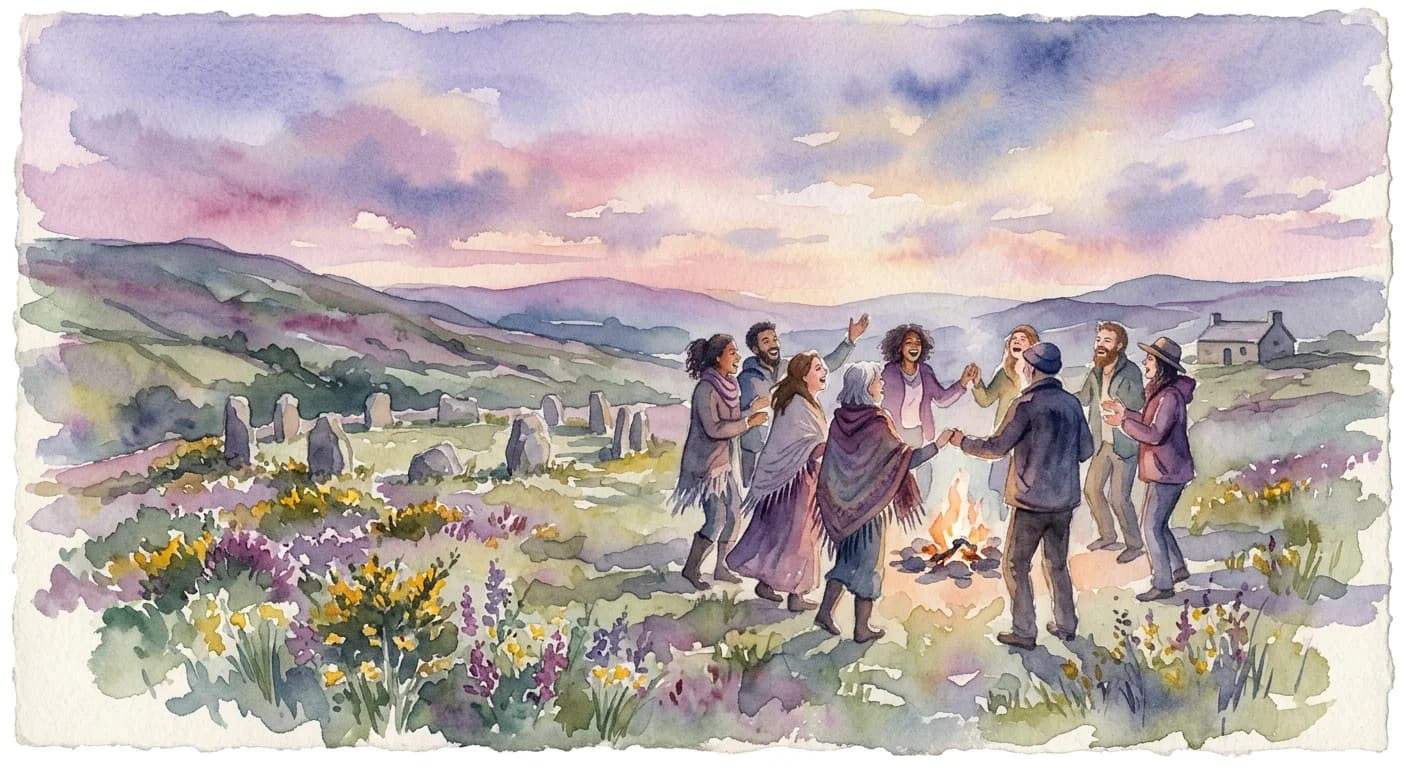
Hwyl embodies an electrifying surge of collective passion, enthusiasm, and spiritual fervor, often manifesting as a shared, almost transcendent experience. It's far more than mere excitement; it's a deep, visceral connection to a moment, particularly within communal activities like singing, performance, or public speaking. This intrinsically Welsh feeling ignites a collective spirit, transforming an event into an immersive, soul-stirring phenomenon that resonates deeply within each participant.
Literal Translation
fun, good, sail (as in a ship's sail)
The Story Behind the Word
Hwyl is deeply rooted in Welsh history, particularly the nation's strong non-conformist chapel tradition and its fervent love for music and singing. During the 18th and 19th-century religious revivals, services were often characterized by highly emotional preaching and congregational singing that would build to a powerful, cathartic crescendo – a prime example of 'hwyl.' It reflects a cultural value placed on emotional expression, communal solidarity, and the power of shared experience. The word reveals a Welsh worldview where collective joy and spiritual upliftment are not just permitted, but actively sought and celebrated, often through the unifying power of voice and shared purpose. It underscores a sense of belonging and identity fostered through intense, shared emotional journeys.
Experience It
Rugby Match Hwyl
As the Welsh rugby team scored the winning try in the final seconds, the stadium erupted. Thousands of voices merged in a deafening roar, flags waved wildly, and strangers embraced, all swept up in an overwhelming wave of hwyl that pulsed through the stands.
Chapel Service Hwyl
During the Cymanfa Ganu (hymn-singing festival), the congregation's voices swelled, harmonizing in a powerful, emotional chorus. The preacher's voice rose and fell with impassioned rhetoric, drawing everyone into a profound state of spiritual hwyl, a shared sense of upliftment and connection.
The Deeper Meaning
Hwyl reveals a cultural philosophy that values emotional authenticity and collective effervescence as central to human experience. It suggests that true joy and meaning are often found not in solitary pursuits, but in shared moments of intense feeling, where individual identities merge into a larger, unified spirit. This highlights the Welsh appreciation for community, spiritual depth, and the power of shared expression to transcend the mundane.
Did You Know?
The literal meaning 'sail' (of a ship) is thought to connect to the idea of being 'carried away' or 'filled with wind/spirit,' much like a sail propels a boat forward.
How It's Used
Typically used in Wales to describe the special atmosphere at a concert, a sporting event, a chapel service, or any gathering where a strong sense of shared emotion and enthusiasm is present. It can also refer to the skill and passion of a performer.