Eisteddfod
/EYE-stedh-vodh/
Meaning
An Eisteddfod is a profound expression of Welsh identity, a vibrant festival where the ancient traditions of poetry, music, and performance are not merely preserved, but passionately celebrated and reinterpreted. Far more than a competition, it is a spiritual homecoming for many, a gathering where bards, musicians, and dancers vie for honor, fostering community spirit and a deep reverence for the Welsh language and its rich cultural heritage. It represents a living link to a storied past, ensuring that the unique soul of Wales continues to flourish vibrantly in the present.
Literal Translation
Sitting (from 'eistedd' meaning sit, and '-fod' a noun-forming suffix)
The Story Behind the Word
The Eisteddfod's roots stretch back to the 12th century, with the first recorded event in Cardigan Castle in 1176, making it one of Europe's oldest cultural festivals. It emerged from the bardic tradition, where poets and musicians were central to Celtic society, serving as historians, entertainers, and advisors. For centuries, especially during periods of cultural suppression, the Eisteddfod became a vital crucible for preserving the Welsh language and identity, a defiant act of cultural survival. It embodies the Welsh people's deep respect for artistic excellence, intellectual pursuit, and their profound connection to their land and language. It reveals a culture that values collective celebration of individual talent, seeing art not as mere entertainment but as a cornerstone of national spirit and continuity. The 'sitting' implied in its literal meaning reflects the formal assembly and judgment, underscoring its solemnity and significance.
Experience It
National Eisteddfod Ceremony
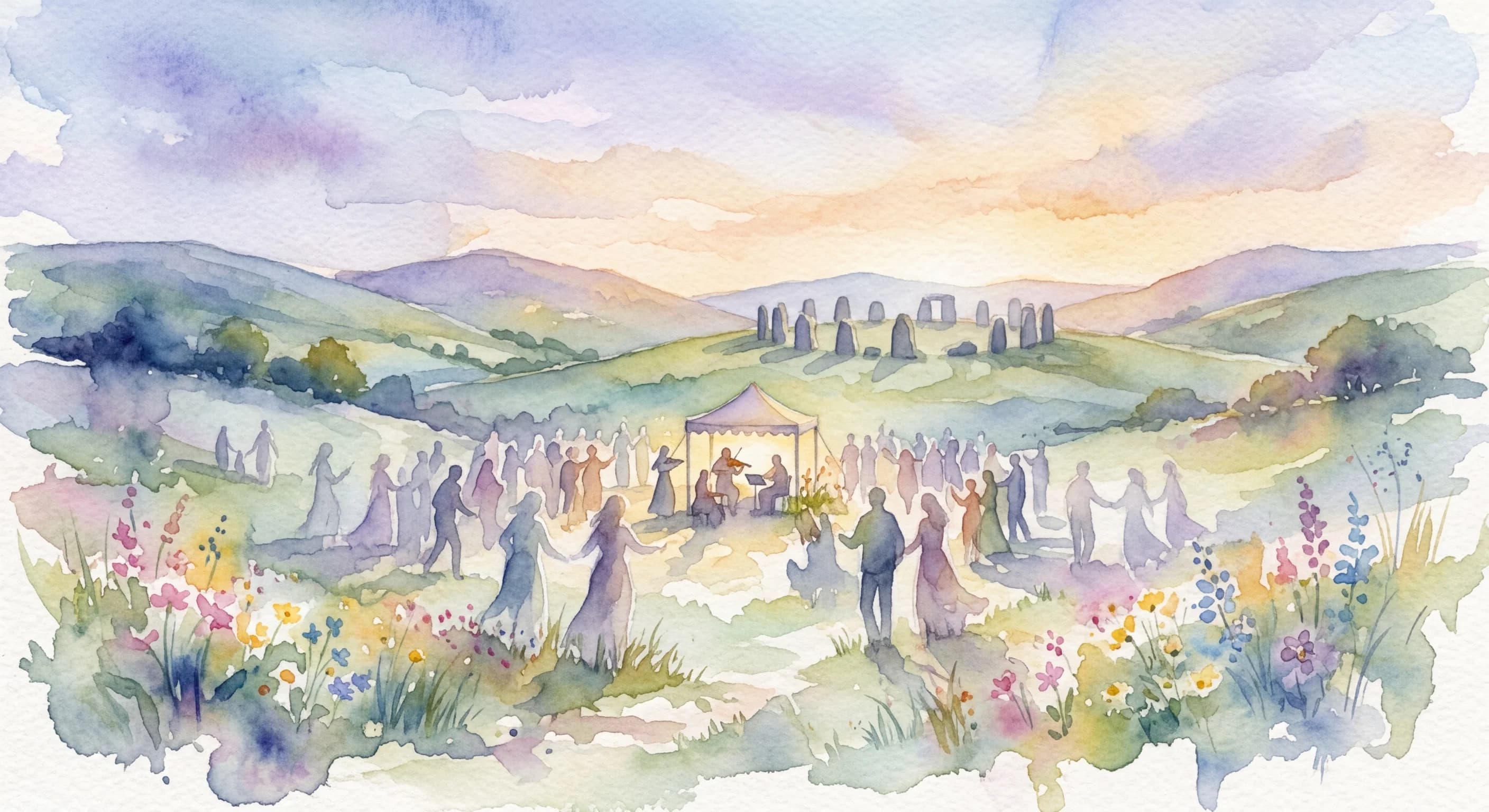
The Gorsedd of Bards, robed in ceremonial white, green, and blue, processes into the circle of stones. The Archdruid raises the Sword of Peace, and the crowd falls silent, anticipating the announcement of the Eisteddfod Chair winner, a moment of profound national pride and artistic triumph.
Local Community Eisteddfod
In a village hall, a young girl, clutching her sheet music, sings a traditional Welsh folk song with a clear, strong voice. Her grandparents beam from the audience, witnessing the continuation of their heritage, a proud link in the chain of generations. The air hums with supportive applause and the scent of bara brith.
The Deeper Meaning
The Eisteddfod encapsulates a philosophy of cultural resilience and continuity. It asserts that identity is not static but a living, breathing entity, constantly re-created and celebrated through shared artistic expression. It underscores the belief that language and art are not just aesthetic pursuits, but fundamental pillars of nationhood, essential for collective memory and future flourishing, fostering a deep sense of belonging and intergenerational responsibility.
Did You Know?
The National Eisteddfod always requires that its main ceremonies (like the Crowning and Chairing of the Bard) are conducted entirely in the Welsh language, reinforcing its role as a guardian of the nation's linguistic heritage.
How It's Used
Typically held annually or biennially, Eisteddfodau can range in size from small community events to the National Eisteddfod, a week-long celebration of Welsh culture.