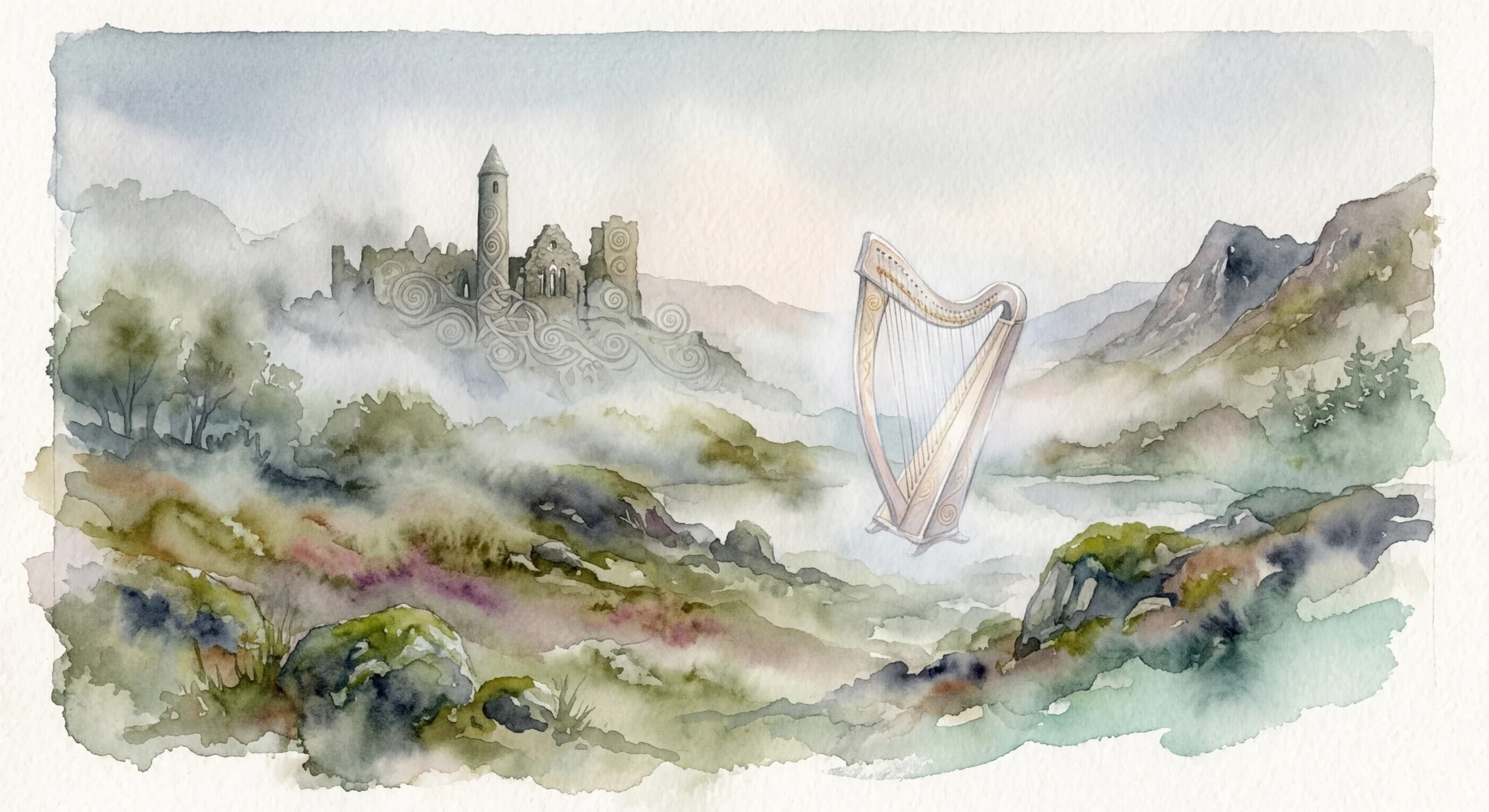
Tír gan teanga, tír gan anam
/TEER guhn CHAH-nguh, TEER guhn AH-num/
Meaning
This poignant Irish phrase, translating literally to "a country without a language, a country without a soul," encapsulates the profound belief that a nation's language is the very essence of its being. It posits that the loss or suppression of a language isn't merely a communication breakdown, but an existential wound that severs a people's umbilical cord to their history, traditions, and the collective spirit forged over millennia. It underscores the vital truth that language is the lifeblood and repository of a culture's unique worldview, stories, and ancestral wisdom.
Literal Translation
Country without language, country without soul
The Story Behind the Word
This phrase is deeply rooted in Ireland's tumultuous history, particularly the period of British colonization and the subsequent decline of the Irish language (Gaeilge). For centuries, English was imposed as the language of administration, education, and social mobility, leading to a drastic reduction in Irish speakers. The Gaelic Revival movements of the late 19th and early 20th centuries championed the Irish language as a crucial component of national identity and a symbol of resistance against cultural assimilation. 'Tír gan teanga, tír gan anam' became a rallying cry, emphasizing that sovereignty wasn't just about political independence, but also about the preservation of a distinct Irish way of seeing and understanding the world. It reflects a worldview where language is not just a tool, but an inheritance, a living connection to ancestors, and the vessel for a unique cultural consciousness that would vanish if the language were lost.
Experience It
Language Revival Debate
During a heated debate about increased funding for Irish language education, a TD (Member of Parliament) passionately declared, 'We cannot allow Gaeilge to fade into memory. Remember, tír gan teanga, tír gan anam. Our language is the heart of who we are as a nation.' His words resonated, emphasizing the cultural imperative beyond mere practicality.
Diaspora Connection
An Irish-American, visiting their ancestral homeland, expressed regret at not learning Gaeilge. An elder consoled them, saying, 'While it's a pity, the spirit of Ireland isn't lost to you. But for those of us living here, keeping the language alive is paramount, for as we say, tír gan teanga, tír gan anam.' It highlighted the ongoing responsibility to preserve the linguistic heritage.
The Deeper Meaning
This phrase reveals a deeply holistic and organic understanding of nationhood, where language is not an accessory but an integral, animating force. It suggests that a nation's 'soul' (anam) is inextricably linked to its unique linguistic expression, implying that without its indigenous tongue, a country loses its distinctive character, its collective memory, and its unique way of interpreting existence. It's a philosophy that sees language as the primary conduit for cultural transmission and the very essence of identity.
Did You Know?
This phrase is so central to Irish identity that it is often taught in schools and features prominently in cultural and political discourse, serving as a constant reminder of the language's intrinsic value.
How It's Used
This phrase is often used in discussions about language preservation, cultural identity, and the impact of historical suppression on minority languages. It serves as a powerful reminder of the value of linguistic diversity and the deep connection between language and national spirit.