U.
HomeRegionsLanguagesEmotionsCollections
Find Your Word

“The limits of my language mean the limits of my world.”

— Ludwig Wittgenstein, Philosopher

Untranslatable

A curated collection of the world's most beautiful expressions—words that remind us language is humanity's greatest invention.

  • Home
  • Collections
  • Regions
  • Countries
  • Emotions
  • Tags
  • Contexts
  • Finder
  • Europe
  • Asia
  • Americas
  • Africa
  • Middle East
  • About
  • Contact
  • Privacy Policy
  • Terms of Service

2026 © Untranslatable. All rights reserved.

    /
    /
    1. Home
    2. /
    3. Europe
    4. /
    5. Ar scáth a chéile
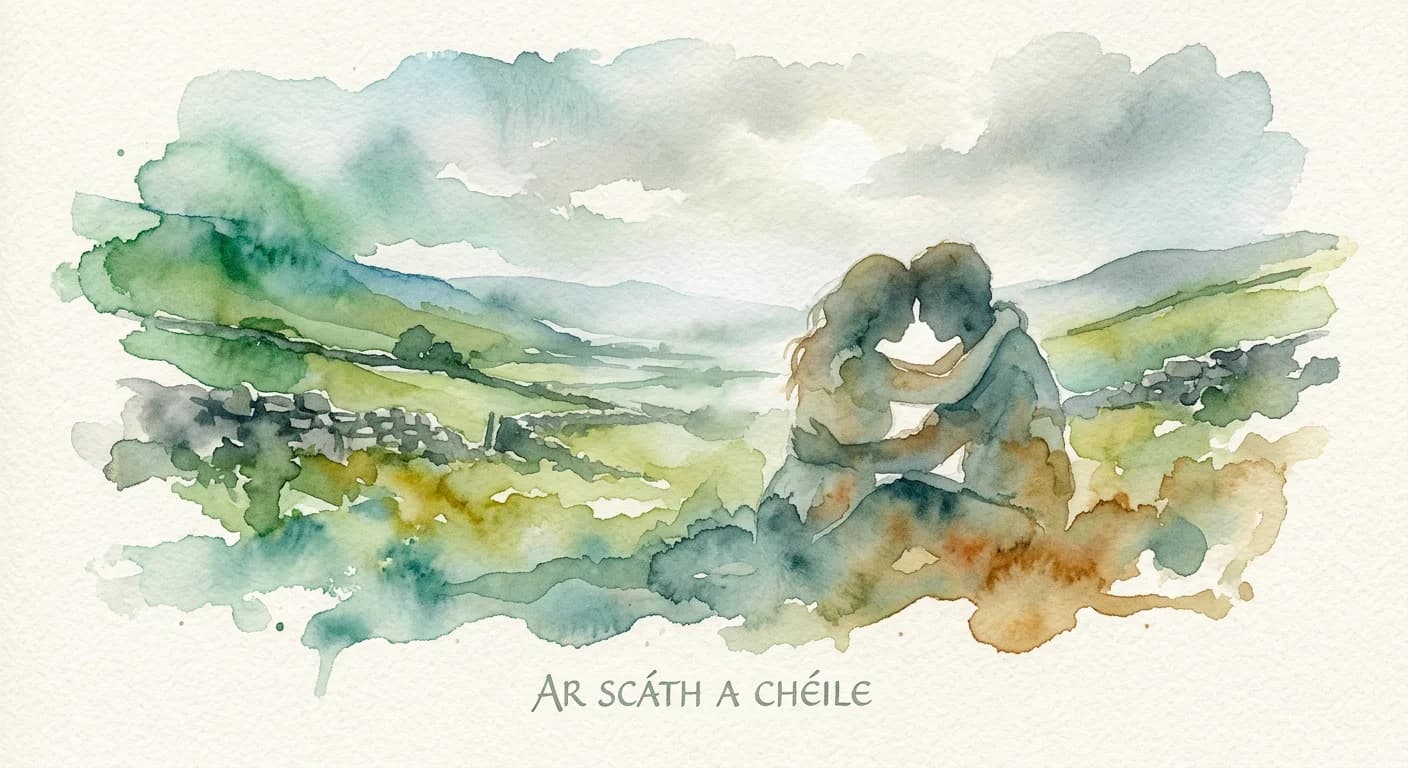
    Artistic representation of Ar scáth a chéile
    Irish•
    🇮🇪Ireland

    Ar scáth a chéile

    /Er skawth uh khay-luh/

    Meaning

    This profound Irish proverb, literally "in the shadow of each other," beautifully articulates the fundamental belief that human flourishing is inextricably linked to collective support and interdependence. It suggests that individuals derive strength, solace, and identity not in isolation, but through their deep-seated connections within a community. True well-being, both personal and societal, is cultivated by the mutual acts of looking out for and being cared for by one's peers, emphasizing that a shared existence underpins all success and resilience.

    Literal Translation

    In the shadow of each other

    The Story Behind the Word

    The phrase 'Ar scáth a chéile' is deeply rooted in Ireland's historical experience, particularly its agrarian past and the enduring strength of its clan and community structures. In a land often marked by hardship and a challenging environment, survival was rarely a solitary endeavor; mutual aid was not merely a preference but a necessity. This proverb reflects a worldview where individualism, as understood in some Western contexts, takes a backseat to the collective good. It speaks to a profound sense of responsibility for one's neighbors and kin, a legacy of communal living that has shaped Irish society for centuries. It reveals a culture that values belonging, loyalty, and the shared burden and joy of life above all else, seeing the community as the true foundation of individual prosperity and peace.

    Experience It

    Village Harvest

    During a particularly wet harvest season, one farmer's machinery broke down. Without a second thought, neighbors arrived with their own equipment and manpower, working late into the night. It was a clear demonstration of 'Ar scáth a chéile', ensuring no one was left behind.

    Community Bereavement

    When a beloved elder passed away, the entire village rallied around the grieving family. Meals were cooked, children were cared for, and comforting visits were constant. The community embraced the family, living out the proverb's truth that they would find strength and solace in each other's 'shadows'.

    The Deeper Meaning

    This proverb embodies a communalistic philosophy, where the self is understood not as an isolated entity but as an integral part of a larger social fabric. It challenges the notion of rugged individualism, proposing instead that genuine strength and security are found in interdependence. It suggests that human dignity and flourishing are best achieved when individuals consciously choose to support and uplift one another, recognizing that their own well-being is intrinsically tied to the well-being of the collective.

    Did You Know?

    While often translated as 'shadow', 'scáth' in Old Irish could also mean 'shelter' or 'protection', deepening the proverb's sense of mutual safeguarding.

    How It's Used

    This phrase is used as a proverb or a guiding principle to emphasize the importance of community, mutual support, and interdependence.

    Emotions
    belonging,comfort,gratitude
    Contexts
    community,family,friendship
    🇮🇪Ireland

    by Anya Petrova·Written Mar 10, 2026·Updated Apr 3, 2026

    Related Words

    Explore more
    HyggeDanish

    Hygge is more than mere coziness; it's a holistic embrace of comfort, warmth, and belonging that nourishes the soul. It describes the intentional creation of an intimate atmosphere where simple pleasures, genuine connection, and mindful presence converge, fostering a profound sense of contentment and well-being. It's about finding joy and peace in the small, everyday moments, often shared with loved ones.

    SaudadePortuguese

    Saudade encapsulates a profound, melancholic longing for something or someone cherished that is absent, often with the bittersweet knowledge that it may never return. It's a deep emotional state tinged with nostalgia, evoking a sense of loss for past experiences, places, or people, yet also holding a tender appreciation for the beauty of what once was. This yearning is not merely sadness, but a complex tapestry of desire, memory, and a poignant acceptance of absence, holding the beloved in a warm, persistent embrace within the heart.

    GezelligDutch

    Gezellig encapsulates a profound sense of warmth, belonging, and convivial comfort, extending beyond mere coziness to embrace the social and emotional atmosphere. It's the feeling of being truly at ease, surrounded by good company, laughter, and a shared sense of contentment. This untranslatable term describes not just a physical space, but a holistic experience where time seems to slow down, fostering genuine connection and a deep sense of well-being.

    Dolce far nienteItalian

    Dolce far niente captures the profound joy and effortless pleasure derived from simply existing without obligation or purpose. It's the art of savoring moments of pure, unadulterated idleness – lying in the sun, watching the clouds drift, or enjoying a leisurely coffee – not as a break from work, but as a valuable state in itself. This 'sweetness of doing nothing' is a conscious embrace of stillness and contentment, allowing the soul to breathe and the senses to fully engage with the present.

    Featured in 1 collection

    🤝The Art of Togetherness