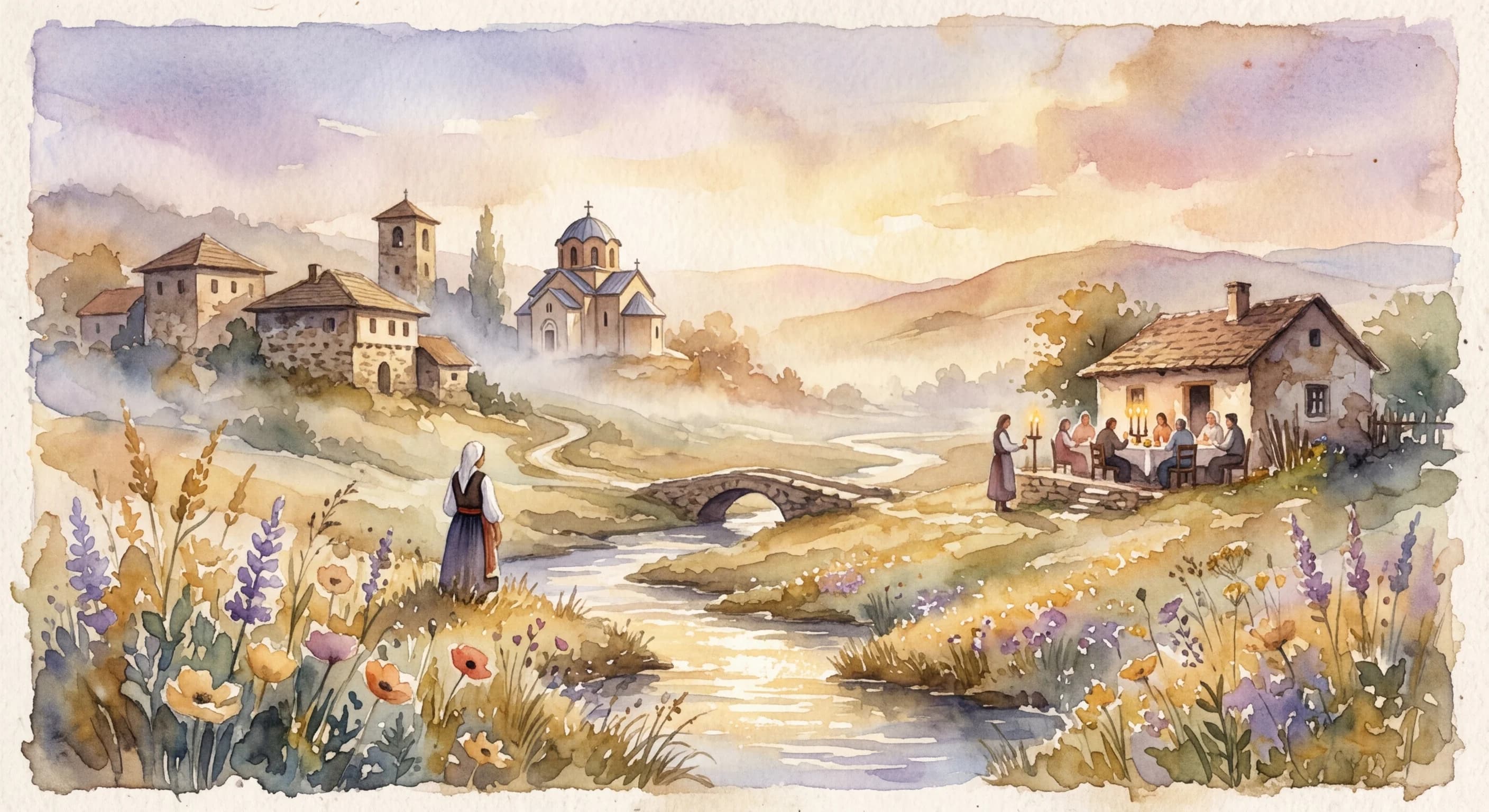
Slava
/SLAH-vah/
Meaning
Slava transcends the English notions of 'glory' or 'fame,' embodying a profound and often sacred honor tied to identity, heritage, and collective memory. It signifies not just recognition, but a deep-seated respect earned through deeds, lineage, or a shared cultural narrative. This concept is interwoven with spiritual devotion, national pride, and the enduring legacy of ancestors, serving as a powerful affirmation of individual and communal worth that resonates across generations.
Literal Translation
Glory, fame
The Story Behind the Word
The word 'slava' in Serbian culture is most famously associated with the unique Serbian Orthodox tradition of the family patron saint day, also called 'Slava.' This annual celebration is an integral part of Serbian identity, passed down from father to son, commemorating the family's spiritual lineage and connection to their chosen saint. Historically, it served as a cornerstone of community and family cohesion, particularly during periods of foreign occupation when national and religious identity were suppressed. The 'Slava' embodies the collective memory, resilience, and spiritual depth of the Serbian people, reflecting a worldview where individual existence is deeply intertwined with ancestral heritage and divine protection. It reveals a culture that values steadfastness, tradition, and the enduring power of faith.
Experience It
Honoring a Champion
After a Serbian athlete won an Olympic gold, the crowd erupted, chanting 'Slava! Slava!'. His coach, beaming with pride, remarked, 'His hard work brought slava not only to himself but to our entire nation.'
Family Celebration
During the annual family Slava, the host raised a glass, proclaiming, 'Slava Svetom Nikoli i našim precima!' (Glory to Saint Nicholas and our ancestors!). This was a heartfelt prayer, acknowledging the spiritual protection and heritage passed down through generations.
The Deeper Meaning
The concept of 'slava' underscores a worldview where honor is not fleeting but deeply rooted in one's origins and contributions to a greater collective. It suggests that true worth comes from upholding traditions, honoring ancestors, and acting in ways that bring esteem to one's family, community, or nation. It speaks to a cyclical understanding of time, where past deeds continuously inform and enrich the present and future, binding individuals to a timeless legacy.
Did You Know?
The Serbian 'Slava' is the only non-liturgical custom inscribed on UNESCO's Representative List of the Intangible Cultural Heritage of Humanity, highlighting its unique cultural significance.
How It's Used
Used in greetings, farewells, and exclamations, often as part of longer phrases like 'Slava Bogu' (Glory to God) or 'Slava Srbiji' (Glory to Serbia). It can also be used in praise of someone's accomplishments or to express admiration.