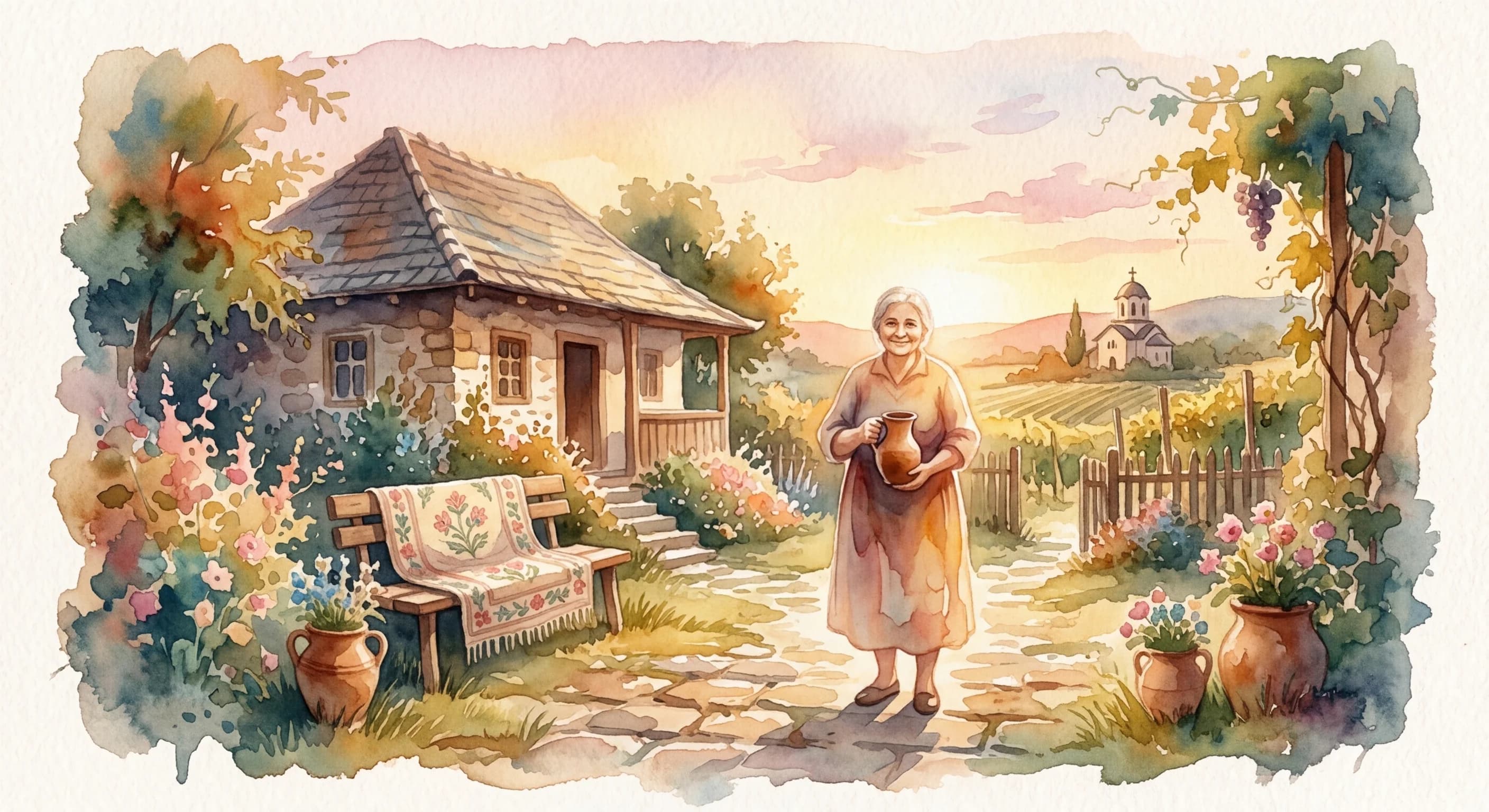
Domaćin
/DOH-mah-yeen/
Meaning
Domaćin transcends the simple definition of a host; it embodies the soul of South Slavic hospitality. It describes an individual who not only owns the home but generously opens it, extending warmth, comfort, and an unwavering commitment to the well-being of every guest. This role signifies a profound sense of responsibility, deep-seated generosity, and a vital connection to tradition and community, making the domaćin the radiant heart of any gathering, ensuring visitors feel cherished and completely at ease.
Literal Translation
host, master of the house
The Story Behind the Word
The concept of 'domaćin' is deeply woven into the fabric of South Slavic cultures, particularly within Serbian society, reflecting centuries of communal living and a strong emphasis on family and collective well-being. Historically, in rural communities, the domaćin was not just the head of the household but often the leader of a zadruga (extended family cooperative), responsible for the welfare of all under his roof and the prosperity of the entire family unit. This tradition of hospitality, known as 'gostoprimstvo', is almost sacred, stemming from a time when travelers relied on the kindness of strangers for survival. The existence of 'domaćin' reveals a worldview where generosity, honor, and the art of welcoming others are paramount virtues, forming the bedrock of social interaction and community cohesion. To be a good 'domaćin' is to uphold a fundamental cultural duty and earn profound respect.
Experience It
Slava Celebration
At the annual Slava, the family's patron saint day, Marko, the domaćin, personally greets each arriving guest with a warm embrace and rakija. He ensures everyone has a place at the overflowing table, their glasses are full, and they feel like the most important people in the world, embodying the spirit of his ancestors.
Unexpected Visitors
When a distant relative unexpectedly arrives from out of town, Ana, the domaćin, immediately prepares a lavish meal, offers her best guest room, and sets aside her own plans to spend the day making her guest feel completely at home and cared for, without a hint of inconvenience.
The Deeper Meaning
The word 'domaćin' reveals a philosophical stance where human connection and reciprocal respect are paramount. It signifies that true wealth isn't just material possessions, but the ability to share, to provide comfort, and to foster a sense of belonging for others. It underscores a worldview where hospitality is not a chore but a sacred duty, reflecting the inherent dignity of both the host and the guest, and strengthening communal bonds.
Did You Know?
In some Serbian villages, the 'domaćin' traditionally had the honor of leading certain community rituals and even held informal authority in local matters, extending his role beyond just his home.
How It's Used
The term 'domaćin' is used to refer to the host of a home, party, or event, emphasizing their role in providing hospitality and ensuring guests feel welcome and cared for. It can also be used more broadly to describe someone who is a good host or takes pride in their home and their ability to entertain.