Prelo
/PREH-loh/
Meaning
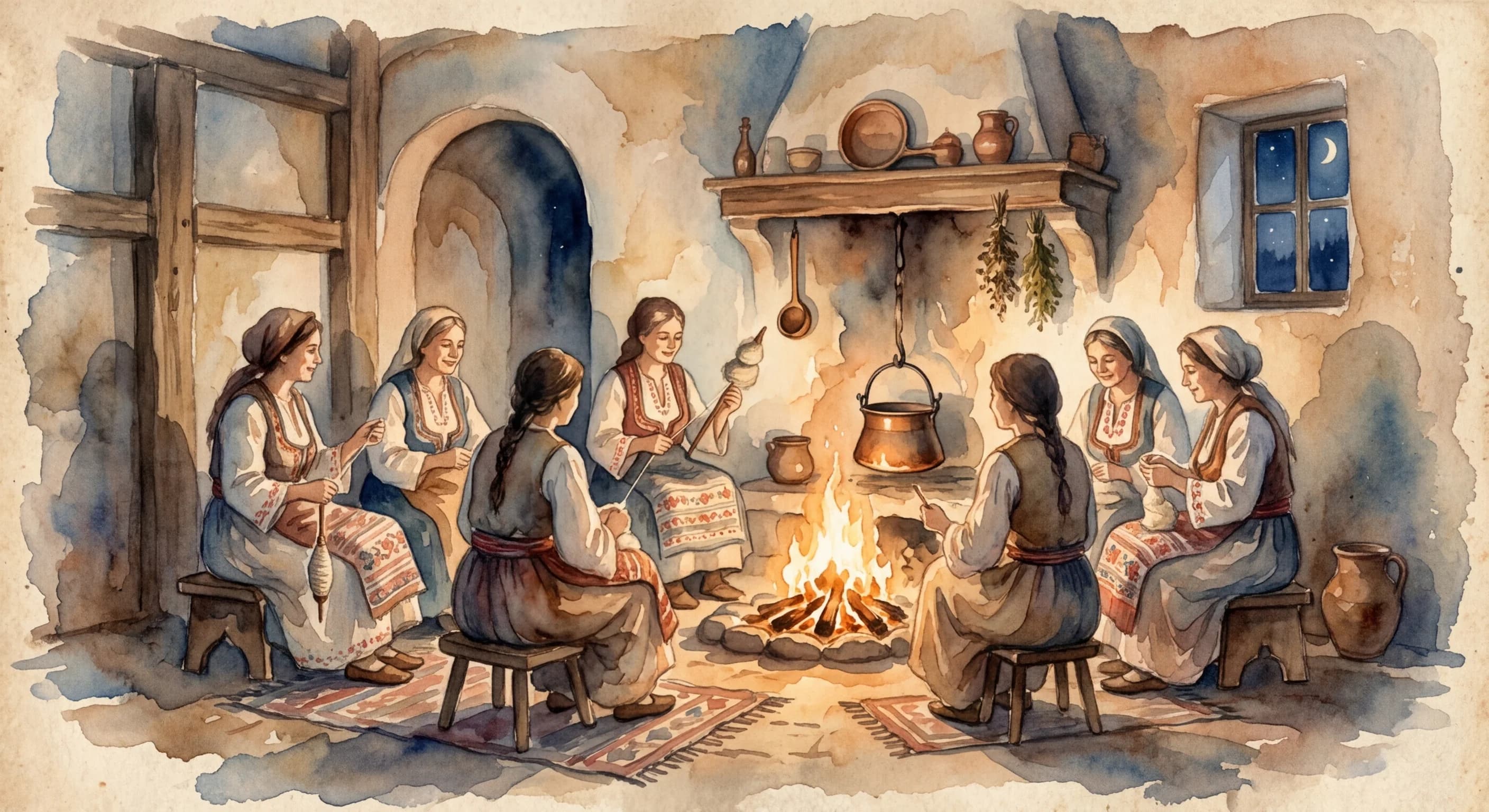
Prelo is a soulful Serbian tradition, a folk gathering typically held during the long, cold winter nights, where women would converge to collectively spin wool, mend, and socialize. Far more than just shared labor, it embodies a vibrant spirit of communal creativity, intergenerational storytelling, and the delicate passing down of cherished traditions. The atmosphere is invariably warm and convivial, filled with the gentle hum of work, the lilt of laughter, and the rich tapestry of songs, fostering an unbreakable bond of belonging and mutual support central to rural life.
Literal Translation
Spinning (as in spinning wool)
The Story Behind the Word
The existence of 'prelo' is deeply rooted in the agricultural rhythms and communal ethos of traditional Serbian society. In a time before industrialization, self-sufficiency was paramount, and the collaborative effort embodied by prelo ensured families were clothed and connected. It was a vital social institution, especially for women, offering a rare space for agency, skill-sharing, and emotional support outside the immediate family unit. The word reveals a culture that valued collective well-being over individual pursuits, where work and social life were not separated but interwoven into a rich, supportive fabric. It highlights a pragmatic yet poetic worldview where even necessity could be transformed into an occasion for joy, solidarity, and the preservation of cultural heritage through oral tradition and shared craft.
Experience It
Winter Evening Prelo
The lamp cast long shadows as Baba Mara, with nimble fingers, taught young Milena the intricate knot for a sock heel. Around them, the rhythmic whir of spinning wheels mingled with hushed conversations and the occasional burst of a folk song, making the cold winter night feel warm and alive.
Modern Cultural Revival
At the village festival, a 'prelo' corner had been set up, drawing curious onlookers. Women, young and old, demonstrated traditional spinning and weaving, sharing stories of their grandmothers' gatherings, ensuring the spirit of communal craft and camaraderie lived on for a new generation.
The Deeper Meaning
Prelo encapsulates a philosophy of 'zadruga' – the traditional South Slavic extended family or cooperative – extended to the community. It underscores the belief that human flourishing is best achieved through interdependence, shared labor, and the intergenerational transfer of knowledge and values. It speaks to a deep understanding that societal resilience is built not just on individual effort, but on the strength of collective bonds and shared cultural practices that weave people together.
Did You Know?
Historically, a prelo was also an informal 'marriage market' where young men might discreetly observe potential brides, noting their diligence and social graces.
How It's Used
Historically, prelo was a common practice in rural communities, particularly during the colder months when agricultural work was minimal. It served as a vital social event for women, offering a space for cooperation, skill-sharing, and companionship. While less common today, the spirit of prelo can still be found in organized cultural events or informal gatherings that aim to preserve these traditions.