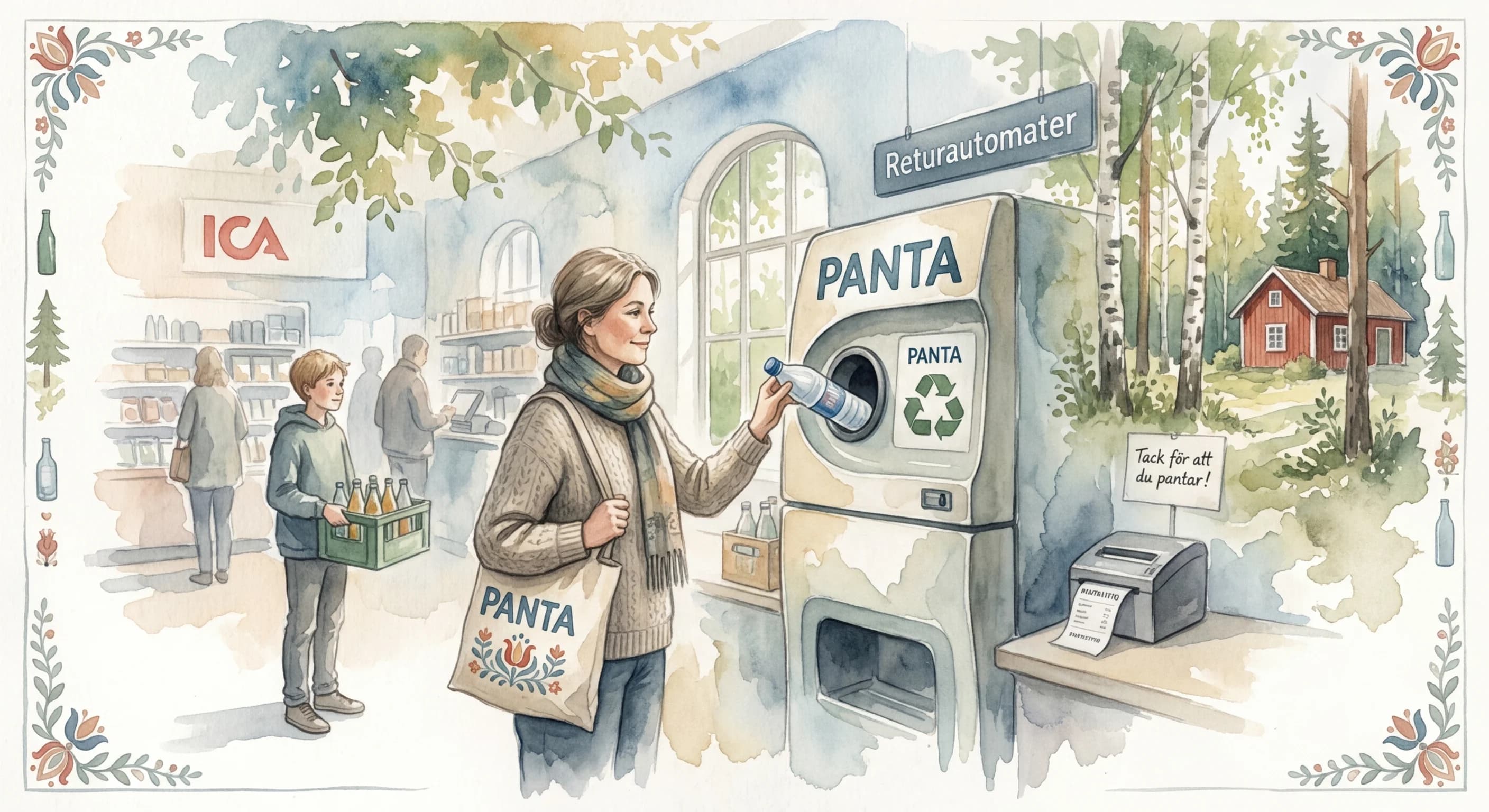
Panta
/PAHN-tah/
Meaning
The Swedish word "panta" encapsulates the ritualistic act of returning empty beverage containers – bottles and cans – to designated collection points, typically within grocery stores, to reclaim a small deposit. It's far more than a mere transaction; it's a daily, tangible expression of Sweden's profound commitment to environmental stewardship and resourcefulness. This ingrained practice transforms individual responsibility into a collective effort, fostering a deep-seated respect for materials and a proactive approach to minimizing waste.
Literal Translation
Deposit/Pledge (in the context of returning containers)
The Story Behind the Word
The practice of "panta" is deeply woven into the fabric of Swedish society, reflecting a national ethos of sustainability, order, and collective responsibility. Its roots trace back to early environmental movements and the post-war emphasis on resource conservation, solidifying into a nationwide deposit-return system (DRS) that began in the 1980s. This system isn't just about recycling; it's a pedagogical tool, teaching generations of Swedes the value of every resource and the direct impact of their actions on the environment. It embodies the concept of 'lagom' – just enough, not too much – by encouraging mindful consumption and discouraging waste. For Swedes, "panta" is a quiet, everyday contribution to a cleaner, more sustainable future, a testament to their belief in shared societal duties.
Experience It
Family Panta Day
Maria gathers the week's collection of empty soda bottles and juice cartons, lining them up in a reusable bag. Her young son, Erik, excitedly helps carry them to the local ICA, eagerly anticipating the satisfying clatter as each container is fed into the machine, watching the deposit amount tick up on the screen. He knows this money often goes towards a small treat, reinforcing the positive association with recycling.
The Student's Panting
After a weekend gathering, Linnea and her flatmates meticulously sort through the pile of empty beer cans. They know that even the small refund from 'panta' can add up, providing a welcome boost to their student budgets. It's a pragmatic habit, a small act of financial prudence coupled with an automatic environmental consciousness that feels entirely natural.
The Deeper Meaning
"Panta" reflects a core Swedish philosophical tenet: that environmental responsibility is not an abstract concept but a concrete, everyday action integrated into daily life. It embodies a form of pragmatic idealism, where individual effort, motivated by a small incentive, collectively contributes to a larger societal good. This practice underscores a deep-seated respect for resources and a proactive, rather than reactive, approach to ecological stewardship, viewing waste as a valuable resource rather than mere trash.
Did You Know?
Sweden boasts one of the highest return rates in the world, often exceeding 85-90% for bottles and cans, thanks to the widespread acceptance and efficiency of the 'pant' system.
How It's Used
Used when returning empty beverage containers (bottles and cans) to a store for a refund.