Klapa
/KLAH-pah/
Meaning
Klapa is a soulful, traditional form of a cappella singing from Dalmatia, Croatia, embodying the region's enduring spirit and communal heart. Far more than mere music, it's a living narrative of love, loss, the sea's embrace, and daily life, woven into intricate vocal harmonies. Each performance is a powerful, unadorned expression, forging a profound connection between singers and listeners that transcends generations and reinforces a shared identity.
Literal Translation
The word 'klapa' itself is thought to derive from the Venetian Italian word 'clapa' meaning 'a group of friends' or 'a chamber', reflecting the intimate and communal nature of the singing.
The Story Behind the Word
The existence of 'klapa' reveals a profound reverence for community, oral tradition, and emotional authenticity in Dalmatian culture. Born from informal gatherings in taverns, fishing boats, and village squares, klapa served as both entertainment and a vital means of preserving history and local identity in a region often subjected to external influences. It speaks to a worldview where shared experience, collective memory, and the raw human voice are paramount. The 'group of friends' etymology underscores its foundational philosophy: music as an intimate, collaborative act, reflecting a society that values close-knit relationships and common purpose. It's a testament to resilience, joy, and sorrow, all expressed through the purity of the human voice, echoing the landscape's rugged beauty and the sea's unpredictable nature.
Experience It
Village Festival Evening
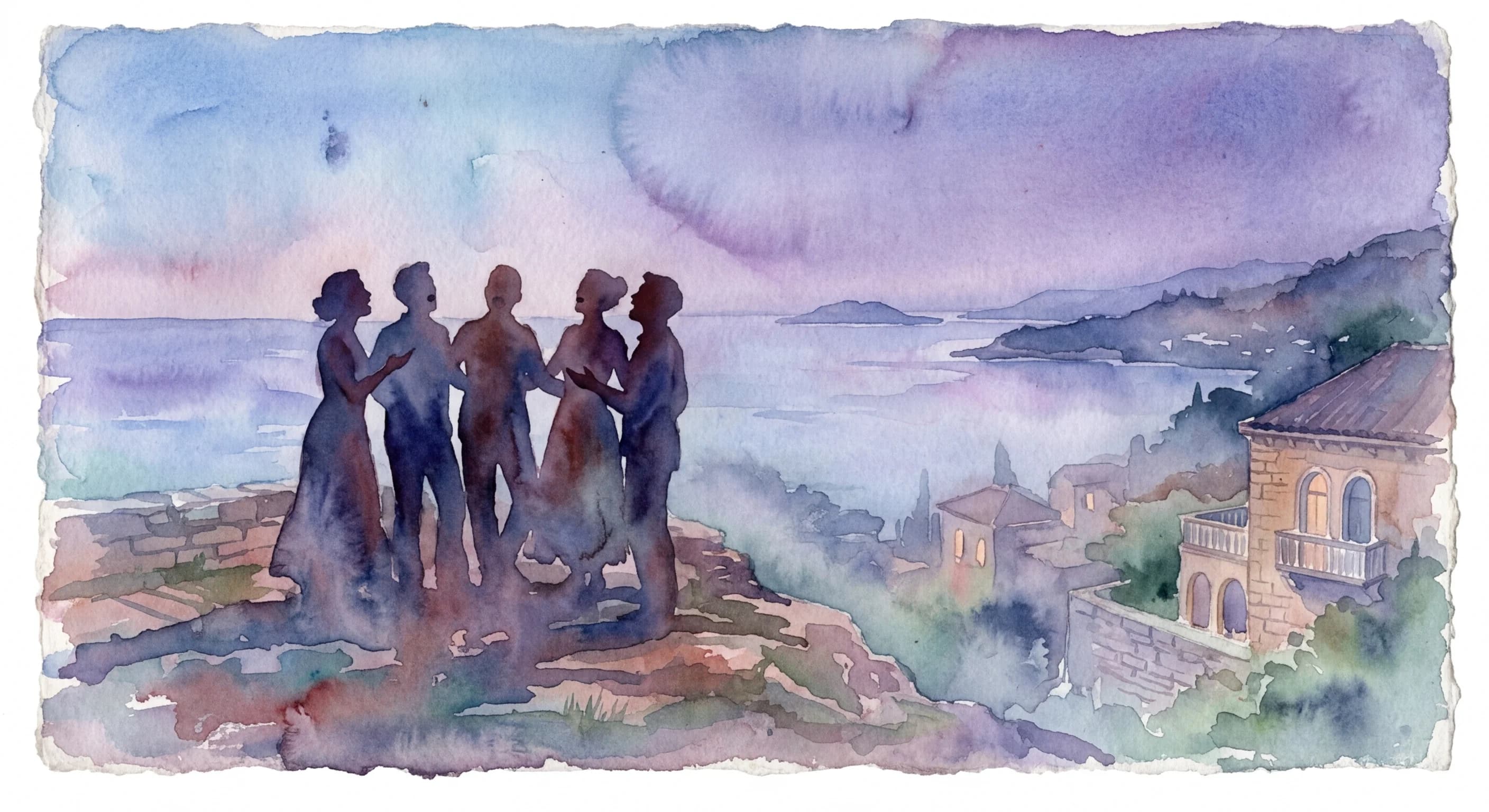
As dusk settles over the stone houses of a Dalmatian village, the air fills with the resonant harmonies of a klapa. Men, standing casually in a circle, their voices blending seamlessly, sing of ancient olive groves and sailors' longings. The crowd listens, eyes closed, transported by the raw emotion emanating from the impromptu stage.
Family Celebration
During a family wedding feast, after the initial revelry, an uncle calls for quiet. His klapa group, comprised of cousins and neighbors, gathers to perform a heartfelt serenade to the newlyweds. Their voices, rich with tradition and affection, become a blessing, sealing the occasion with deep cultural pride and communal warmth.
The Deeper Meaning
Klapa embodies a philosophy where art is not separate from life, but an inherent part of it, deeply integrated into social fabric and personal expression. It champions the power of the collective voice over individual virtuosity, suggesting that true beauty and meaning arise from harmony and shared experience. This reflects a worldview where community, memory, and authentic emotion are the bedrock of identity.
Did You Know?
Klapa singing was inscribed on UNESCO's Representative List of the Intangible Cultural Heritage of Humanity in 2012, recognizing its profound cultural significance and the need to preserve this unique vocal tradition.
How It's Used
Klapa is performed by male or mixed-gender vocal groups, typically a cappella, and is often heard during social gatherings, celebrations, religious holidays, and festivals in Dalmatia.