Ganga
/GAHN-gah/
Meaning
Ganga is a raw, powerful form of traditional folk singing from the rugged Dalmatian hinterland, characterized by its striking, often dissonant harmonies and the unbridled vocal passion of its performers. It's a deeply emotive musical expression, typically performed by groups of men, that vividly recounts tales of rural life, love, and historical struggles. The melancholic undertones and almost primal sound of ganga serve as a profound testament to the region's cultural identity and collective memory, echoing through generations.
Literal Translation
The literal meaning of 'ganga' in Croatian is not straightforward and is primarily associated with this specific style of singing.
The Story Behind the Word
Ganga is more than just a song; it's an auditory tapestry woven from centuries of hardship, resilience, and communal life in the Dinaric Alps. Its existence is rooted in the need for expression in a challenging environment, where a powerful, unamplified voice was the primary means of communication and emotional release. The dissonance, often jarring to an untrained ear, isn't a flaw but a deliberate aesthetic reflecting the rugged landscape and the often-harsh realities of life. Ganga reveals a culture that values authenticity, collective memory, and a direct, unvarnished emotional truth. It's a sonic monument to their heritage, a way of keeping stories and feelings alive among a people who faced Ottoman rule, wars, and poverty, finding strength and solace in their shared voice. It represents a deep connection to the land and a defiant preservation of identity.
Experience It
Village Festival Echoes
As the sun dips below the mountains during the village patron saint's day, a group of older men gathers, and the first guttural cry of a ganga leader cuts through the evening air. Soon, the other voices join, creating a powerful, almost mournful harmony that fills the square, drawing villagers closer, their faces reflecting pride and a shared sense of belonging.
Shepherd's Respite
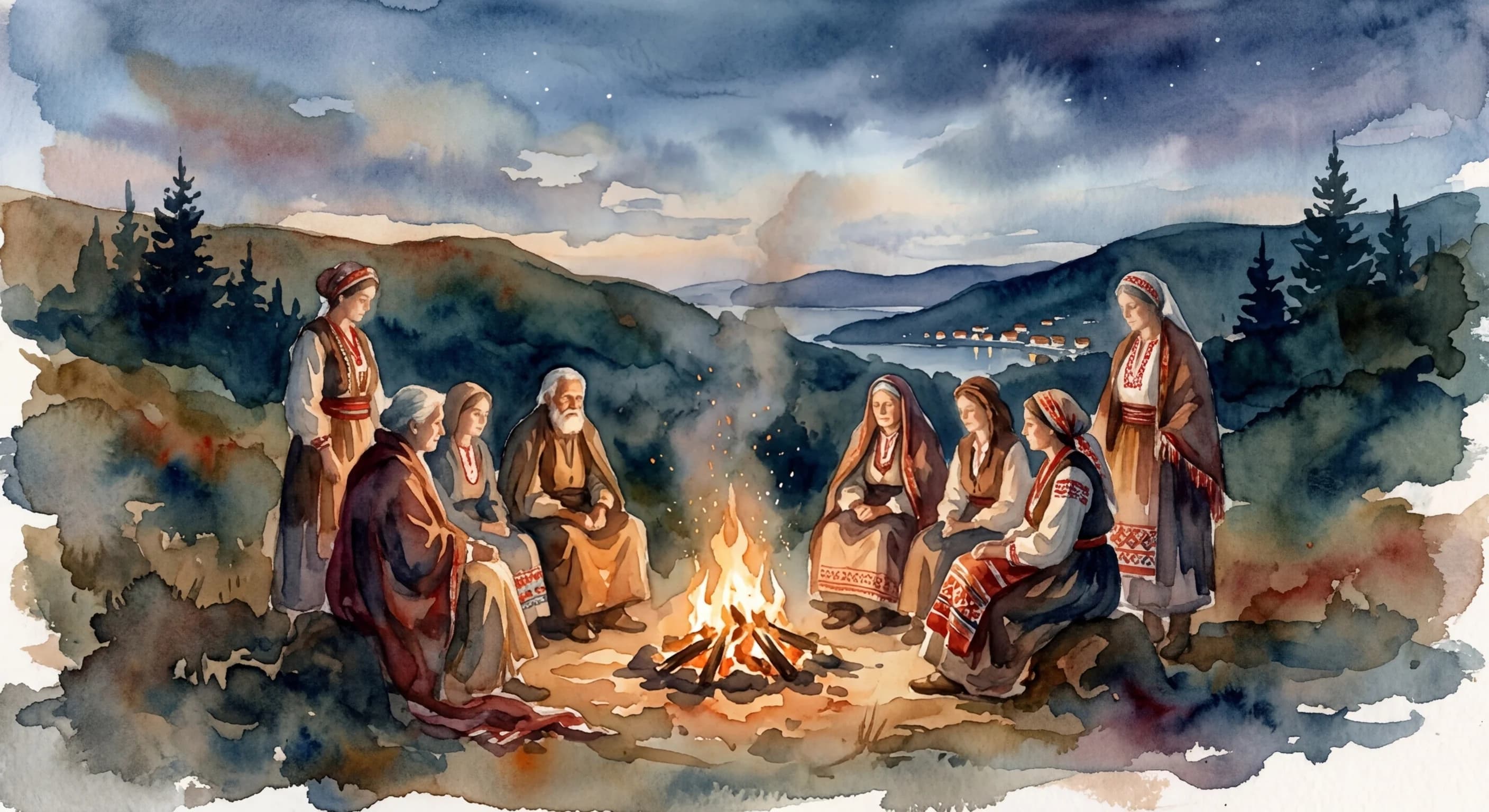
High in the mountains, after a long day of herding, a young shepherd sits by the fire with his elders. One of them begins to sing a low, resonant ganga. The younger man listens intently, learning the nuances of the ancient melodies and stories, absorbing the wisdom and melancholy woven into each verse, connecting him to generations past.
The Deeper Meaning
Ganga embodies a philosophy of raw, unfiltered expression, suggesting that truth and emotion are best conveyed through unpolished, collective vocalization. It highlights the belief that individual voices, even when seemingly clashing, contribute to a stronger, more resonant whole. This reflects a worldview where communal bonds and shared history are paramount, and where art serves not as mere entertainment, but as a vital conduit for cultural memory and enduring identity.
Did You Know?
Ganga's unique dissonant harmonies were once thought to be 'primitive' by outsiders, but ethnomusicologists now recognize them as a sophisticated and intentional part of its ancient musical structure, deeply tied to the region's oral tradition.
How It's Used
Ganga is performed by groups, typically men, singing in a close, often dissonant harmony. It is most commonly heard during social gatherings, festivals, and celebrations in rural areas of Dalmatia and the surrounding regions.