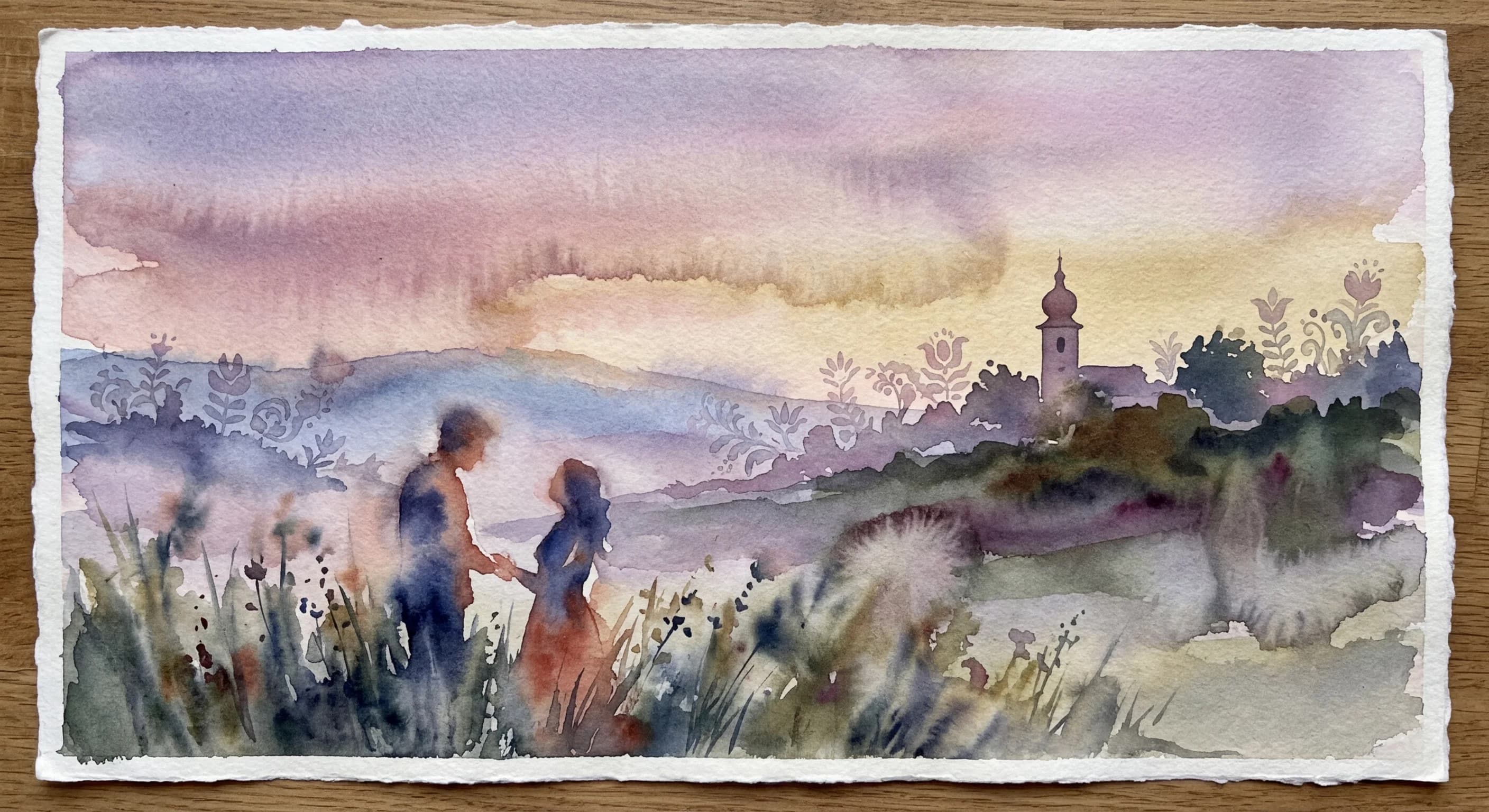
Szerelem
/SEH-reh-lem/
Meaning
Szerelem transcends a simple English 'love,' embodying a profound, all-encompassing romantic devotion that often feels fated and transformative. It speaks to a passionate, intense bond that deeply intertwines two lives, implying not just affection but a powerful, consuming emotional and spiritual connection. This word suggests a love that is experienced with every fiber of one's being, capable of inspiring great sacrifices, enduring challenges, and shaping one's entire existence with an almost mystical intensity.
Literal Translation
love
The Story Behind the Word
The concept of 'szerelem' in Hungarian culture is deeply rooted in a rich history of poetry, folk songs, and dramatic narratives, often reflecting a melancholic yet intensely passionate national character. Hungarian literature, especially romantic poetry from the 19th and early 20th centuries, frequently explores the depths and complexities of 'szerelem,' portraying it as a powerful, sometimes tragic, force that can elevate or devastate. It speaks to a cultural appreciation for emotional depth and sincerity, where love is not merely a fleeting emotion but a profound commitment and a cornerstone of personal identity. The word's strong emotional resonance also connects to a historical context where enduring personal bonds were crucial for survival and community cohesion, making 'szerelem' a vital element of individual and collective identity.
Experience It
First Glimpse, Lasting Love
János saw Eszter across the Danube, her laughter echoing like a melody. In that instant, a feeling he knew only from old songs swelled within him – it was 'szerelem,' an undeniable pull that promised a lifetime. He knew his world had irrevocably shifted.
Enduring Through Hardship
Despite years of separation during difficult times, Mária never doubted her feelings for István. Their 'szerelem' was a silent, unbreakable thread connecting them, a certainty that fueled her hope and sustained her spirit until their reunion.
What Gets Lost in Translation
English speakers might equate 'szerelem' simply with 'love,' missing its unique emphasis on profound, often fated, and all-consuming romantic passion. It's not just affection or even strong liking; it implies a deep, almost spiritual connection and an intense emotional commitment that feels destined, going beyond mere infatuation or casual romance.
Across Cultures
While English uses 'love,' it lacks a single word capturing the specific intensity and romantic destiny of 'szerelem.' German 'Liebe' or French 'amour' can come close in romantic contexts, but 'szerelem' often carries a distinct undertone of fatedness. Perhaps the closest in spirit might be the Portuguese 'saudade' when applied to a person, though 'saudade' is rooted in longing and absence, whereas 'szerelem' is about the presence and profound experience of romantic love itself.
The Deeper Meaning
'Szerelem' reveals a worldview where profound emotional connection is not just a personal experience but a central, almost mystical, force in human existence. It suggests a philosophy where love is transformative, capable of shaping destiny and defining one's identity. This word hints at a belief in an intrinsic human need for deep, passionate bonding, viewed as a foundational element of a meaningful life.
Did You Know?
The Hungarian word 'szerelem' is often associated with the phrase 'szerelem első látásra,' meaning 'love at first sight,' highlighting the cultural belief in an instant, profound connection.
How It's Used
Used to describe deep romantic love, a passionate relationship, or a profound emotional connection between two people.