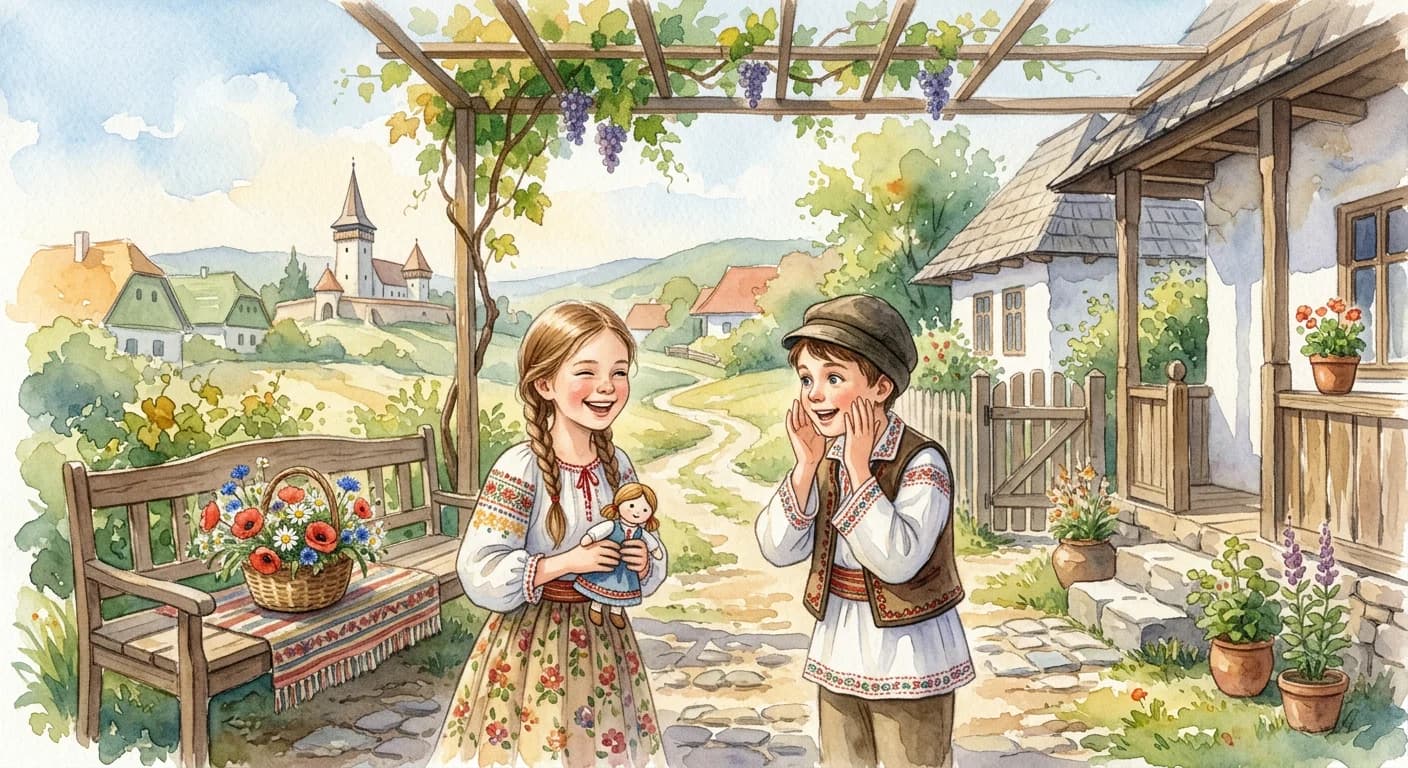
A se ștrengări
/ah seh STREN-guh-ree/
Meaning
To "a se ștrengări" is to engage in a delightful dance of playful mischief, where one artfully tricks or teases another with a spirit of good humor and affection. It's about orchestrating lighthearted pranks or devising clever, harmless schemes, not to cause genuine distress, but to elicit laughter and shared amusement. The beauty of it lies in the unspoken understanding that the 'victim' will eventually recognize the jest, joining in the fun and strengthening the bonds of camaraderie through this spirited, good-natured tomfoolery. It's a testament to the joy found in shared, playful deception that ultimately brightens the mood.
Literal Translation
to trick oneself / to play tricks on oneself (idiomatic, meaning to play tricks on others)
The Story Behind the Word
The existence of "a se ștrengări" in Romanian culture speaks volumes about the value placed on wit, improvisation, and the ability to find joy in everyday interactions. In a culture that has often faced hardship, the art of lighthearted teasing and playful deception serves as a vital coping mechanism and a way to foster resilience and social cohesion. It reflects a worldview where humor is not just entertainment, but a tool for connection, for deflecting tension, and for affirming strong interpersonal relationships. The act often involves a certain theatricality and quick thinking, traits admired in Romanian folklore and daily life. It's a way of saying, 'I care enough about you to playfully challenge you, and I trust you'll understand it's all in good fun.' This cultural nuance highlights a preference for indirect communication and a sophisticated understanding of social dynamics, where a seemingly mischievous act is, in fact, an expression of affection and belonging.
Experience It
Birthday Morning Surprise
On his brother's birthday, Andrei secretly swapped the sugar for salt in the coffee pot. Watching his brother take the first bewildered sip, Andrei burst out laughing, exclaiming, "Te-am ștrengărit!" before handing him a freshly brewed, proper cup.
Grandma's Clever Distraction
Grandma wanted to sneak a cookie to her grandson before dinner, knowing his mother would disapprove. She loudly announced she needed help finding her 'lost' glasses, sending everyone on a wild goose chase while she subtly passed the treat, a knowing twinkle in her eye, having successfully 'ștrengărit' the adults.
The Deeper Meaning
This word encapsulates a philosophy where playfulness is not a trivial pastime but an essential ingredient for robust human connection and emotional well-being. It underscores the belief that a shared laugh, even at someone's playful expense, can dismantle rigidity, foster empathy, and reinforce the intricate, affectionate bonds that define family and friendship. It suggests that true intimacy allows for vulnerability and the joyous acceptance of lighthearted imperfection.
Did You Know?
The root of 'ștrengar' (the noun form related to 'a se ștrengări') is thought to derive from Slavic languages, meaning 'rope' or 'noose,' hinting at the clever, often tricky knotting of a situation.
How It's Used
Used to describe playful teasing, lighthearted pranks, or clever, harmless tricks between friends or family members.