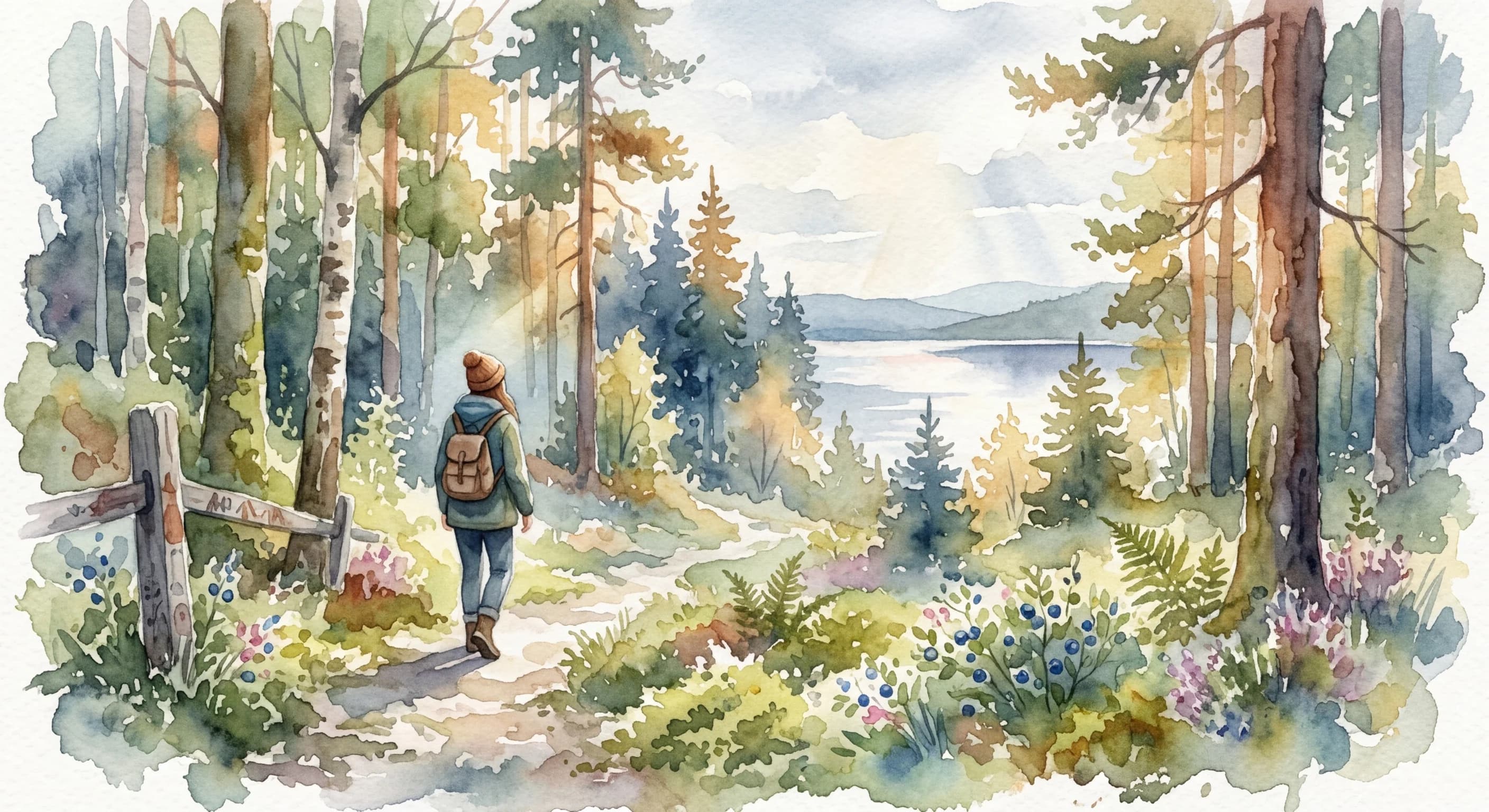
Allemansrätt
/AL-eh-mahnz-ret/
Meaning
Allemansrätt, or 'every person's right,' is a cherished principle in Sweden, granting unparalleled freedom to roam and connect with the natural world. It allows individuals to traverse private land, forage for berries and mushrooms, swim in lakes, and even camp for a night or two, all without needing explicit permission. This right is predicated on a profound mutual trust and responsibility: enjoy nature, but do so without disturbing the landowner, damaging the environment, or leaving a trace. It fosters a deep-seated appreciation for the wild and a sense of shared stewardship over Sweden's vast landscapes.
Literal Translation
Every man's right
The Story Behind the Word
The roots of Allemansrätt are deeply embedded in Sweden's agrarian past and its vast, sparsely populated wilderness. For centuries, access to land for foraging, hunting, and passage was a practical necessity, not a privilege. While not formally codified until the 20th century, the principle reflects an ancient Nordic understanding that nature is a common heritage, essential for sustenance and well-being. It speaks to a cultural ethos that values egalitarianism and a harmonious relationship with the environment. This right isn't merely legal; it's a moral compass, fostering a national identity tied to outdoor life, self-reliance, and a deep respect for the land. It embodies a societal contract where freedom comes with an inherent responsibility, shaping how Swedes perceive land ownership and public access.
Experience It
Wild Berry Foraging
A Swedish family spends a sunny August afternoon deep in the forest, their baskets filling with ripe blueberries and lingonberries. Though they are on private land, they know Allemansrätt permits their activity, as long as they don't disturb any cultivated areas or leave litter behind. The children learn about nature's bounty and the unspoken rules of respectful foraging.
Lakeside Overnight Stay
Two friends embark on a multi-day hike, pitching their tent by a pristine lake, far from any habitation. They enjoy the tranquility, knowing their overnight stay is protected by Allemansrätt, provided they don't stay for more than a night or two in the same spot, cause no damage, and pack out everything they packed in. It's a spontaneous connection with nature, enabled by this unique right.
The Deeper Meaning
Allemansrätt reflects a profound philosophy of collective ownership and stewardship of nature, transcending individual property rights. It posits that access to the natural world is a fundamental human need and a societal good, rather than a privilege. This worldview emphasizes trust, personal responsibility, and a deep-seated belief in humanity's ability to coexist respectfully with the environment, fostering a nation deeply connected to its wild spaces and the freedom they offer.
Did You Know?
While often translated as 'every man's right,' the Swedish word 'man' in this context is gender-neutral, signifying 'person,' making 'every person's right' a more accurate contemporary interpretation.
How It's Used
This term is used to describe the legal right of public access to the natural environment in Sweden, Norway, and Finland. It's invoked when discussing outdoor activities, land use, and the cultural relationship with nature.