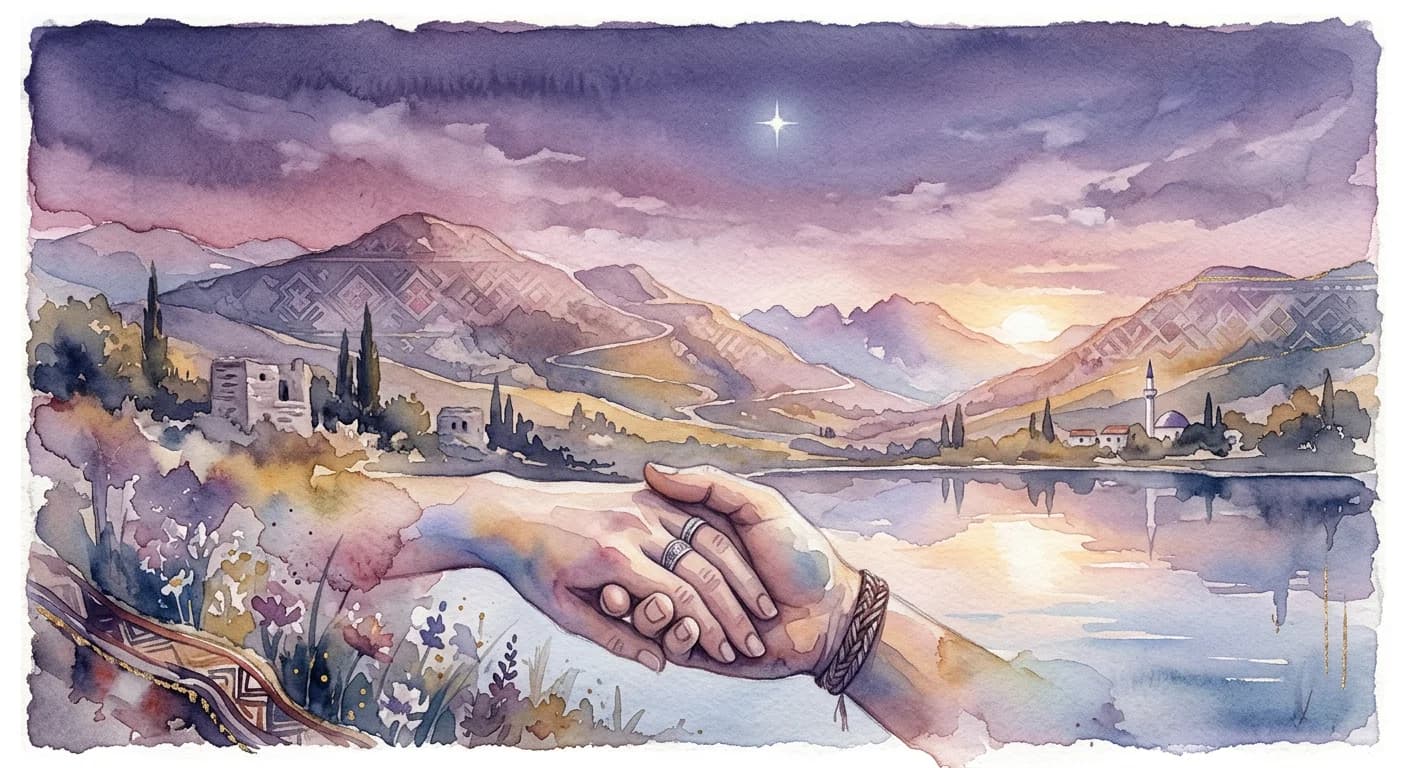
Besa
/BEH-sah/
Meaning
Besa is far more than a simple promise; it is an unwritten covenant, a sacred oath binding an individual to their word with absolute fidelity. This profound commitment transcends personal convenience, becoming a moral imperative where honor and integrity are paramount. To give one's Besa is to stake one's very being on the truth and reliability of their pledge, knowing that its violation carries deep, communal shame and lasting consequences. It is the bedrock of trust, ensuring that a spoken word is as solid as a written contract, often more so.
Literal Translation
To keep the word / To give the word
The Story Behind the Word
The concept of Besa is deeply rooted in Albania's historical struggles and traditional social structures, particularly the Kanun, a customary law code. In a land often marked by foreign occupation and a need for strong internal community bonds, Besa emerged as a vital mechanism for survival, trust, and social cohesion. It provided a framework for order and justice where state institutions might be weak or absent, forming the ethical backbone of family and clan relations. Besa reveals a culture where personal honor is inextricably linked to collective well-being, and where an individual's word is literally their most valuable asset, essential for maintaining peace, commerce, and mutual respect within a society that values resilience and self-reliance above all.
Experience It
A Promise of Protection
During World War II, an Albanian family gave their Besa to a Jewish family, vowing to protect them from persecution. Despite immense personal risk and the constant threat of discovery, they sheltered the family for years, honoring their sacred word until the war's end, prioritizing human life above all else.
Business Deal Secured
In a mountain village, two farmers needed to exchange livestock and crops. Instead of complex contracts, they simply shook hands, one giving his Besa to deliver the sheep, and the other giving his Besa to provide the harvest. Both knew this verbal agreement, backed by Besa, was unbreakable.
The Deeper Meaning
Besa embodies a philosophy where trust is not merely transactional but existential. It posits that true honor lies in unwavering adherence to one's word, elevating integrity to a divine-like principle. This concept underscores a worldview where individual moral fortitude directly contributes to the stability and ethical fabric of the entire community, suggesting that a society's strength is ultimately measured by the collective commitment to truth and reliability among its members.
Did You Know?
During WWII, Albania was the only country in Europe with more Jewish residents at the end of the war than at the beginning, largely due to Albanians honoring their Besa to protect all guests.
How It's Used
Besa is invoked when making a solemn promise, giving one's word of honor, or undertaking a commitment that requires absolute integrity and trustworthiness. It is often used in contexts where trust is paramount, such as in business dealings, personal relationships, or historical accounts of protection and loyalty.