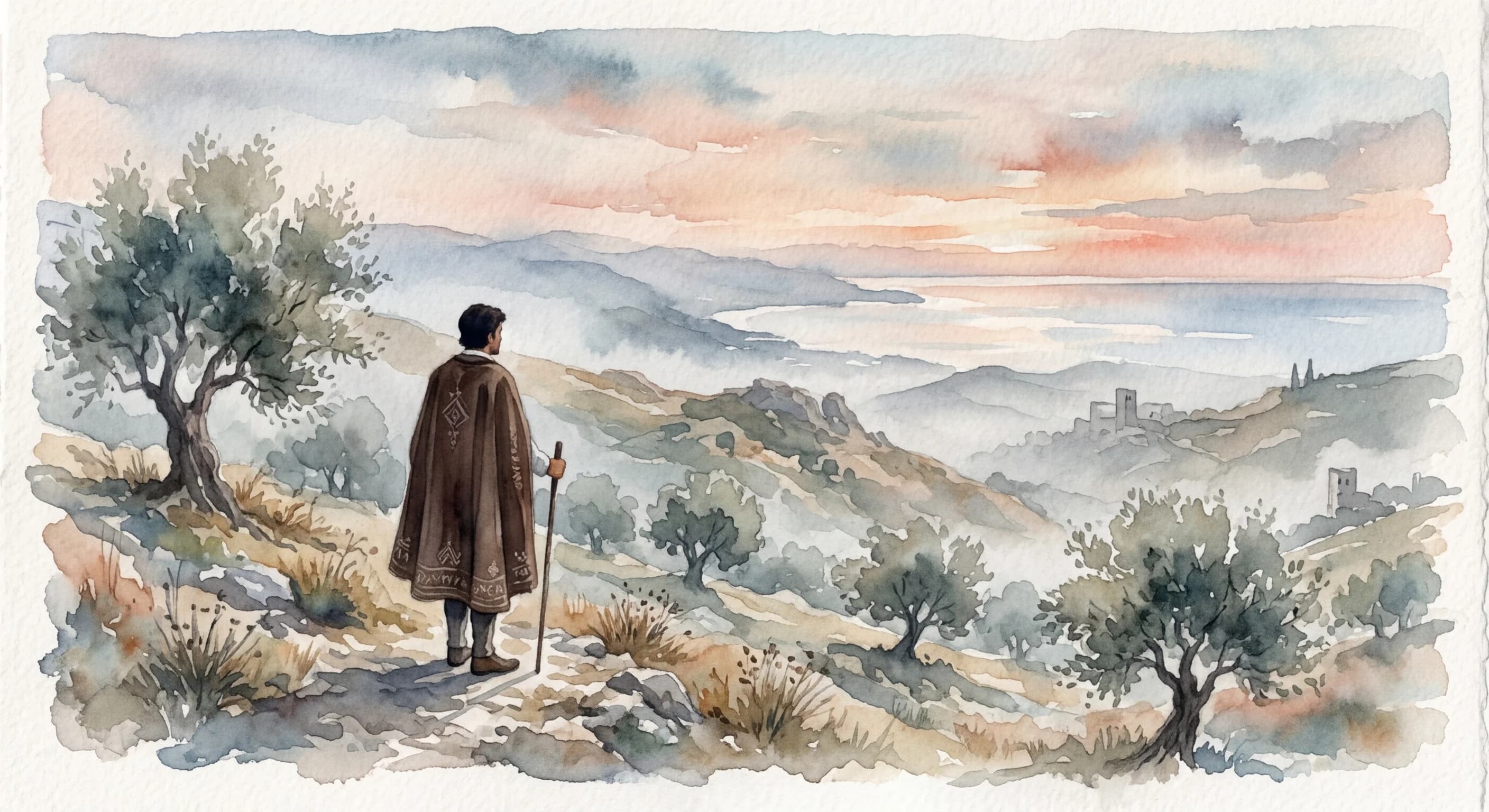
Gurbet
/GOOR-bet/
Meaning
Gurbet is the profound, soul-stirring ache of being far from one's homeland, a pervasive longing that transcends mere homesickness. It encapsulates the melancholic weight of an existence in exile, whether by necessity or aspiration, where the heart remains inextricably tethered to the landscapes, people, and memories of 'home.' This state is a persistent duality, living physically in one place while emotionally dwelling in another, often idealized, past.
Literal Translation
Exile, abroad, foreign land
The Story Behind the Word
The concept of 'gurbet' is deeply etched into Albanian identity, stemming from centuries of forced migrations, economic hardship, and political instability that have scattered Albanians across the globe. From the Ottoman era's 'kurbetçinj' (seasonal workers abroad) to the mass exoduses of the 20th century, leaving home has been a recurring, often painful, theme. This history has forged a collective consciousness where 'gurbet' isn't just an individual experience but a shared cultural wound and a testament to resilience. It reveals a people who view home not just as a physical location, but as an intrinsic part of their being, something that, once left, leaves an irreplaceable void. The word also embodies the hope of eventual return, a persistent yearning for reunion with the ancestral land.
Experience It
Elder's Gurbet Tale
Grandfather Naim, his eyes distant, often speaks of his youth spent working in Germany. He recalls the harsh winters and the unfamiliar language, but mostly, he recounts the gnawing gurbet that made every meal taste bland and every laugh feel hollow, always yearning for the sun-drenched hills of his village.
Student's First Winter
Elira, studying in London, felt the gurbet keenly during her first lonely winter. The bustling city lights couldn't warm the emptiness she felt for her family's lively Sunday dinners, the scent of her mother's cooking, and the familiar rhythm of Tirana's streets.
The Deeper Meaning
Gurbet offers a philosophical lens into the human condition's relationship with belonging and displacement. It suggests that identity is profoundly rooted in one's place of origin, and that true 'home' is not merely a physical address but a deeply internalized repository of memory, culture, and self. The word underscores the idea that while one can leave a place, a place never truly leaves you, shaping your emotional landscape even in absence.
Did You Know?
The term 'gurbet' is also found in Turkish ('gurbet') and several Balkan languages, reflecting a shared historical experience of migration and longing for home across the region, often stemming from Ottoman-era influences.
How It's Used
Used to describe the feeling of being an expatriate, a migrant, or someone far from their homeland, often evoking a sense of sadness and longing.