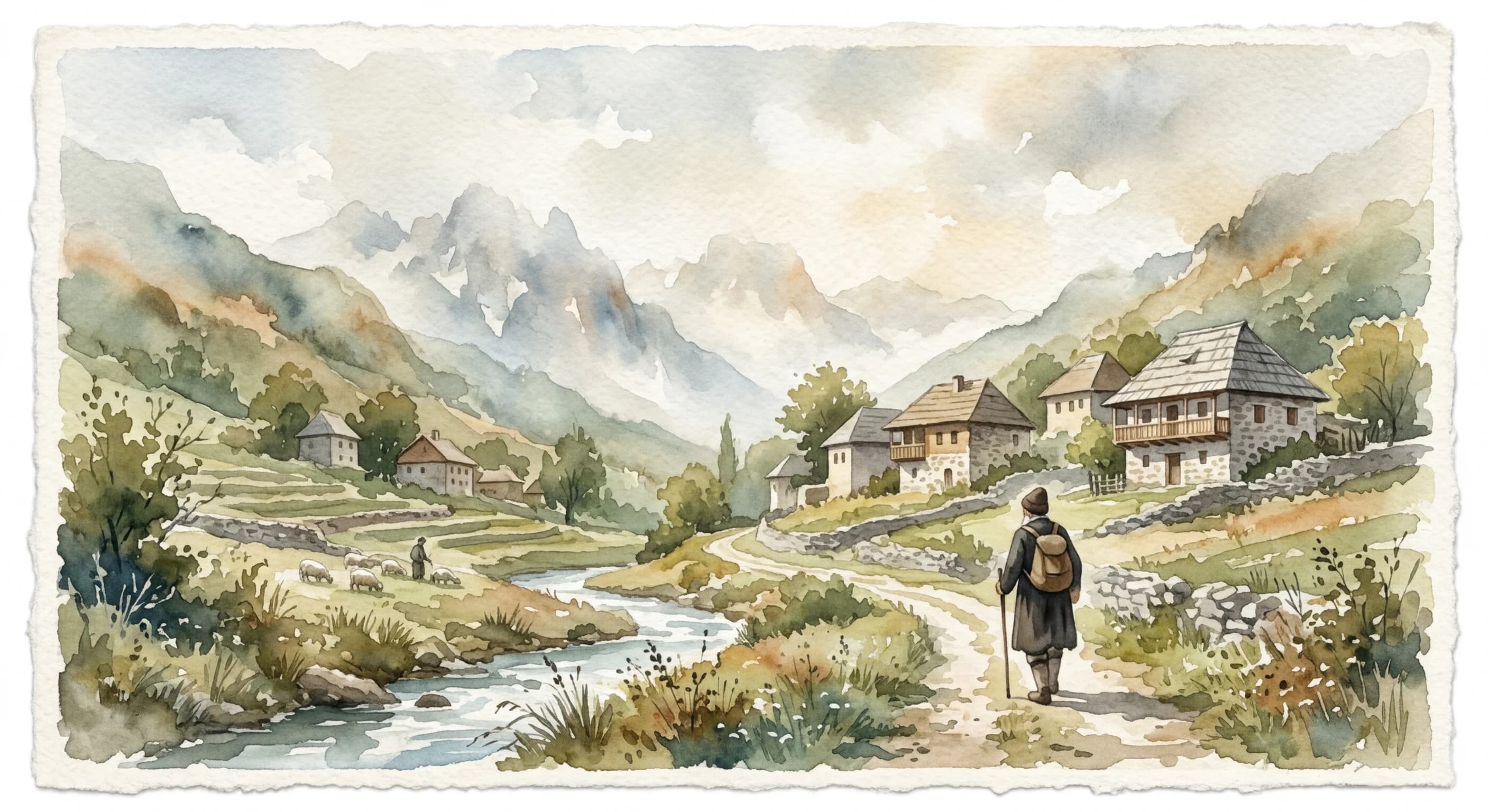
Dukagjini
/doo-kah-jin-ee/
Meaning
Dukagjini transcends a mere geographical label; it evokes a wild, magnificent landscape in the Albanian Alps, a place where time-honored traditions are etched into the very stone of its villages and the hearts of its people. It signifies a distinct cultural identity forged by centuries of self-reliance, communal bonds, and an unwavering connection to the land. This term conjures images of ancient stone towers, the pastoral rhythms of mountain life, and a proud, resilient spirit deeply intertwined with the Kanun, Albania's traditional customary law, which historically governed life in this rugged domain.
Literal Translation
The name 'Dukagjini' is believed to derive from the noble family of Dukagjini that held significant influence in the region during the Middle Ages.
The Story Behind the Word
The word 'Dukagjini' is steeped in the history of medieval Albanian principalities, taking its name from the powerful Dukagjini noble family who once ruled these lands. However, its cultural significance extends far beyond feudal lineage. It embodies a unique mountain culture where autonomy, honor (besa), and community solidarity were paramount for survival in a challenging environment. The enduring association with the Kanun of Lekë Dukagjini highlights a society that, for centuries, largely self-governed through a complex system of oral laws, justice, and social codes. This reveals a worldview where ancestral wisdom, collective responsibility, and a deep respect for tradition shaped every aspect of life, underscoring a profound sense of identity rooted in both place and heritage, distinct from central state authority for much of its history.
Experience It
A Dukagjini Wedding
The sounds of traditional music echoed through the valley as families gathered for the wedding feast. 'This is a true Dukagjini celebration,' remarked an elder, watching the intricate folk dances, 'where every guest is family and every song tells a story of our mountains and our ancestors, upholding traditions passed down for generations.'
The Old Man's Tale
Sitting by the fire, Gjergj recounted stories of his grandfather's days, explaining the ancient ways of resolving disputes according to the Kanun. 'Life in Dukagjini demanded fairness and strong community ties,' he explained, 'and the Kanun was our guide, ensuring peace and honor even in the harshest winters.'
The Deeper Meaning
Dukagjini encapsulates a philosophy of resilience and self-sufficiency, where human identity is inextricably linked to the rugged landscape. It reveals a worldview prioritizing collective honor, ancestral wisdom, and a profound respect for customary law over external authority. This emphasis on 'besa' (word of honor) and community solidarity reflects a deep understanding of interdependence necessary for survival and flourishing in challenging environments, shaping a unique moral and social fabric.
Did You Know?
The Kanun of Lekë Dukagjini, deeply associated with this region, was an unwritten customary law for centuries before being codified. Its principles, though sometimes controversial, regulated everything from property rights to hospitality.
How It's Used
Primarily used to refer to the distinct geographical and cultural region in the Albanian highlands, as well as to people originating from this area. It can also be used in historical contexts related to the Kanun.