U.
HomeRegionsLanguagesEmotionsCollections
Find Your Word

“The limits of my language mean the limits of my world.”

— Ludwig Wittgenstein, Philosopher

Untranslatable

A curated collection of the world's most beautiful expressions—words that remind us language is humanity's greatest invention.

  • Home
  • Collections
  • Regions
  • Countries
  • Emotions
  • Tags
  • Contexts
  • Finder
  • Europe
  • Asia
  • Americas
  • Africa
  • Middle East
  • About
  • Contact
  • Privacy Policy
  • Terms of Service

2026 © Untranslatable. All rights reserved.

    /
    /
    1. Home
    2. /
    3. Europe
    4. /
    5. Kapedan
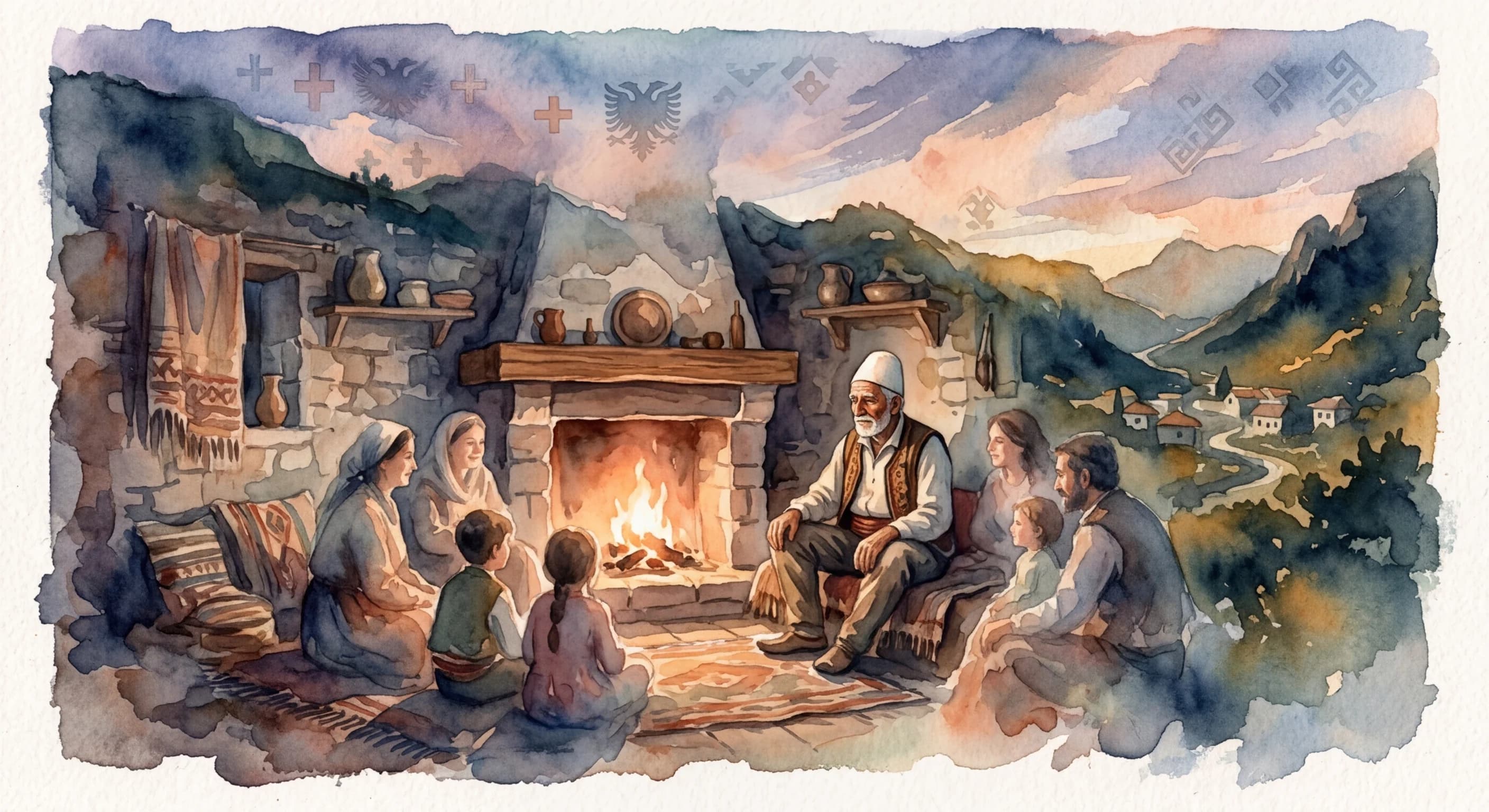
    Artistic representation of Kapedan
    Albanian•
    🇦🇱Albania

    Kapedan

    /kah-PEH-dahn/

    Meaning

    Kapedan signifies far more than just the head of a household; it embodies the very cornerstone of an Albanian family's structure and identity. This patriarch, usually the eldest male, is the ultimate authority, responsible for the moral compass, financial stability, and physical protection of every family member. His role is steeped in tradition, demanding wisdom, unwavering leadership, and a profound sense of communal obligation that extends beyond mere familial ties, dictating respect and obedience from all.

    Literal Translation

    Headman or captain (can also mean 'capTAIN' in a nautical sense, but in domestic context, refers to head of household)

    The Story Behind the Word

    The concept of Kapedan is deeply rooted in Albania's historical context, particularly its long periods of Ottoman rule and the necessity for strong, self-governing family units. In an environment often lacking centralized authority, the Kapedan was the law, the judge, and the protector. This role is intrinsically linked to the Kanun, the traditional Albanian customary law, which codified the Kapedan's responsibilities and privileges, emphasizing honor (besa) and family unity. The word reveals a worldview where the family is the primary social, economic, and political unit, and its leader is entrusted with its very survival and reputation. It reflects a society that values hierarchy, respect for elders, and collective responsibility above individualistic pursuits.

    Experience It

    Family Council

    During a tense family meeting about a difficult land dispute, everyone turns to the eldest uncle, Gjergj. His measured words and thoughtful compromise, delivered with quiet authority, are accepted without question. He is the Kapedan, and his decision is final.

    Protecting the Household

    When a distant relative attempts to claim a portion of the family's ancestral land, the father, as Kapedan, steps forward. He meticulously presents the family's history and documents, his unwavering stance ensuring the family's legacy remains intact, embodying his protective duty.

    The Deeper Meaning

    The Kapedan embodies a collectivist philosophy where individual identity is often subsumed by the family's honor and well-being. It highlights a worldview prioritizing stability, tradition, and intergenerational continuity over personal autonomy. The Kapedan's burden is not just power, but a sacred trust to preserve the family's past, navigate its present, and secure its future, reflecting a profound sense of duty and sacrifice for the greater good of the lineage.

    Did You Know?

    Historically, the Kapedan's authority was so absolute that his word could settle disputes, arrange marriages, and even decide matters of life and death within the family's jurisdiction.

    How It's Used

    Used to refer to the male head of a household, a respected elder, or a leader within a family or community.

    Emotions
    belonging,comfort,warmth
    Contexts
    dining,family,greeting
    🇦🇱Albania

    by Annelise Dubois·Written Mar 10, 2026·Updated Apr 3, 2026

    Related Words

    Explore more
    HyggeDanish

    Hygge is more than mere coziness; it's a holistic embrace of comfort, warmth, and belonging that nourishes the soul. It describes the intentional creation of an intimate atmosphere where simple pleasures, genuine connection, and mindful presence converge, fostering a profound sense of contentment and well-being. It's about finding joy and peace in the small, everyday moments, often shared with loved ones.

    SaudadePortuguese

    Saudade encapsulates a profound, melancholic longing for something or someone cherished that is absent, often with the bittersweet knowledge that it may never return. It's a deep emotional state tinged with nostalgia, evoking a sense of loss for past experiences, places, or people, yet also holding a tender appreciation for the beauty of what once was. This yearning is not merely sadness, but a complex tapestry of desire, memory, and a poignant acceptance of absence, holding the beloved in a warm, persistent embrace within the heart.

    GezelligDutch

    Gezellig encapsulates a profound sense of warmth, belonging, and convivial comfort, extending beyond mere coziness to embrace the social and emotional atmosphere. It's the feeling of being truly at ease, surrounded by good company, laughter, and a shared sense of contentment. This untranslatable term describes not just a physical space, but a holistic experience where time seems to slow down, fostering genuine connection and a deep sense of well-being.

    Dolce far nienteItalian

    Dolce far niente captures the profound joy and effortless pleasure derived from simply existing without obligation or purpose. It's the art of savoring moments of pure, unadulterated idleness – lying in the sun, watching the clouds drift, or enjoying a leisurely coffee – not as a break from work, but as a valuable state in itself. This 'sweetness of doing nothing' is a conscious embrace of stillness and contentment, allowing the soul to breathe and the senses to fully engage with the present.