Kenga
/KEN-gah/
Meaning
Kenga is far more than a 'song'; it is the resonant soul of Southern Albania, a polyphonic tapestry woven from generations of communal experience. These intricate vocal performances, often featuring lead singers, harmonizers, and a drone, embody historical narratives, profound emotions, and the very identity of a village or clan. Sung at pivotal life events from joyous weddings to solemn laments, a Kenga is a living archive, a shared breath that connects past, present, and future within the vibrant, improvisational heart of Albanian cultural memory.
Literal Translation
Song
The Story Behind the Word
The existence of 'Kenga' speaks to a culture deeply rooted in oral tradition and communal expression, where history, law, and emotion were preserved and transmitted through performance. Its polyphonic structure, with distinct roles for each singer, reflects a societal emphasis on collective harmony while allowing for individual artistry. Kenga reveals a worldview where memory is not static but a dynamic, shared act of creation, and where community cohesion is reinforced through shared vocal ritual. It's a testament to resilience, a medium through which joy, sorrow, and resistance have been articulated and passed down, often in the face of external pressures. The improvisational elements also highlight a value placed on spontaneity and the ability to adapt within a structured framework, mirroring life itself.
Experience It
Wedding Celebration Kenga
At a sun-drenched wedding in Gjirokastër, the elder men gather, their voices intertwining in a soaring Kenga. The lead singer recounts the families' histories, while the others provide a deep, undulating drone and vibrant harmonies, making the air thrum with shared joy and ancestral blessings.
Lament for a Lost One
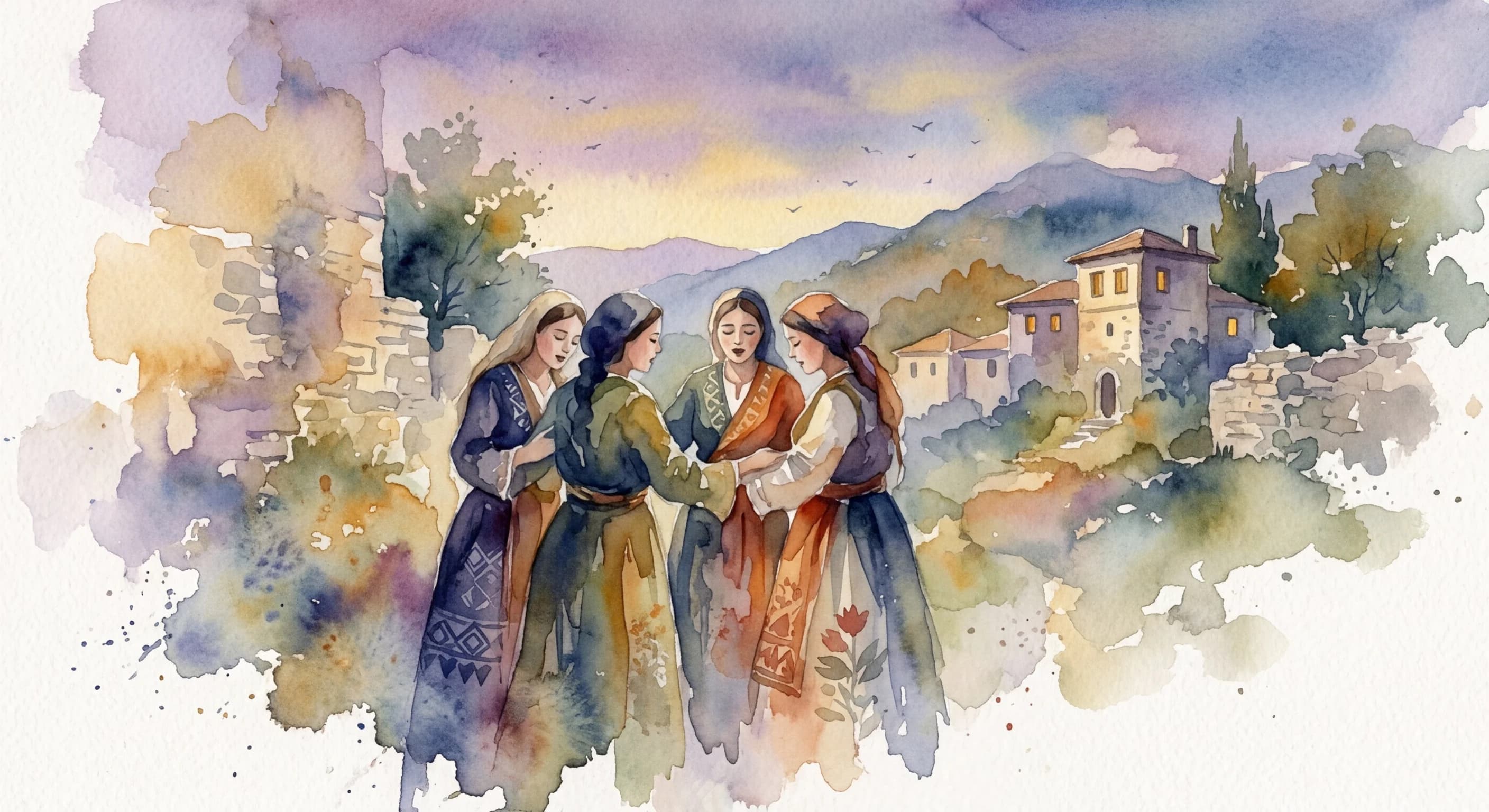
In a quiet village home, women gather around a grieving family, their voices rising and falling in a mournful Kenga. Each note carries the weight of collective sorrow, a powerful, raw expression of loss that binds the community in shared empathy and remembrance.
The Deeper Meaning
Kenga embodies a philosophy of collective memory and emotional catharsis through shared voice. It suggests that identity is not solitary but forged in communal sound, and that history lives not just in texts but in the very breath and harmony of a people. It highlights the profound human need for ritualized expression to process joy, sorrow, and the continuum of life, connecting individuals to a larger, enduring cultural narrative.
Did You Know?
Kenga's polyphonic singing from Southern Albania (specifically the region of Labëria) was inscribed on UNESCO's Representative List of the Intangible Cultural Heritage of Humanity in 2005.
How It's Used
Used to refer to a specific genre of Albanian polyphonic folk music, often sung during celebrations, lamentations, or as a form of storytelling.