Lahuta
/LAH-hoo-tah/
Meaning
Lahuta transcends a simple epic poem; it is the resonant voice of Albania's soul, echoing centuries of struggle, triumph, and unwavering spirit. These sung narratives, often accompanied by the very instrument from which they take their name, are living chronicles of national identity, preserving ancestral wisdom, heroic deeds, and ancient mythologies. It embodies a sacred trust, passed down through generations, ensuring that the collective memory and values of the Albanian people remain vibrant and deeply rooted.
Literal Translation
Lute (as in a musical instrument, often used to accompany the epics)
The Story Behind the Word
The Lahuta is more than literature; it is a pillar of Albanian cultural survival and identity, especially significant given centuries of foreign occupation and attempts to suppress national consciousness. Its existence reveals a people who deeply value their history, oral tradition, and the power of storytelling to bind communities and preserve their heritage against all odds. The epic tradition served as an unwritten constitution, a moral compass, and a historical record, fostering resilience and a shared sense of belonging when formal institutions were absent or suppressed. It underscores a worldview where the past is not merely remembered but actively re-enacted and lived through performance, connecting the present generation directly to their heroic ancestors and the enduring spirit of their land.
Experience It
Village Elder Recites
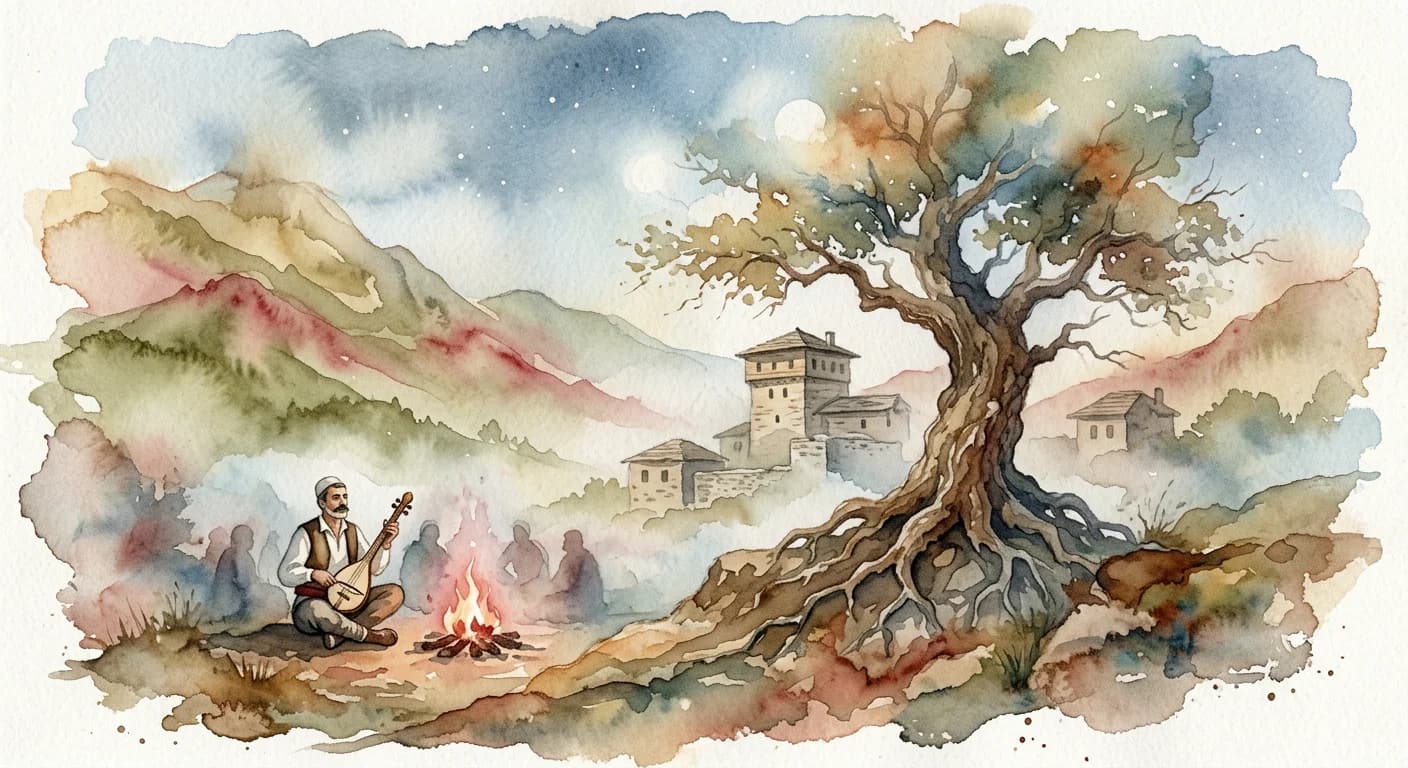
At the annual village festival, the revered elder, eyes sparkling with age and wisdom, takes center stage. With the first resonant strum of his lahuta, a hush falls over the crowd, as he begins to recite an ancient tale of Skanderbeg, weaving intricate verses of courage and sacrifice that captivate every listener.
Academic Discussion
During a university lecture on Albanian folklore, the professor emphasizes the profound impact of the Lahuta. She explains how its verses are not just poems but historical documents, cultural blueprints, and moral lessons that have shaped the Albanian ethos for generations, inspiring both resistance and national pride.
The Deeper Meaning
The Lahuta embodies a profound philosophy of cultural persistence and the enduring power of memory. It suggests that identity is not static but a continuous narrative, actively shaped and reinforced through shared stories and communal recitation. It highlights the belief that a people's past – their struggles, heroes, and values – is their most potent resource for navigating the present and forging a future, demonstrating a deep reverence for ancestral wisdom and the cyclical nature of history.
Did You Know?
The most famous collection of Albanian epic poems, 'Lahuta e Malësisë' (The Highland Lute), comprises 30 cantos and was written by Gjergj Fishta, often considered Albania's national poet.
How It's Used
The term 'Lahuta' is used to refer to the epic poems themselves or the tradition of reciting/singing them, particularly in cultural gatherings, festivals, or academic discussions about Albanian literature and folklore.