Toloka
/toh-LOH-kah/
Meaning
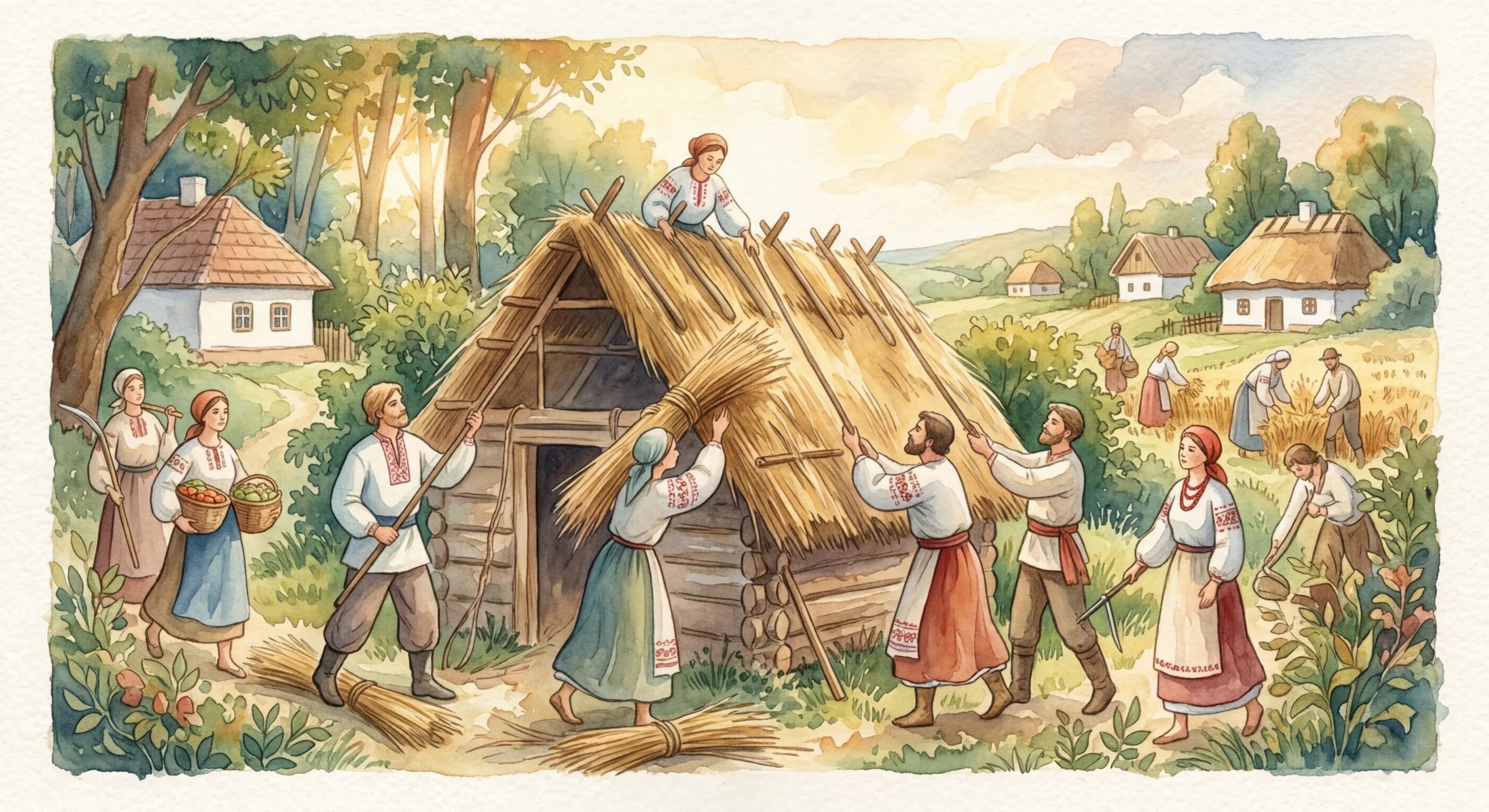
Toloka describes a deeply ingrained Ukrainian tradition of communal labor, a spontaneous convergence of neighbors and friends to tackle a task too daunting for a single household. It's a vibrant expression of solidarity, where collective hands transform arduous work like harvesting fields or rebuilding a barn into a shared endeavor, often accompanied by singing, feasting, and the strengthening of community bonds. This practice ensures that no one faces overwhelming challenges alone, embodying a profound sense of mutual responsibility and care.
Literal Translation
Communal labor / mutual help
The Story Behind the Word
The concept of 'toloka' is deeply woven into the fabric of Ukrainian rural life, predating modern social welfare systems and rooted in the necessity of survival in agrarian societies. Historically, it was a vital mechanism for communities to thrive, particularly in times of hardship or for large-scale agricultural projects that demanded many hands. This practice reveals a worldview where interdependence is paramount, and individual well-being is intrinsically linked to the strength of the collective. It reflects a profound respect for community, a belief in the power of shared effort, and a cultural emphasis on mutual support as a cornerstone of social life. 'Toloka' isn't just about getting work done; it's a ritual that reinforces social cohesion and identity, preserving traditions of hospitality and reciprocity.
Experience It
Harvesting the Fields
The golden wheat stretched endlessly, a daunting task for the elderly widow Hryhorivna. Then, as if by magic, neighbors arrived with scythes and laughter, turning the vast field into a bustling scene of collective effort. By sunset, the harvest was complete, and a shared meal under the open sky celebrated their 'toloka'.
Rebuilding After Storm
When a fierce storm tore through Ivan's roof, leaving his small cottage exposed, despair threatened to set in. But the next morning, men from the village appeared with hammers and timber, women brought food and drink, and together, they worked tirelessly. The damaged roof was mended, a testament to their unwavering 'toloka' spirit.
The Deeper Meaning
Toloka encapsulates a philosophy of communalism and interdependence, where the individual's strength is magnified through collective action. It underscores the belief that human flourishing is best achieved not through isolated effort, but through shared burdens and mutual aid. This worldview prioritizes social harmony and collective resilience over strict individualism, celebrating the intrinsic value of community bonds.
Did You Know?
Historically, participating in a 'toloka' was not just an act of kindness but often a social obligation, with those who consistently shirked their duties risking ostracization from the community.
How It's Used
This term is used to describe a specific type of communal work or collective help, often in rural settings or during significant community events. It's a practice rooted in tradition and mutual support, highlighting the importance of community bonds.