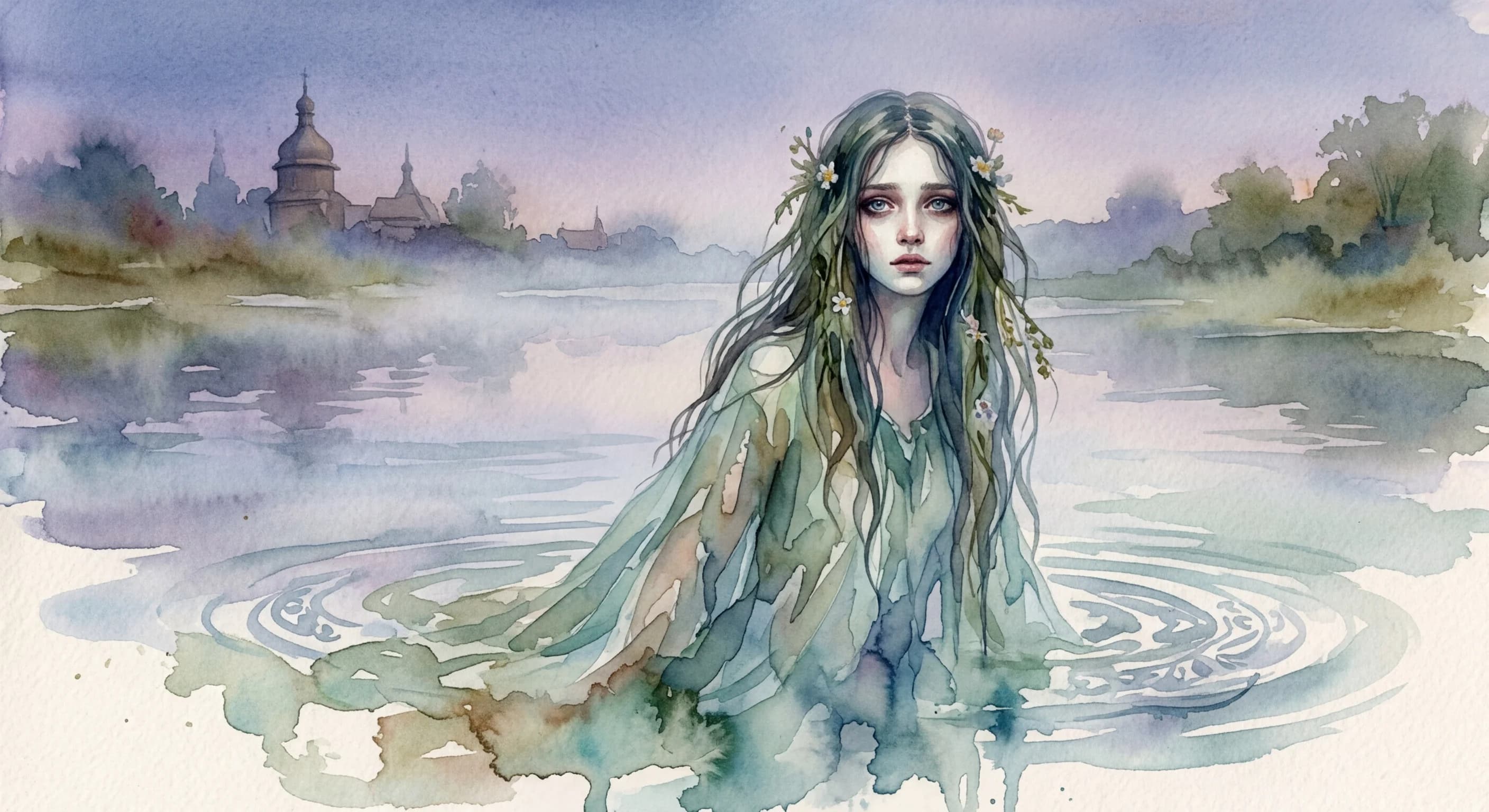
Rusalka
/ROO-sal-kah/
Meaning
A Rusalka is a spectral water nymph from Slavic folklore, embodying the tragic beauty and perilous allure of nature's wild places. Often depicted as the restless spirit of a young woman who met an untimely, watery end, she haunts rivers, lakes, and ponds, her ethereal form captivating but deadly. With long, flowing hair of green or golden hue, she can enchant men with her songs or dances, drawing them to their doom beneath the surface. Her existence weaves together themes of lost innocence, vengeful sorrow, and the untamed power of the natural world.
Literal Translation
The etymology is debated, but it is often linked to Old Slavic 'ruslo' (riverbed) or 'roj' (swarm, referring to mist or spray).
The Story Behind the Word
The Rusalka's enduring presence in Ukrainian folklore reflects a deep, ancient reverence and fear of nature, particularly water, which was seen as both life-giving and death-dealing. Her story often served as a cautionary tale, especially for young men, embodying the dangers of venturing too close to wild waters or succumbing to temptation. Historically, Rusalki were most active during Rusalna Week (Green Week or Pentecost), a time when the boundary between the living and spirit worlds was thin. Rituals and offerings were made to appease them, highlighting a worldview where spirits actively influenced human life and required respect. Her dual nature—beautiful yet dangerous—mirrors the complex relationship between humans and the unpredictable environment they inhabited, a relationship deeply ingrained in rural Slavic life and agricultural cycles. The Rusalka symbolizes the profound sorrow of unfulfilled life and the powerful, enduring spirit of those who died tragically, particularly unmarried women, whose restless souls found solace and power in the watery depths.
Experience It
A Moonlit Encounter
Ivan, drawn by an unearthly melody, stumbled through the reeds to the riverbank. There, under the full moon, a vision of ethereal beauty with long, flowing green hair beckoned him with a soft, mournful song. He felt an irresistible pull, a deep longing to join her in the shimmering water, forgetting all warnings of the Rusalka's deadly embrace.
Grandmother's Warning
Little Olenka was fascinated by the old willow tree by the pond, but her grandmother always cautioned, 'Never go near the water alone, especially at dusk. The Rusalka waits for careless children.' The warning, imbued with centuries of fear and respect for the water spirits, kept Olenka from straying too close to the dark, reflective surface.
The Deeper Meaning
The Rusalka embodies a profound acknowledgment of life's fragility and the destructive potential inherent in beauty. She represents the untamed, feminine aspect of nature that demands respect, revealing a worldview where the natural world is not merely a resource but a living, sentient force capable of both nurturing and consuming. Her existence speaks to the human struggle with grief, injustice, and the lingering presence of the past in the landscape.
Did You Know?
During Rusalna Week in Slavic traditions, people would often hang threads or rags on trees near water sources as offerings to the Rusalki, hoping to appease them and prevent them from harming crops or people.
How It's Used
The term 'Rusalka' is used in folklore, literature, and art to refer to these specific water spirits. It appears in traditional tales, modern fantasy works, and cultural discussions about Slavic mythology.