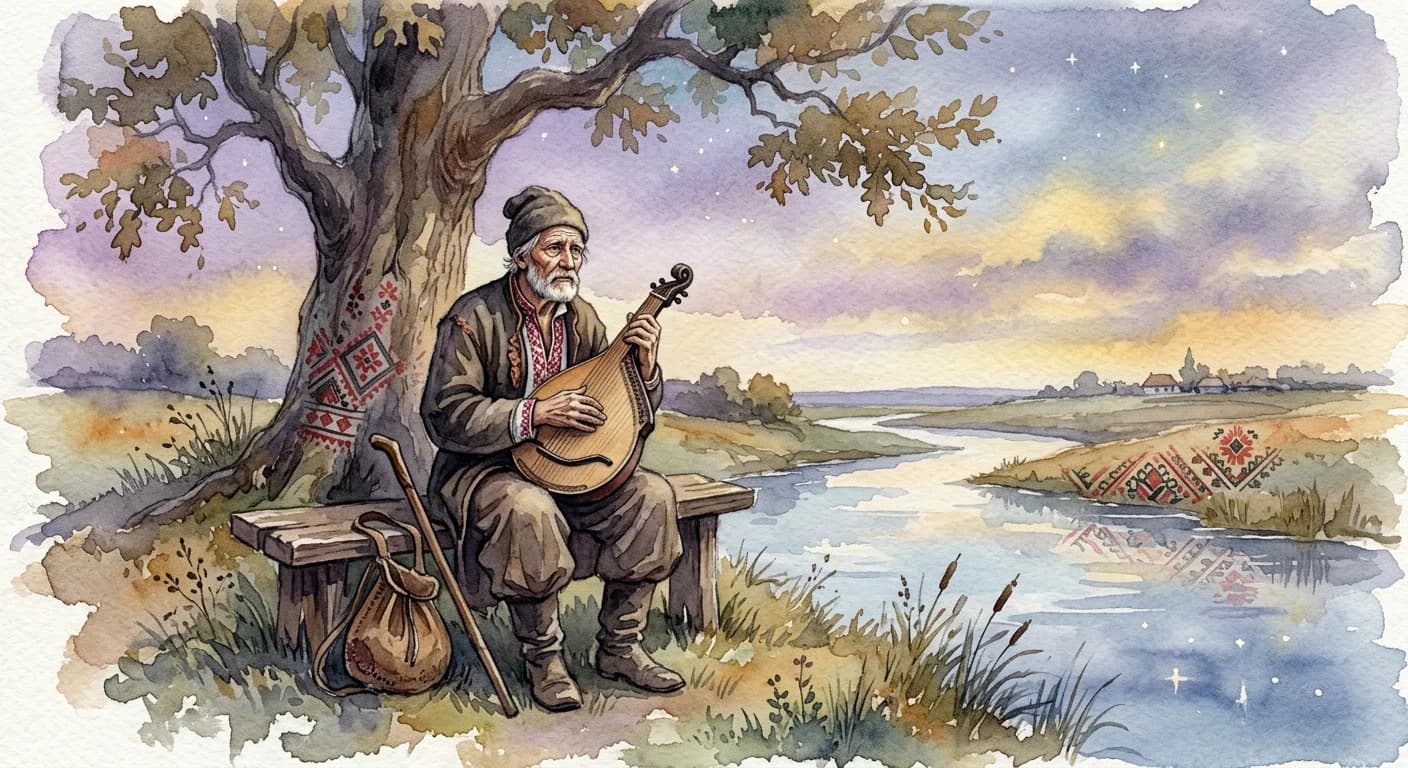
Kobzar
/KOHB-zahr/
Meaning
A "kobzar" is far more than a mere musician; they are the living embodiment of Ukraine's historical memory and national spirit. These often-blind, itinerant bards traversed villages, their soulful voices and banduras weaving epic poems, historical ballads, and deeply resonant songs that chronicled the triumphs, tragedies, and indomitable spirit of the Ukrainian people. Through their performances, kobzari served as vital custodians of cultural heritage, fostering unity, resilience, and a profound connection to the land and the collective soul of the nation, especially during periods of oppression.
Literal Translation
Bard, minstrel (though this is an oversimplification)
The Story Behind the Word
The kobzar tradition emerged centuries ago, deeply rooted in the Cossack era, where these musician-poets served as chroniclers of military campaigns, spiritual guides, and moral compasses. Their existence speaks volumes about a culture that valued oral tradition, historical memory, and artistic expression as fundamental to national identity and survival. In times of foreign domination, kobzari became clandestine educators and symbols of resistance, their songs often coded with defiance and hope. The reverence for the kobzar reveals a Ukrainian worldview where art is not just entertainment, but a powerful force for preserving truth, nurturing collective consciousness, and inspiring resilience against adversity. Their stories, often sung to the haunting strains of the bandura, connected generations and kept the flame of Ukrainian identity alive.
Experience It
Village Gathering
As dusk settles, villagers gather around a fire, their faces illuminated by the flickering light. An old, blind kobzar, his bandura resting on his lap, begins a mournful duma about a Cossack hero, his voice echoing the triumphs and sorrows of their ancestors, binding them together in shared history.
Inspiring Resistance
During a period of harsh foreign rule, a young man secretly listens to a kobzar's performance. The bard's song, subtly weaving tales of Ukrainian strength and defiance, ignites a spark of national pride and resistance in the young man's heart, reinforcing his connection to his heritage.
The Deeper Meaning
The concept of 'kobzar' underscores a profound philosophical belief in the power of memory and narrative to shape and sustain a nation's soul. It reveals a worldview where truth and identity are not merely recorded in texts, but embodied in living tradition, passed down through song and story. The kobzar's role highlights the idea that art, particularly during oppression, is an essential tool for human dignity, collective resilience, and the preservation of an authentic cultural self.
Did You Know?
During the Soviet era, kobzari were brutally repressed and even executed in the 1930s as their art was seen as a threat to communist ideology, highlighting their immense cultural power.
How It's Used
Refers to a professional folk singer-poet in Ukrainian tradition, particularly historically. Also used to refer to Taras Shevchenko, Ukraine's national poet, whose seminal work is titled 'Kobzar'.