U.
HomeRegionsLanguagesEmotionsCollections
Find Your Word

“The limits of my language mean the limits of my world.”

— Ludwig Wittgenstein, Philosopher

Untranslatable

A curated collection of the world's most beautiful expressions—words that remind us language is humanity's greatest invention.

  • Home
  • Collections
  • Regions
  • Countries
  • Emotions
  • Tags
  • Contexts
  • Finder
  • Europe
  • Asia
  • Americas
  • Africa
  • Middle East
  • About
  • Contact
  • Privacy Policy
  • Terms of Service

2026 © Untranslatable. All rights reserved.

    /
    /
    1. Home
    2. /
    3. Europe
    4. /
    5. Maidan
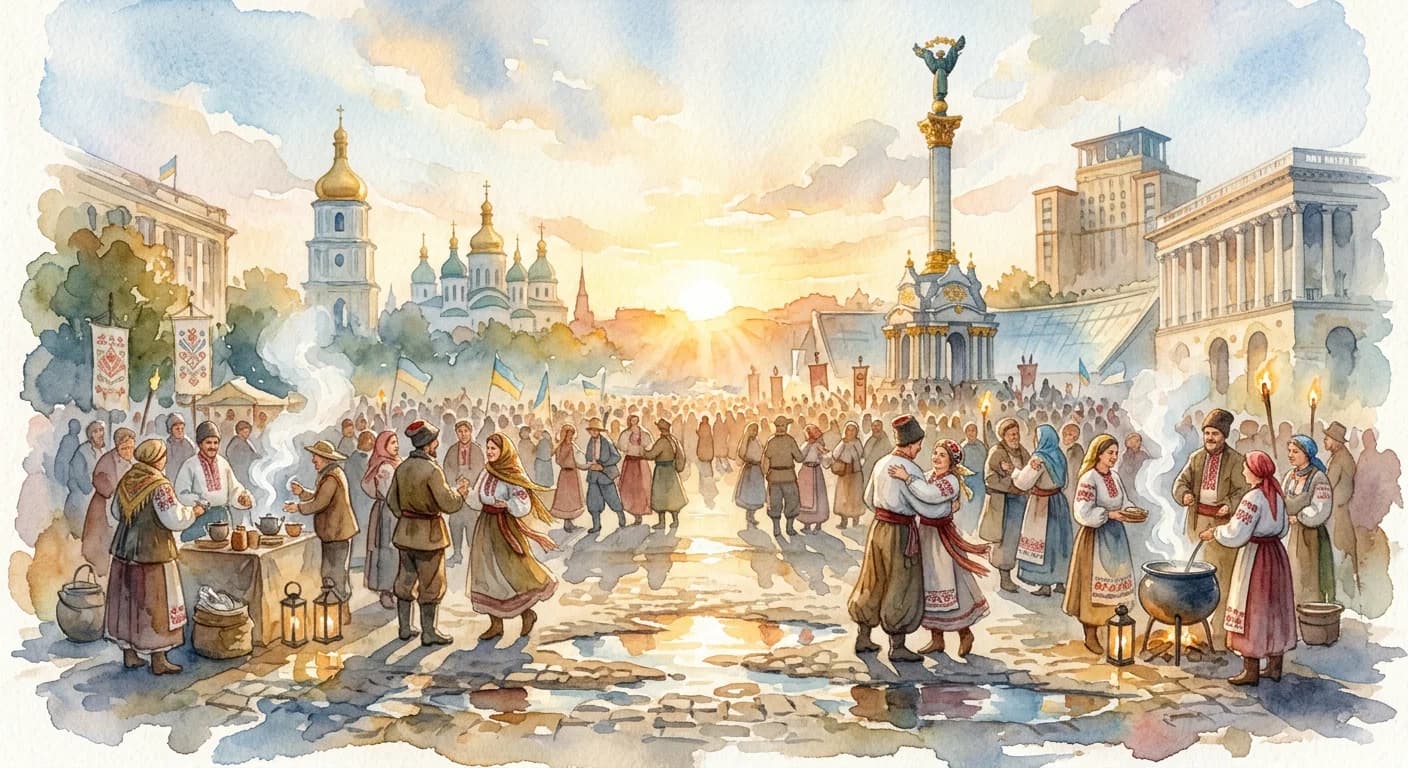
    Artistic representation of Maidan
    Ukrainian•
    🇦🇫Afghanistan🇮🇳India🇮🇷Iran🇵🇰Pakistan🇷🇺Russia🇹🇯Tajikistan🇺🇦Ukraine

    Maidan

    /MY-dan/

    Meaning

    The 'Maidan' is far more than a mere open space; it is the vibrant, beating heart of a Ukrainian city or town, a crucible where collective life unfolds. It serves as a traditional gathering place for bustling markets, joyous festivals, and solemn commemorations, but also as a powerful stage for political rallies and transformative public demonstrations. This central square embodies the very essence of community, a living canvas where history is etched through shared experiences and pivotal events.

    Literal Translation

    Square, field, open space

    The Story Behind the Word

    The concept of "Maidan" is deeply embedded in Ukrainian history and civic consciousness, reflecting a long tradition of collective action and public discourse. Its origin is tied to the open marketplace, the central hub where social and commercial life converged. Over centuries, these spaces evolved into crucial sites for community assembly, protest, and the expression of popular will, particularly in times of political upheaval. The word reveals a culture that values public gathering, communal decision-making, and a sense of shared ownership over civic spaces. It underscores the idea that the heart of a city is not just its architecture, but its people and their collective spirit, capable of shaping destiny within these symbolic grounds. This connection to democratic expression and national identity is perhaps its most profound cultural resonance.

    Experience It

    Festival on the Maidan

    The city's Maidan was alive with the vibrant colors and joyful sounds of the annual harvest festival. Families strolled between food stalls, children chased pigeons near the central fountain, and musicians played traditional folk tunes, creating a communal atmosphere of celebration and shared heritage.

    Voice of the People

    Thousands gathered on the Maidan, their voices rising in a unified chorus against the proposed government policy. Banners waved in the crisp autumn air as citizens exercised their right to peaceful assembly, transforming the public square into a powerful symbol of democratic expression and popular discontent.

    The Deeper Meaning

    The Maidan reflects a profound belief in the power of collective agency and the public sphere as a legitimate site for political and social transformation. It embodies the notion that a nation's destiny is not solely forged in halls of power, but also on the open ground where citizens gather, converse, and assert their will. This emphasizes a civic philosophy where public space is inherently political and essential for democratic health.

    Did You Know?

    The word "Maidan" itself is of Persian origin, meaning 'square' or 'field,' and entered Ukrainian via Ottoman Turkish, highlighting centuries of cultural exchange and historical connections across Eurasia.

    How It's Used

    Used to refer to a central public square or open space, often with historical or political significance. It can describe a marketplace, a gathering spot for events, or a place where significant public demonstrations occur.

    Emotions
    belonging,hope,joy
    Contexts
    celebration,politics,travel,work
    🇦🇫Afghanistan🇮🇳India🇮🇷Iran🇵🇰Pakistan🇷🇺Russia🇹🇯Tajikistan🇺🇦Ukraine

    by Sofia Rossi·Written Mar 10, 2026·Updated Apr 3, 2026

    Related Words

    Explore more
    HyggeDanish

    Hygge is more than mere coziness; it's a holistic embrace of comfort, warmth, and belonging that nourishes the soul. It describes the intentional creation of an intimate atmosphere where simple pleasures, genuine connection, and mindful presence converge, fostering a profound sense of contentment and well-being. It's about finding joy and peace in the small, everyday moments, often shared with loved ones.

    SaudadePortuguese

    Saudade encapsulates a profound, melancholic longing for something or someone cherished that is absent, often with the bittersweet knowledge that it may never return. It's a deep emotional state tinged with nostalgia, evoking a sense of loss for past experiences, places, or people, yet also holding a tender appreciation for the beauty of what once was. This yearning is not merely sadness, but a complex tapestry of desire, memory, and a poignant acceptance of absence, holding the beloved in a warm, persistent embrace within the heart.

    GezelligDutch

    Gezellig encapsulates a profound sense of warmth, belonging, and convivial comfort, extending beyond mere coziness to embrace the social and emotional atmosphere. It's the feeling of being truly at ease, surrounded by good company, laughter, and a shared sense of contentment. This untranslatable term describes not just a physical space, but a holistic experience where time seems to slow down, fostering genuine connection and a deep sense of well-being.

    Dolce far nienteItalian

    Dolce far niente captures the profound joy and effortless pleasure derived from simply existing without obligation or purpose. It's the art of savoring moments of pure, unadulterated idleness – lying in the sun, watching the clouds drift, or enjoying a leisurely coffee – not as a break from work, but as a valuable state in itself. This 'sweetness of doing nothing' is a conscious embrace of stillness and contentment, allowing the soul to breathe and the senses to fully engage with the present.