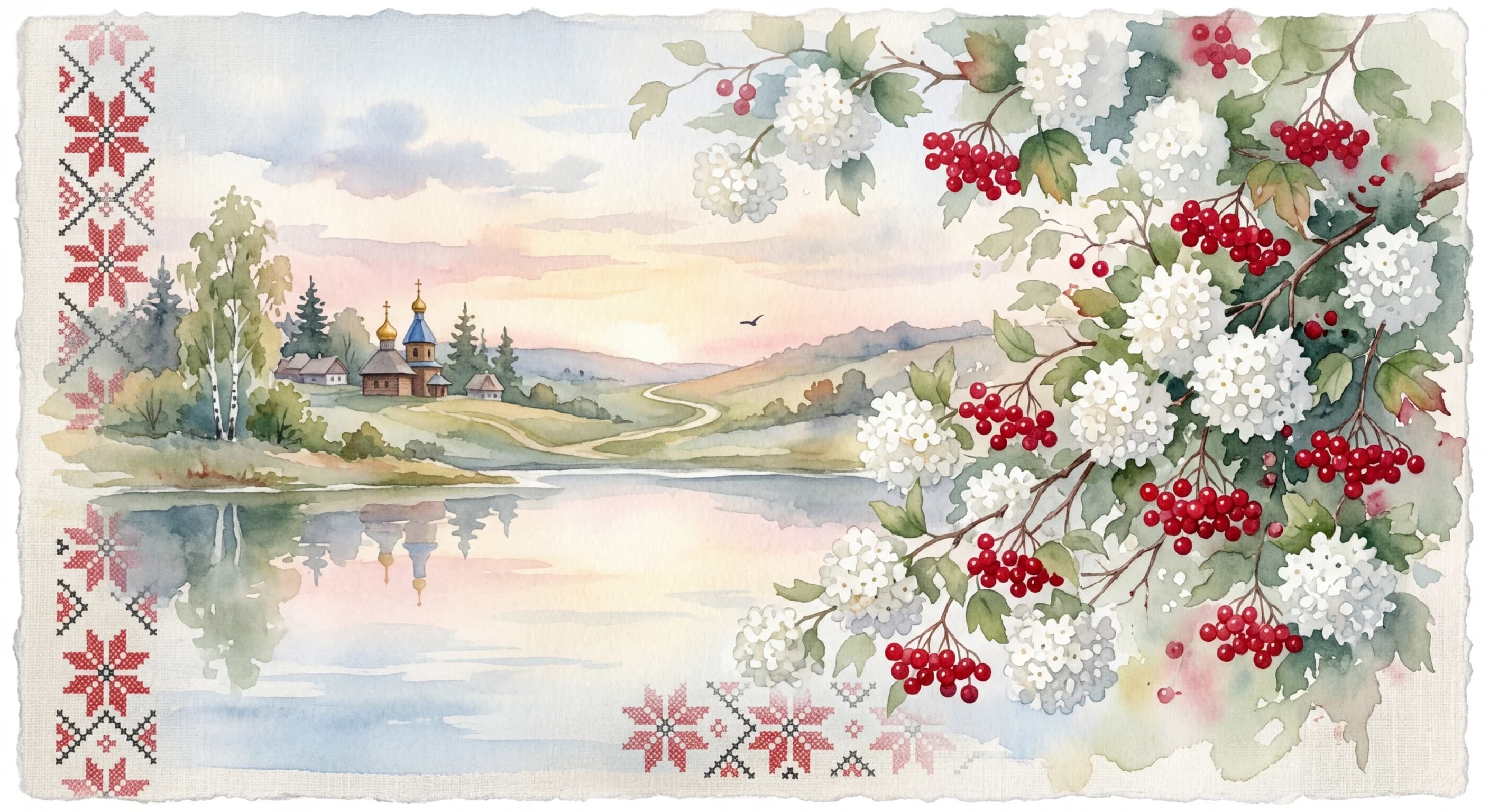
Kalyna
/KAH-lih-nah/
Meaning
Kalyna, often translated as 'guelder rose' or 'snowball tree,' is far more than just a botanical specimen in Ukrainian culture. It's a profound, multifaceted symbol deeply interwoven with national identity, embodying love, beauty, and feminine grace. Its vibrant red berries symbolize blood, sacrifice, and the enduring passion for freedom, while the delicate white blossoms represent purity, hope, and new beginnings. Kalyna frequently appears in folklore, songs, and poetry, acting as a poignant emblem of Ukraine's resilience and its people's unwavering spirit, especially during times of hardship or longing for home.
Literal Translation
Guelder rose / Snowball tree
The Story Behind the Word
The kalyna's deep roots in Ukrainian culture stem from its pervasive presence in the natural landscape and its integration into ancient Slavic mythology and pagan rituals. Before the adoption of Christianity, it was associated with the sun, fire, and the cosmos, symbolizing the eternal cycle of life, death, and rebirth. Its enduring cultural significance reflects a worldview where nature is not just a backdrop but an active participant in human destiny and emotion. The plant's ability to thrive and bear fruit even in harsh conditions has made it a powerful metaphor for the Ukrainian people's resilience and unbreakable spirit throughout centuries of foreign occupation and struggle. It embodies a collective memory of both joy and sorrow, making it a sacred national emblem that resonates deeply with personal and national identity.
Experience It
A Wedding Garland
At a traditional Ukrainian wedding, the bride, Oksana, wore a beautifully woven garland of fresh kalyna berries and white flowers in her hair. Each red berry, nestled amongst the green leaves, spoke silently of the ancestors' blessings and the hope for a family as strong and vibrant as the plant itself, symbolizing the eternal bond of love and the promise of new life.
Song of Remembrance
During a somber commemoration of the Holodomor, an elderly woman softly sang a folk song about a lone kalyna bush by a grave. Her voice, filled with sorrow and strength, evoked the plant's dual symbolism of tragic loss and the enduring hope for national revival, reminding everyone of the sacrifices made and the spirit that can never be extinguished.
The Deeper Meaning
The kalyna encapsulates a core Ukrainian philosophical outlook: that beauty and sorrow, life and sacrifice, are inextricably linked. It reflects a profound connection to the land and a spiritual resilience born from adversity. The plant symbolizes an enduring national soul that, like the kalyna, can weather harsh winters and still blossom and bear fruit, affirming the cyclical nature of existence and the persistent hope for revival and freedom.
Did You Know?
The kalyna is so revered that many Ukrainian folk songs start with, or prominently feature, the plant, often personifying it as a young maiden or a symbol of Ukraine itself.
How It's Used
Kalyna is used in poetry, songs, folklore, and as a national symbol to represent Ukraine, beauty, love, and resilience.