U.
HomeRegionsLanguagesEmotionsCollections
Find Your Word

“The limits of my language mean the limits of my world.”

— Ludwig Wittgenstein, Philosopher

Untranslatable

A curated collection of the world's most beautiful expressions—words that remind us language is humanity's greatest invention.

  • Home
  • Collections
  • Regions
  • Countries
  • Emotions
  • Tags
  • Contexts
  • Finder
  • Europe
  • Asia
  • Americas
  • Africa
  • Middle East
  • About
  • Contact
  • Privacy Policy
  • Terms of Service

2026 © Untranslatable. All rights reserved.

    /
    /
    1. Home
    2. /
    3. Europe
    4. /
    5. Kolyada
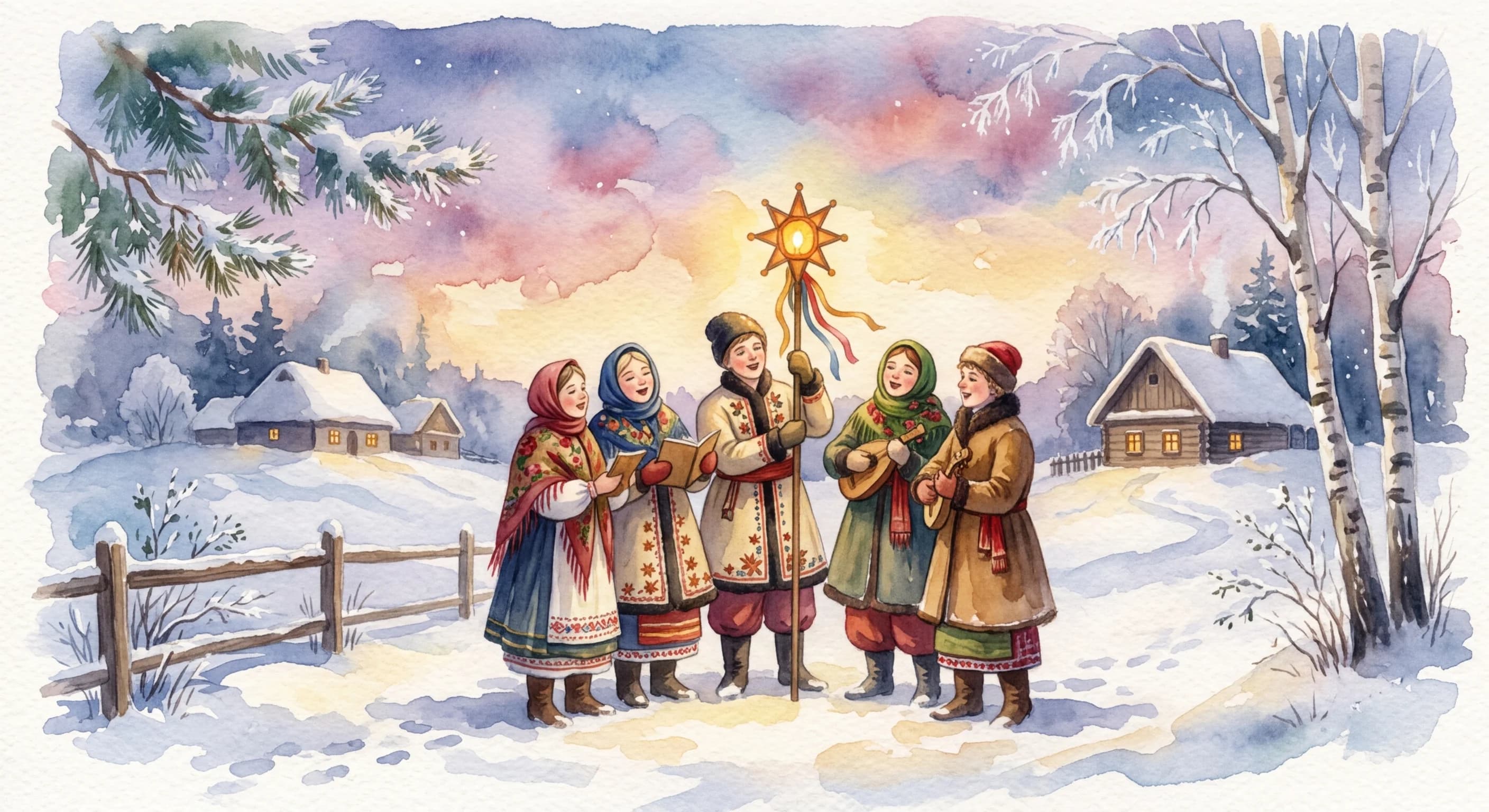
    Artistic representation of Kolyada
    Ukrainian•
    🇧🇾Belarus🇵🇱Poland🇷🇺Russia🇺🇦Ukraine

    Kolyada

    /koh-lee-AH-dah/

    Meaning

    Kolyada is a vibrant Ukrainian winter solstice festival, a tapestry woven from ancient pagan traditions celebrating the rebirth of the sun and later harmonizing with Christian Christmas. It's a period of joyous communal gathering, marked by groups of 'kolyadnyky' visiting homes to sing carols, share blessings, and perform short plays, ensuring good fortune and prosperity for the coming year. This sacred time embodies a profound connection to ancestral customs, the cyclical rhythm of nature, and a hopeful anticipation for the lengthening days and renewed life.

    Literal Translation

    The exact etymology is debated, but it is often linked to the Latin word 'calendae' (the first day of the month), referring to the start of the new year or the new cycle.

    The Story Behind the Word

    Kolyada's existence reveals Ukraine's deep historical layers, where pre-Christian animistic beliefs about nature's cycles and the sun's power were skillfully integrated, rather than eradicated, by Christianity. It reflects a worldview that sees the natural world and spiritual realm as intrinsically linked, where human actions (like caroling and blessing) can influence cosmic harmony and agricultural bounty. The tradition emphasizes community solidarity, intergenerational knowledge transfer, and the enduring power of ritual to navigate transitions, like the dark of winter into the promise of spring. It's a testament to cultural resilience, preserving ancient echoes within modern observance and reinforcing a collective identity rooted in both earth and spirit.

    Experience It

    Carolers at the Door

    A group of children, bundled in scarves and hats, stand at the neighbor's door, their voices rising in a traditional Kolyada carol. They sing of the birth of Christ and the coming of spring, hoping to receive treats and spread good cheer throughout the frosty evening.

    Family Feast

    The aroma of kutia and varenyky fills the air as a family gathers around a festive table for Sviata Vecherya (Holy Supper) during Kolyada. Grandparents share stories of past celebrations, reinforcing the deep cultural roots of their winter traditions and the hopeful anticipation of the new year.

    The Deeper Meaning

    Kolyada embodies a cyclical worldview, where endings are always beginnings, and darkness inevitably gives way to light. It reflects a profound respect for nature's rhythms and the belief that human participation in ritual can influence the well-being of the community and the fertility of the land, fostering hope and renewal in the face of winter's austerity.

    Did You Know?

    Some Kolyada carols are so ancient, their lyrics contain references to pagan deities and rituals that predate Christianity by centuries, subtly woven into the fabric of the celebration.

    How It's Used

    Typically used during the Christmas and New Year season, from late December to mid-January. It refers to the songs sung by groups of carolers (kolyadnyky) who visit homes, as well as the festive period itself.

    Emotions
    belonging,hope,joy,warmth
    Contexts
    celebration,family,greeting,seasons
    🇧🇾Belarus🇵🇱Poland🇷🇺Russia🇺🇦Ukraine

    by Annelise Dubois·Written Mar 10, 2026·Updated Apr 3, 2026

    Related Words

    Explore more
    HyggeDanish

    Hygge is more than mere coziness; it's a holistic embrace of comfort, warmth, and belonging that nourishes the soul. It describes the intentional creation of an intimate atmosphere where simple pleasures, genuine connection, and mindful presence converge, fostering a profound sense of contentment and well-being. It's about finding joy and peace in the small, everyday moments, often shared with loved ones.

    SaudadePortuguese

    Saudade encapsulates a profound, melancholic longing for something or someone cherished that is absent, often with the bittersweet knowledge that it may never return. It's a deep emotional state tinged with nostalgia, evoking a sense of loss for past experiences, places, or people, yet also holding a tender appreciation for the beauty of what once was. This yearning is not merely sadness, but a complex tapestry of desire, memory, and a poignant acceptance of absence, holding the beloved in a warm, persistent embrace within the heart.

    GezelligDutch

    Gezellig encapsulates a profound sense of warmth, belonging, and convivial comfort, extending beyond mere coziness to embrace the social and emotional atmosphere. It's the feeling of being truly at ease, surrounded by good company, laughter, and a shared sense of contentment. This untranslatable term describes not just a physical space, but a holistic experience where time seems to slow down, fostering genuine connection and a deep sense of well-being.

    Dolce far nienteItalian

    Dolce far niente captures the profound joy and effortless pleasure derived from simply existing without obligation or purpose. It's the art of savoring moments of pure, unadulterated idleness – lying in the sun, watching the clouds drift, or enjoying a leisurely coffee – not as a break from work, but as a valuable state in itself. This 'sweetness of doing nothing' is a conscious embrace of stillness and contentment, allowing the soul to breathe and the senses to fully engage with the present.