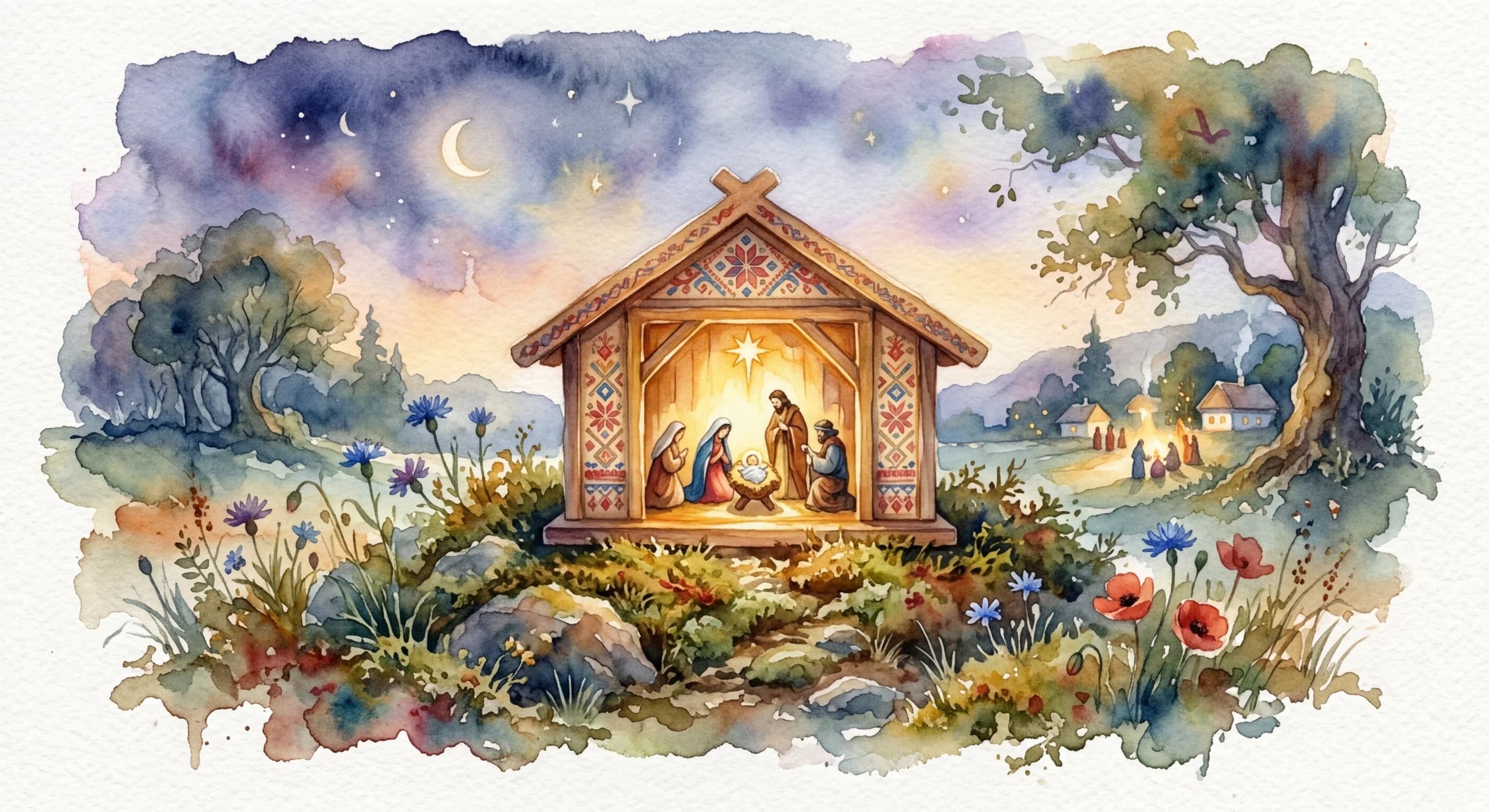
Vertep
/VEHR-tehp/
Meaning
A vertep is a captivating, portable puppet theater, deeply rooted in Ukrainian and Eastern Slavic tradition. More than mere entertainment, it's a dynamic cultural mosaic, weaving together sacred narratives of the Nativity with boisterous folk tales, sharp social satire, and moral allegories. Housed within an often intricately decorated, multi-tiered wooden box, its performances, particularly vibrant during Christmas, served as a communal hearth for storytelling, reflection, and shared laughter, bringing ancient wisdom to life through the antics of its diverse puppet cast.
Literal Translation
Nativity scene, manger (in its original religious context)
The Story Behind the Word
The vertep emerged from the confluence of medieval mystery plays, Byzantine liturgical drama, and indigenous Slavic folk traditions, flourishing from the 17th century onwards. Its dual-tiered structure often symbolized heaven and earth, sacred and profane, reflecting a worldview where the divine intermingled with everyday life and human foibles. The lower tier, with its devils, soldiers, and everyday characters, provided a platform for biting social commentary, often satirizing local authorities or current events, while the upper tier remained sacred to the Nativity. This ability to simultaneously honor religious dogma and critique societal norms reveals a culture that valued both spiritual devotion and a keen, often humorous, sense of justice and resilience. The vertep was a vital conduit for preserving Ukrainian language, folk songs, and historical memory during periods of foreign domination, embodying a spirit of cultural defiance and continuity.
Experience It
Christmas Eve Vertep
The aroma of kutia filled the air as the family gathered, but the children's eyes were fixed on the small wooden box brought out by their grandfather. As he began to manipulate the puppets, the story of Christ's birth unfolded on the upper tier, followed by uproarious laughter as a devilish character tried to trick a Cossack on the lower stage, transforming their Christmas Eve into a lively spectacle.
Vertep in the Village Square
During the holiday season, a traveling vertep troupe would set up their elaborate box in the village square. Farmers and merchants alike paused their chores, drawn by the lively music and the promise of both sacred stories and satirical jabs at the local landowner, fostering a shared sense of community and playful dissent.
The Deeper Meaning
The vertep embodies a deeply holistic worldview, where spiritual reverence and earthy humor are not mutually exclusive but intertwined. It suggests that profound truths can be conveyed through both sacred narrative and irreverent satire, and that communal reflection often thrives when presented with both the sublime and the ridiculous. This blend reflects a resilient spirit capable of finding joy and critical insight even amidst hardship.
Did You Know?
Some historical verteps were so large they required several people to operate and could feature dozens of intricately carved puppets, turning a simple box into a miniature theatrical world.
How It's Used
Used to refer to a traditional puppet theater, especially one used for religious or folk performances during holidays like Christmas.