Kupala
/KOO-pah-lah/
Meaning
Kupala transcends a mere festival; it's an ancient, mystical embrace of the summer solstice, a night when the veil between worlds thins. It's a vibrant, untamed celebration of fertility, purification, and the sun's potent energy, deeply rooted in pre-Christian Slavic paganism. Through bonfires, ritual bathing, and the weaving of flower wreaths, communities seek purification, love, and good fortune, believing that nature's spirits are most active and benevolent during this fleeting, magical peak of summer.
Literal Translation
Kupala (Купала) is derived from the Old Slavic word for 'bath' or 'immersion', referencing the ritualistic bathing and water ceremonies central to the festival. It is also linked to the name John (Ivan) in Ivan Kupala, referencing John the Baptist, though its pagan roots predate Christianization.
The Story Behind the Word
The word 'Kupala' and the festival it denotes are cornerstones of Ukrainian folk heritage, reflecting a profound, ancient connection to the cycles of nature. Before Christianization, Slavic peoples revered the sun, water, and earth as living entities, and Kupala was their most potent expression of this reverence, marking the zenith of summer's life-giving power. The adoption of 'Ivan' (John) later, linking it to John the Baptist, demonstrates a syncretic cultural adaptation, where pagan rites were overlaid with Christian narratives to ensure their survival. Yet, the core rituals — jumping over fires for purification, floating wreaths for divination, and searching for the mythical fern flower for extraordinary luck — remain deeply pagan, revealing a worldview that sees the natural world as imbued with powerful, often benevolent, magic and a source of both physical and spiritual sustenance. It embodies a collective memory of a time when humanity lived in closer, more mystical harmony with the environment.
Experience It
Kupala Night Bonfire
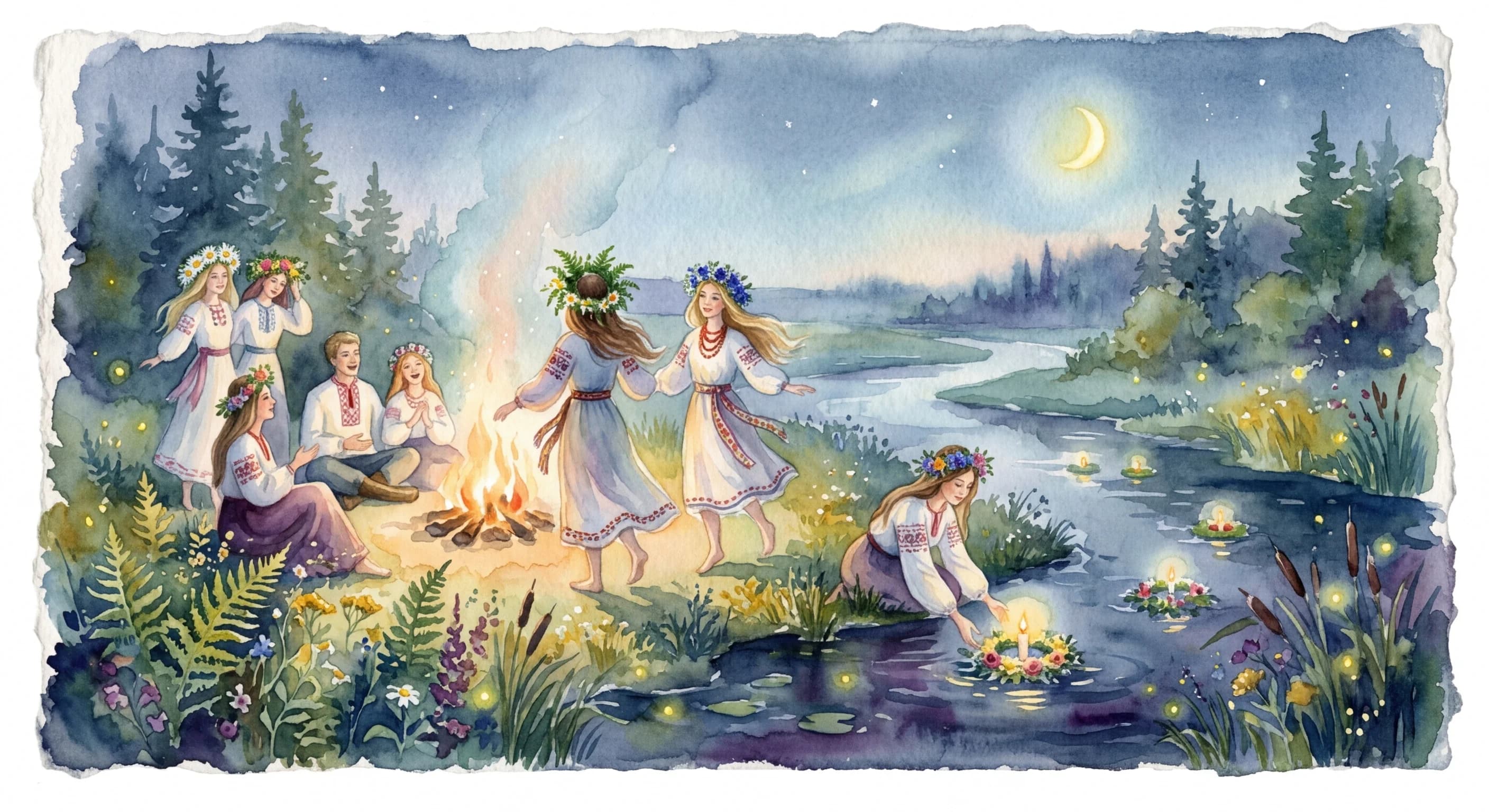
As twilight deepened, the village gathered, their faces illuminated by the towering bonfire. Young couples, hand-in-hand, bravely leaped over the flames, believing it would seal their love and protect them from illness for the coming year, their laughter echoing into the starry Kupala night.
Wreaths on the River
With anticipation in their eyes, the maidens carefully placed their intricately woven flower wreaths onto the gentle current of the river. They watched as the wreaths drifted downstream, each hoping hers would float far and true, a sign that her beloved was near and their future bright, a timeless Kupala tradition.
The Deeper Meaning
Kupala reveals a worldview where humanity is inextricably linked to nature's rhythms, not separate from them. It underscores a belief in the inherent sacredness of the natural world, seeing water as purifying, fire as transformative, and the sun as the ultimate life-giver. This perspective fosters a sense of collective belonging and a cyclical understanding of time, where ancient traditions continually renew the connection between the past, present, and the vital forces of the earth.
Did You Know?
The mythical fern flower, believed to bloom only on Kupala night, is said to grant its finder immense wealth, understanding of animal speech, and the power to open any lock.
How It's Used
Kupala is primarily used to refer to the midsummer festival itself, known as Ivan Kupala Day in some regions. It is celebrated with various folk customs, including jumping over bonfires, weaving flower wreaths and floating them down rivers to predict future love, and searching for the mythical fern flower. It's a significant cultural event tied to the summer solstice.