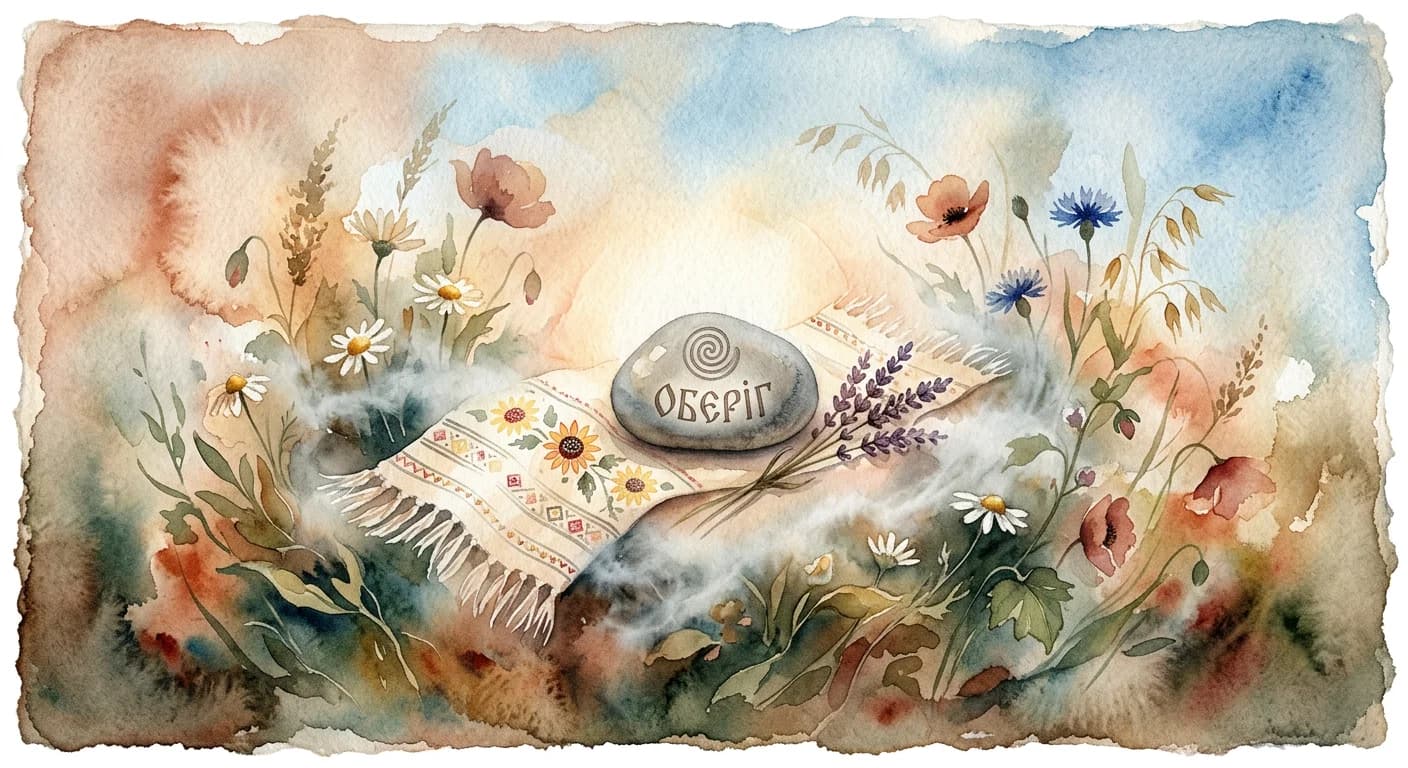
Obereh
/OH-beh-rekh/
Meaning
Obereh transcends a simple trinket; it is a potent embodiment of protection, a guardian spirit woven into the fabric of Ukrainian life. This sacred concept encompasses any object, symbol, or even a ritual believed to actively ward off malevolent forces, misfortune, and negative energies, while simultaneously drawing in good fortune and blessings. From a grandmother's intricately embroidered rushnyk to a humble sprig of kalyna above a doorway, an obereh serves as a tangible link to ancestral wisdom and a deeply felt assurance of security in a complex world.
Literal Translation
Guardian, amulet, charm
The Story Behind the Word
The concept of obereh is deeply rooted in ancient Slavic pagan beliefs, where the natural world was imbued with spiritual power and the line between the physical and the mystical was fluid. Early Ukrainians, facing harsh realities and a vast, often unforgiving landscape, sought ways to protect themselves and their communities from unseen dangers, illness, and bad luck. Oberehy emerged as a practical and spiritual response, reflecting a worldview where human agency intertwined with natural and supernatural forces. They are not merely superstitious objects, but rather expressions of a profound respect for tradition, a connection to the earth, and a collective desire for harmony and well-being. This enduring belief system reveals a culture that values resilience, community, and the comforting power of symbolic protection passed down through generations, affirming a continuous dialogue with their heritage and the spiritual realm.
Experience It
Grandmother's Embroidered Tale
Young Oksana carefully stitches a vibrant red and black pattern onto a linen shirt, her grandmother's words echoing: 'Each cross-stitch, each symbol, is an obereh for health and happiness, protecting you from harm.' She feels a comforting warmth, knowing her love and intentions are woven into its protective embrace.
Housewarming Blessing
At their new home, Ivan's mother hangs a small, dried bouquet of herbs – wormwood, St. John's Wort, and garlic – above the main entrance. 'This obereh,' she explains, 'will keep evil spirits from crossing our threshold and ensure our family's peace and prosperity within these walls.'
The Deeper Meaning
The obereh reflects a deeply holistic Ukrainian worldview, where the material and spiritual are intertwined, and human intention can imbue objects with protective power. It speaks to a profound belief in the interconnectedness of all things and the human desire to exert agency and find solace in a world often perceived as unpredictable, fostering a sense of control and hope through symbolic action and ancestral wisdom.
Did You Know?
Many traditional Ukrainian folk songs and lullabies incorporate references to oberehy, invoking their protective power to safeguard children and homes from harm.
How It's Used
Used to refer to any object, symbol, or even a ritual believed to offer protection against harm, misfortune, or negative energy. It can be a physical item worn or displayed, or a more abstract concept of spiritual defense.