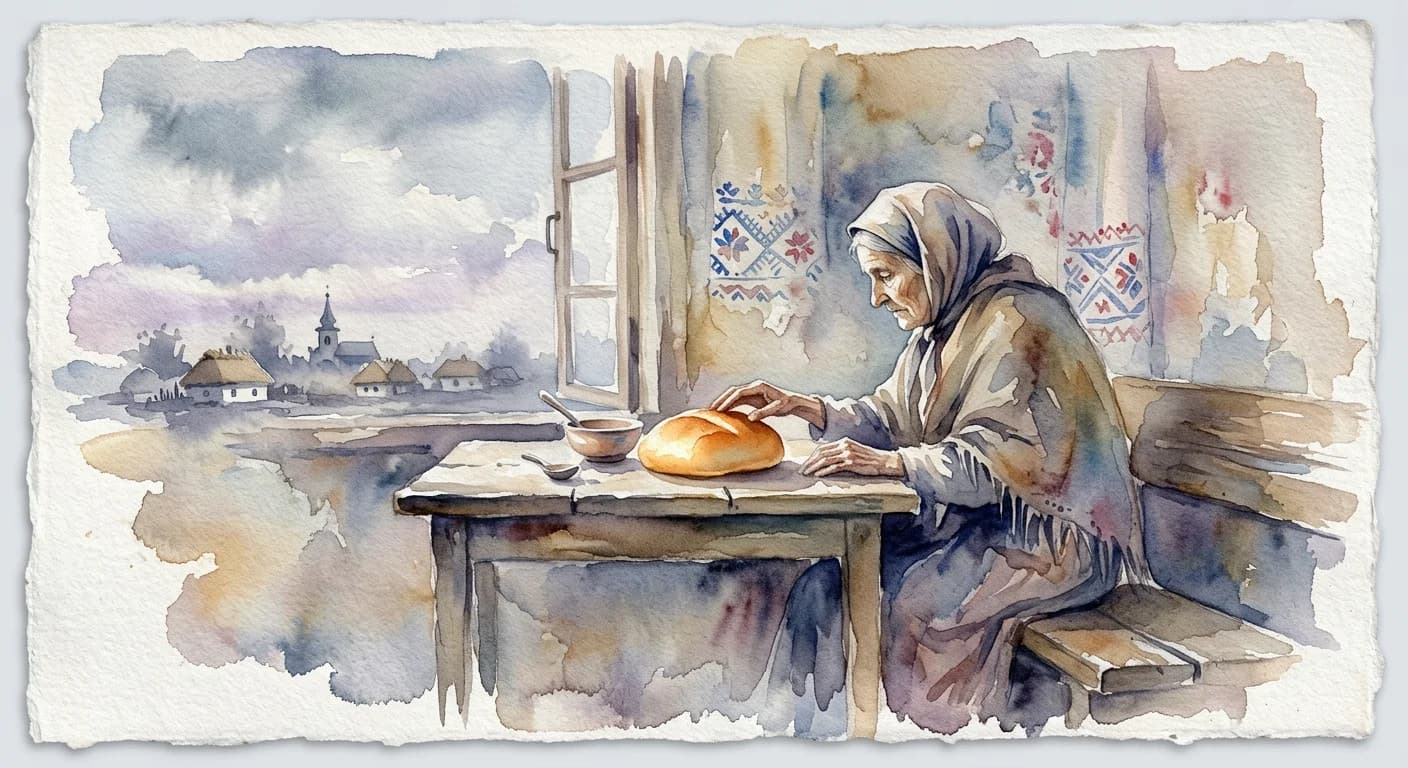
Nenazhyra
/neh-nah-ZHY-rah/
Meaning
Nenazhyra encapsulates a profound form of gluttony, extending far beyond simple overeating. It describes a ravenous, almost desperate consumption of food, driven by a deep-seated, often psychological void rather than mere physical hunger. This intense urge to consume stems from a historical or personal experience of profound lack or emotional emptiness, leading to a temporary, yet ultimately hollow, satiation. The word thus captures a cultural understanding of hunger that is both viscerally physical and deeply psychological, reflecting an insatiable desire that food can never truly fill.
Literal Translation
Cannot be literally translated without losing nuance. It implies 'insatiable eating' or 'eating without satisfaction'.
The Story Behind the Word
The existence of 'Nenazhyra' in Ukrainian culture is deeply rooted in a history marked by periods of immense hardship, including famines (Holodomor being the most tragic example), wars, and economic instability. These collective traumas instilled a profound cultural memory of deprivation and scarcity. Consequently, the act of eating, especially to excess, can be viewed not just as a physical necessity but as a psychological response to historical insecurity. 'Nenazhyra' reveals a cultural understanding that hunger can be an existential condition, an echo of past suffering, and that attempts to fill this void with material sustenance are ultimately futile. It highlights a certain fatalism regarding human desires and the lingering impact of collective memory.
Experience It
The Post-War Feast
After years of wartime rationing and hunger, Ivan, now an old man, would pile his plate high at family gatherings. He didn't truly enjoy the food in a celebratory way; rather, he ate with a quiet, almost frantic intensity, a 'Nenazhyra' driven by the lingering specter of starvation, even when his stomach was full.
Emotional Eater's Binge
Lying on the couch after a difficult day, Maria found herself devouring an entire cake, not out of pleasure, but with a desperate, unthinking urgency. She recognized this feeling as 'Nenazhyra', a futile attempt to fill the emotional emptiness and stress with sugar, knowing it would only bring a fleeting, unsatisfying comfort.
The Deeper Meaning
This word reveals a worldview that acknowledges the profound interplay between physical existence and psychological well-being. It posits that true satiation is not merely a matter of caloric intake but requires addressing deeper emotional or historical voids. 'Nenazhyra' suggests a tragic human condition where material consumption often fails to resolve existential hunger, highlighting the limitations of physical solutions for spiritual or emotional problems.
Did You Know?
The root 'nazhyra' itself can be linked to 'zhyty' (to live), implying that 'nenazhyra' is an eating that doesn't truly bring life or satisfaction, but rather a desperate, unfulfilling existence.
How It's Used
Used to describe someone who eats excessively and with great intensity, often out of a feeling of deprivation or deep-seated hunger, rather than simple enjoyment.