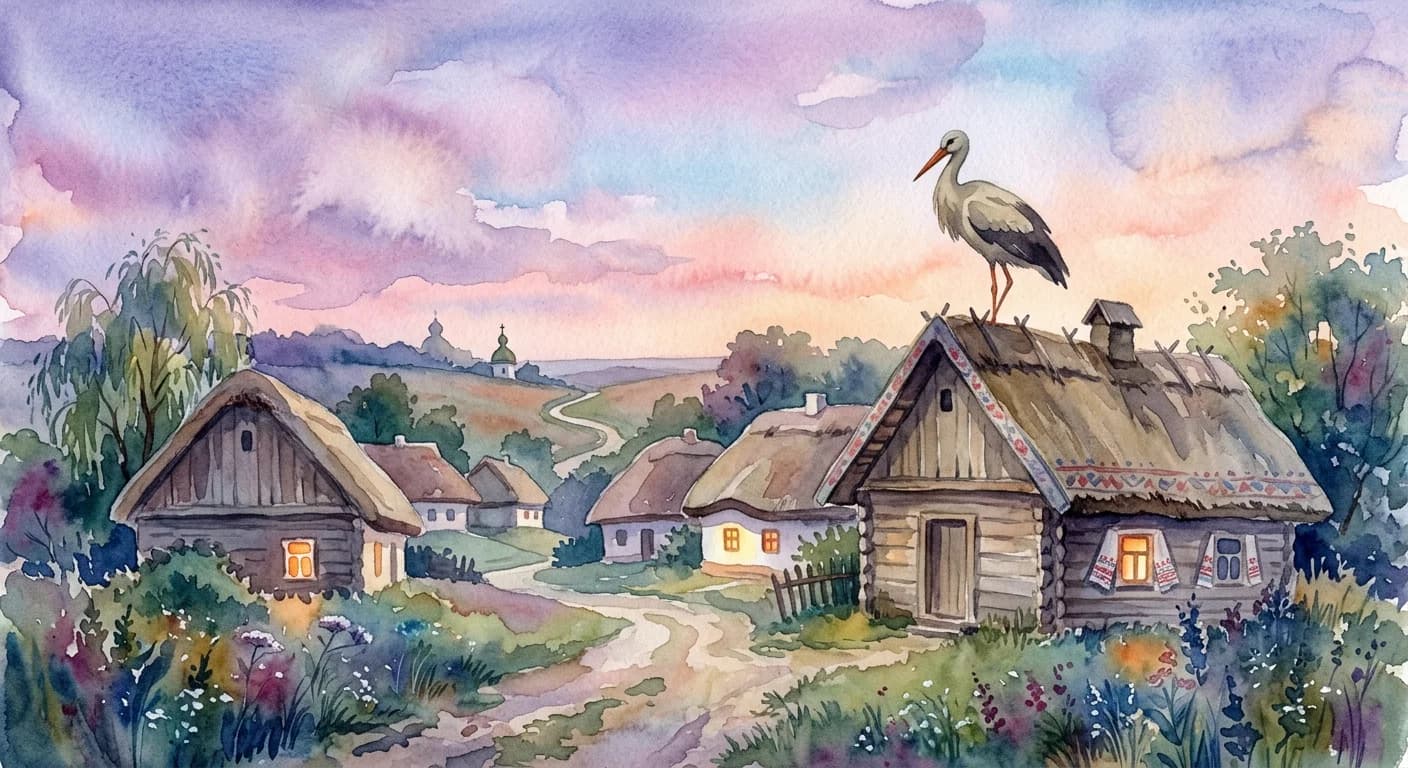
Leleka
/leh-LEH-kah/
Meaning
Leleka is the cherished Ukrainian word for a stork, embodying far more than its literal definition. It is a powerful symbol deeply woven into the fabric of Ukrainian folklore, representing the sanctity of family, the warmth of home, bountiful fertility, and auspicious good fortune. The sight of a leleka, particularly one nesting atop a dwelling, is universally regarded as a profound blessing and a promise of prosperity for the inhabitants. This word evokes a sense of gentle guardianship and an unbreakable connection to the rhythmic cycles of nature, standing as a cherished emblem of hope and enduring continuity within Ukrainian culture.
Literal Translation
stork
The Story Behind the Word
The deep reverence for 'leleka' in Ukrainian culture stems from ancient Slavic beliefs, where nature was seen as intrinsically linked to human destiny and well-being. Storks' annual migration and return became a powerful metaphor for the cyclical nature of life, rebirth, and the steadfast return of spring and new beginnings. Their choice to nest on human dwellings forged an intimate bond, positioning them as benevolent protectors of the household, bringing blessings and warding off evil. This belief system highlights a worldview where humanity is not separate from nature but deeply intertwined with it, relying on its signs and rhythms for guidance and comfort. The leleka, therefore, symbolizes a harmonious existence, a connection to ancestral lands, and the enduring spirit of the Ukrainian people, always returning home. It reveals a culture that values family, community, and the blessings derived from a respectful relationship with the natural world.
Experience It
A Blessed Homecoming
After years abroad, Maria returned to her ancestral village. As she approached her grandmother's old house, a pair of leleky gracefully landed on the chimney, beginning to build their nest. A wave of peace washed over her; it was a sign that she was truly home, blessed by good fortune.
Hope for New Life
For years, Anna and Serhiy had longed for a child. One spring morning, they awoke to find a leleka had built a nest right on their barn roof. They exchanged a hopeful glance, interpreting it as a powerful omen of fertility and the imminent arrival of new life into their family.
The Deeper Meaning
The 'leleka' encapsulates a profound philosophical insight into the Ukrainian worldview: that true prosperity and well-being are not solely material, but deeply rooted in spiritual harmony with nature and the continuity of family and tradition. It speaks to a belief in benevolent natural forces that act as guardians, reinforcing the idea that a blessed life is one lived in alignment with the natural world's rhythms and its ancient, unspoken promises of renewal and home.
Did You Know?
Ukrainian folklore often suggests that leleky bring not only babies but also good harvests and protect houses from lightning, making them incredibly potent symbols of protection and prosperity.
How It's Used
The word 'Leleka' is used to refer to the stork bird. It also appears in folklore, songs, and as a symbolic representation in art and literature, particularly associated with spring and new beginnings.