Petrykivka
/peh-TRIHK-iv-kah/
Meaning
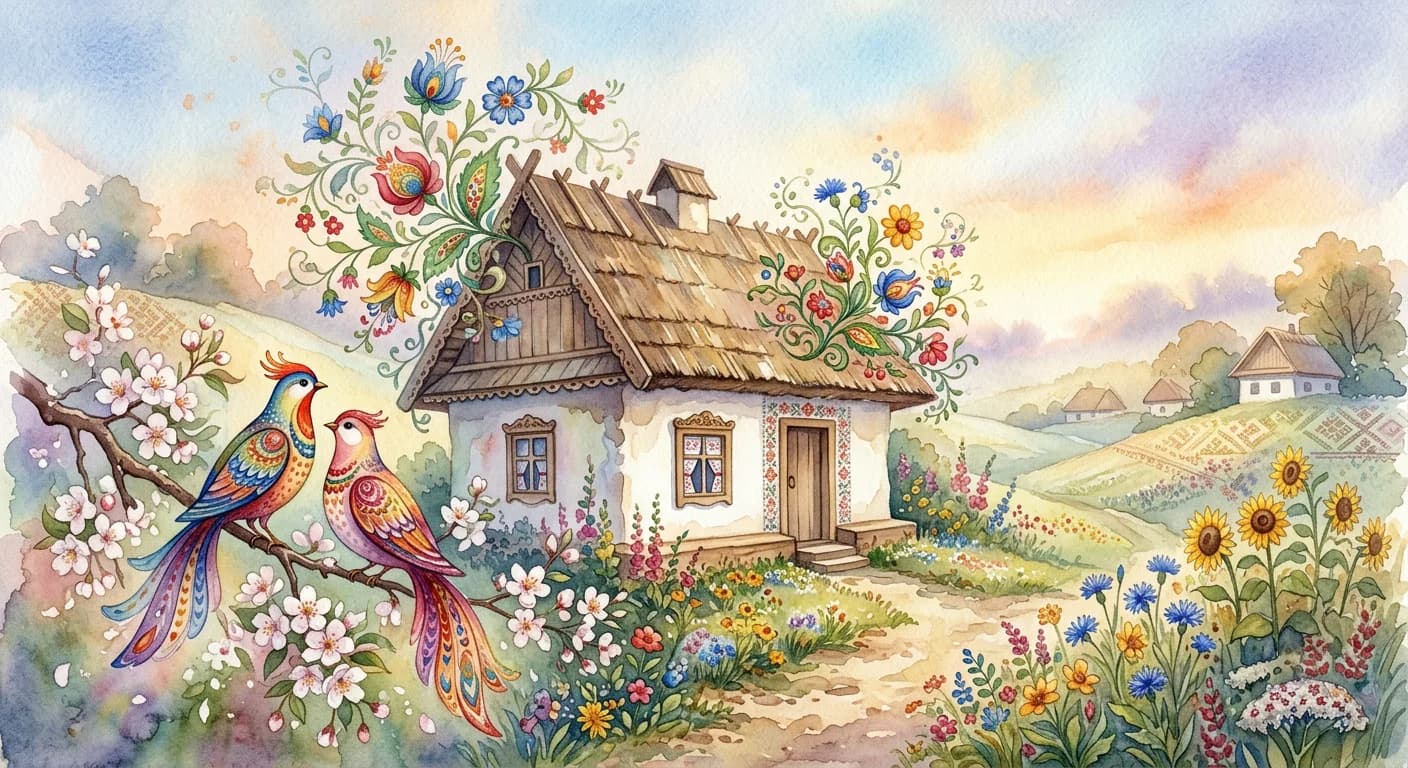
Petrykivka is not merely a word, but the vibrant soul of a unique Ukrainian decorative folk painting style, named after its village of origin. It's a symphony of intricate floral and faunal motifs, where fantastical birds and lush blooms burst forth in an explosion of bright, cheerful colors. This art form, often painted with natural brushes and pigments, embodies a profound connection to nature's beauty and serves as a joyful, living expression of Ukrainian cultural heritage, transforming everyday objects into works of art.
Literal Translation
Petrykivka (a toponym, named after the village)
The Story Behind the Word
Petrykivka emerged in the Ukrainian steppe, a region historically marked by both fertile abundance and devastating invasions. This art form became a way for people to bring beauty and protection into their homes, with motifs believed to ward off evil spirits and invite prosperity. The 'Tree of Life' is a central theme, symbolizing the continuity of generations and the cyclical nature of life. Its genesis in the 18th century, particularly among women, reflects a deep-seated tradition of decorating whitewashed walls and household items. The art is passed down through generations, emphasizing community, continuity, and an optimistic worldview that sees beauty and life even in harsh conditions. It reveals a culture that values harmony with nature, celebrates life, and finds solace and strength in artistic expression.
Experience It
A Gift of Heritage
At a Ukrainian wedding, the bride's grandmother presents the couple with a handcrafted wooden chest, its lid adorned with a swirling Petrykivka design of firebirds and kalyna berries. 'May your home always be as vibrant and full of life as this painting,' she says, her eyes twinkling.
Festival of Colors
During the annual Ivan Kupala festival, a young artist meticulously paints a ceramic plate with Petrykivka flowers, using a traditional cat-hair brush. Tourists gather, captivated by her fluid strokes and the way the bright colors seem to dance, bringing ancient traditions to life.
The Deeper Meaning
Petrykivka art embodies a philosophical outlook rooted in optimism, resilience, and a deep reverence for nature's life-giving force. It reflects a worldview where beauty is not just aesthetic but also protective and spiritually enriching. The continuous cycle of life, growth, and renewal, symbolized by its floral and faunal motifs, speaks to an enduring hope and a profound connection to the earth, transforming the mundane into the magical and the ordinary into the sacred.
Did You Know?
Traditionally, Petrykivka artists used brushes made from cat hair, particularly from a cat's whisker, known for their unique ability to create the delicate, flowing lines characteristic of the style.
How It's Used
Petrykivka is used to refer to the specific style of Ukrainian folk art and the village where it originated. It can be used to describe paintings, decorative items, or the artistic tradition itself. It's often seen during cultural festivals, in museums, and as decorative elements in Ukrainian homes and public spaces.