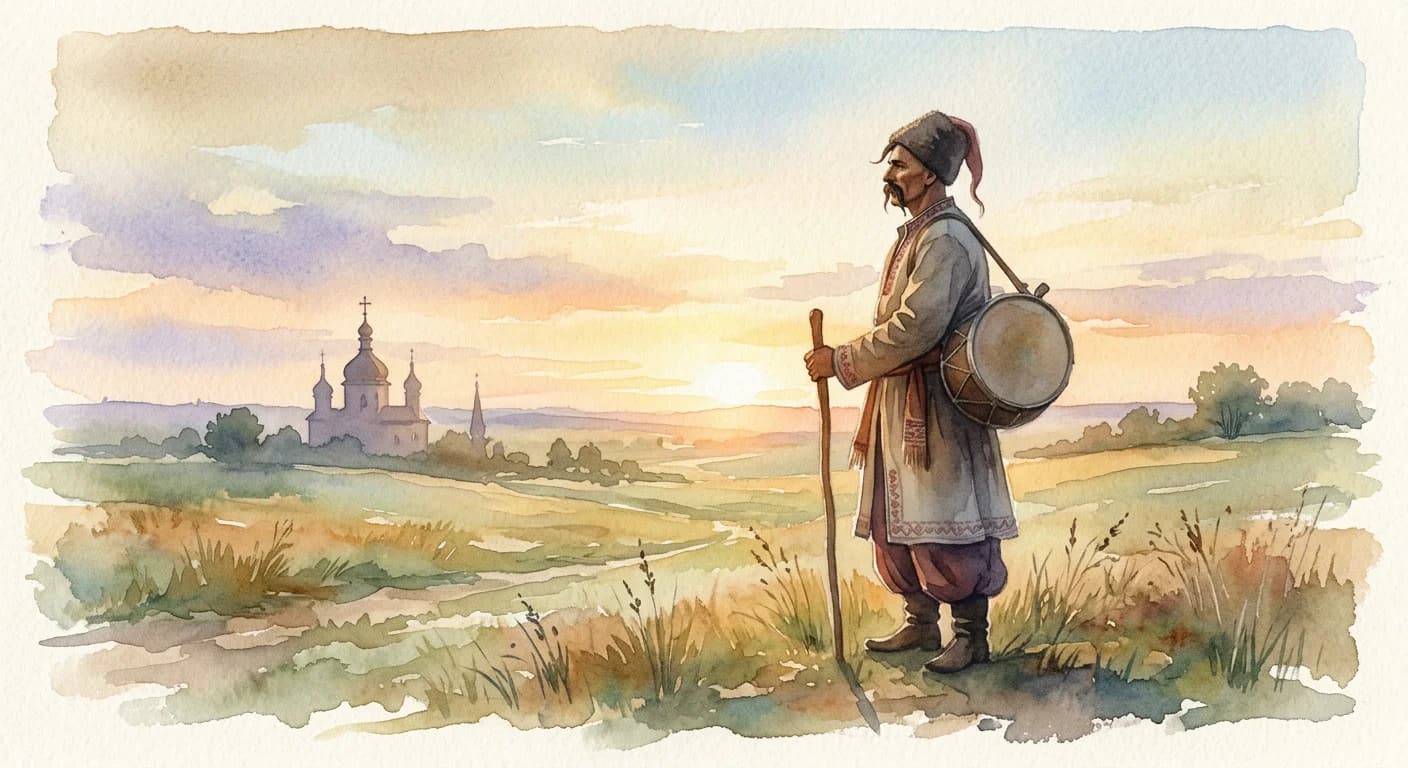
Dovbysh
/DOHV-bish/
Meaning
Dovbysh refers to a historical Ukrainian Cossack warrior, often a foot soldier or a member of a light cavalry unit, embodying the quintessential spirit of courage and martial skill. These formidable figures were not merely soldiers but vital components of Cossack forces, frequently serving as agile scouts or shock troops, pivotal in skirmishes and battles. The term evokes a deep sense of historical martial prowess, connecting directly to the romanticized and fiercely independent past of Ukrainian military tradition. It's more than a designation; it encapsulates a legacy of resilience, strategic cunning, and an unwavering commitment to freedom associated with these legendary figures.
Literal Translation
Foot soldier/light cavalryman
The Story Behind the Word
The word 'Dovbysh' is steeped in the rich tapestry of Ukrainian Cossack history, a period marked by constant struggle for independence against various empires. It exists because the Cossacks developed a unique military and social structure, where individual bravery and skill were paramount. The Dovbysh, as a light and agile warrior, represents the adaptive and guerrilla-like tactics often employed by the Cossacks. This term reveals a culture that deeply values self-reliance, martial honor, and the defense of one's land and freedom. It's a testament to a people who forged their identity through fierce resistance and celebrated the individual warrior's contribution to collective survival and liberty, echoing a romanticized yet powerful historical narrative.
Experience It
Cossack Campfire Tales
Grandfather Taras, his eyes twinkling, recounted tales of old, "My great-great-grandfather was a Dovbysh, nimble as a cat and sharp as a hawk. He once scouted an entire Polish encampment alone, returning with intelligence that saved our whole detachment!" The children listened, captivated by the bravery of the ancient warrior.
Historical Reenactment
At the historical reenactment, the young man portraying a Dovbysh moved with practiced ease, his light armor and swift movements demonstrating the role's agility. He led a charge, embodying the spirit of the shock troops, reminding the audience of the daring and crucial role these warriors played in Cossack battles.
The Deeper Meaning
The concept of the Dovbysh reflects a profound philosophical stance on individual agency within a collective struggle. It highlights the belief that personal courage, skill, and resourcefulness are not just admirable traits but essential components for the survival and freedom of a nation. It underscores a worldview where honor is earned through action, and where the individual warrior's contribution is vital to the larger epic of national identity and resilience.
Did You Know?
While often associated with foot soldiers, some Dovbysh were skilled horsemen, demonstrating the versatility and adaptability that was a hallmark of Cossack warfare.
How It's Used
The term 'Dovbysh' is used to refer to a specific type of historical warrior in Ukrainian history, particularly within the context of Cossack forces. It can be found in historical accounts, literature, and discussions about Ukrainian military heritage.