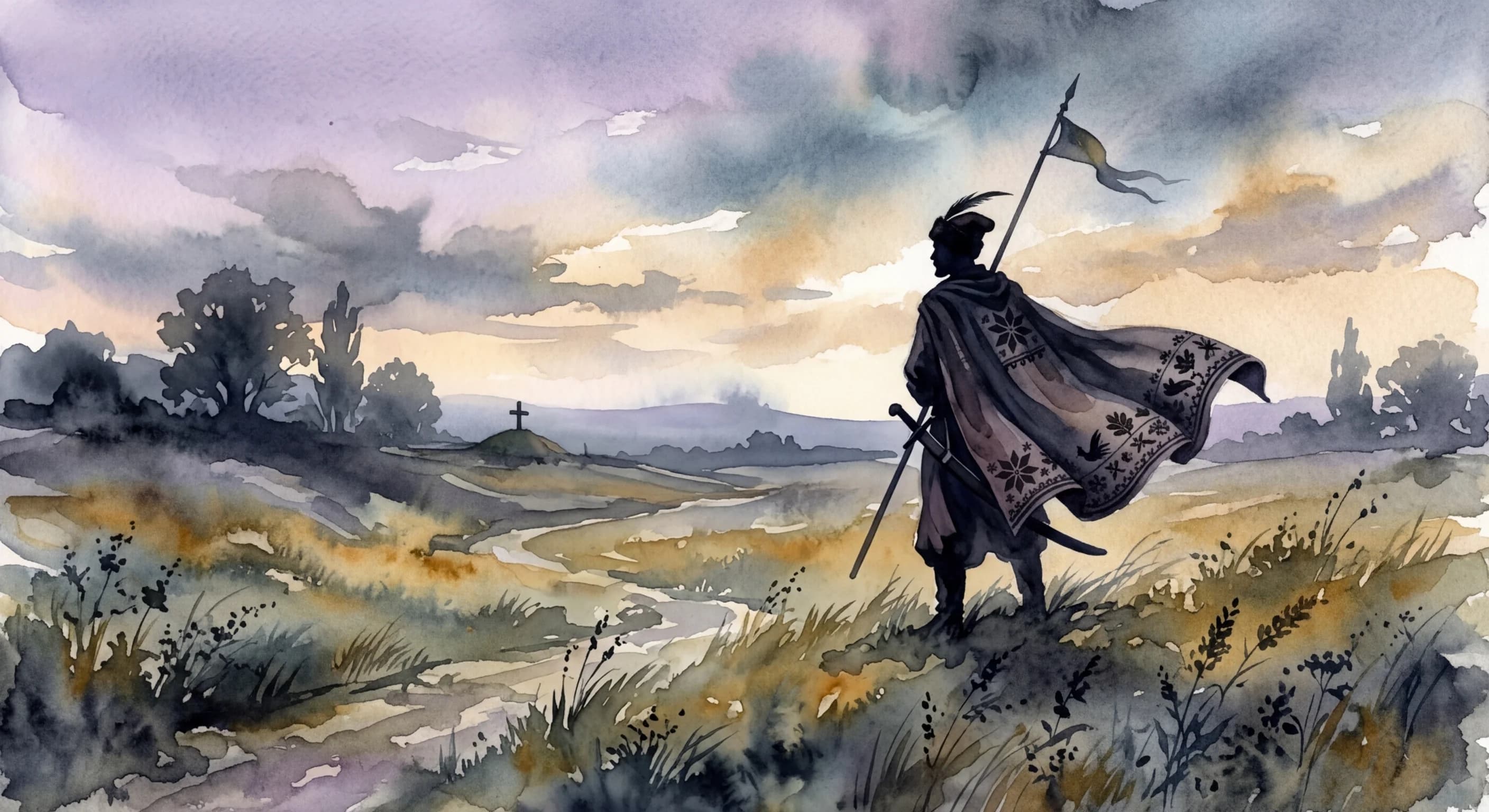
Haydamaky
/HAI-dah-mah-kee/
Meaning
Haydamaky embodies the spirit of 18th-century Cossack rebels in Right-bank Ukraine, a term steeped in both reverence and controversy. These figures were both fierce freedom fighters, resisting foreign domination and social injustice, and, at times, brutal outlaws. The word encapsulates a tumultuous era of popular uprisings, symbolizing a raw, untamed defiance against oppression that resonates deeply within the Ukrainian historical narrative.
Literal Translation
The exact etymology is debated, but it likely derives from Turkic roots related to raiding or plundering.
The Story Behind the Word
The existence of 'Haydamaky' as a cultural touchstone reflects Ukraine's long history of struggle for self-determination and its complex relationship with authority. These rebels emerged from a period of intense social stratification, foreign rule (Polish-Lithuanian Commonwealth, Russian Empire), and religious conflict, where the common people often felt abandoned by official powers. The Haydamaky represented a desperate, often violent, assertion of agency from below. They are celebrated in folklore, songs, and particularly in Taras Shevchenko's epic poem, as symbols of Ukrainian resilience and an unyielding desire for freedom. This dual perception—heroic liberators versus anarchic bandits—reveals a deep cultural understanding that liberation can be messy and that even 'heroes' may employ brutal means in the fight against perceived tyranny, highlighting a pragmatic yet romanticized view of revolutionary struggle.
Experience It
Folklore's Echo
At a family gathering, a grandmother recounts tales of her ancestors, speaking of their 'Haydamaky spirit' in resisting collectivization. It's not about violence, but about their fierce, unyielding independence and refusal to be subjugated, a spirit passed down through generations.
Modern Protest
During a heated political debate, a speaker passionately declares that the people must show a 'Haydamaky resolve' against corrupt officials. He means a defiant, uncompromising stand against injustice, evoking the historical rebels' courage to challenge the powerful, even if it means great risk.
The Deeper Meaning
The word 'Haydamaky' reveals a profound cultural understanding that justice is not always delivered through official channels, and that extreme oppression can justify extreme, even violent, responses. It embodies the tragic paradox of liberation: that freedom fighters, driven by desperation, can sometimes blur the lines between heroism and lawlessness. This reflects a worldview that values fierce independence and resistance to tyranny, even at a high cost, and acknowledges the moral ambiguities inherent in such struggles.
Did You Know?
Taras Shevchenko's epic poem "Haydamaky" (1841) was so influential that it not only cemented the word's cultural significance but also helped shape the modern Ukrainian literary language itself.
How It's Used
The term 'Haydamaky' is used historically to refer to these rebel groups and is also the title of a famous epic poem by Taras Shevchenko, further cementing its cultural significance in Ukraine. It can be invoked to describe a spirit of rebellion or defiance.