Obzhynky
/ob-ZHIN-kee/
Meaning
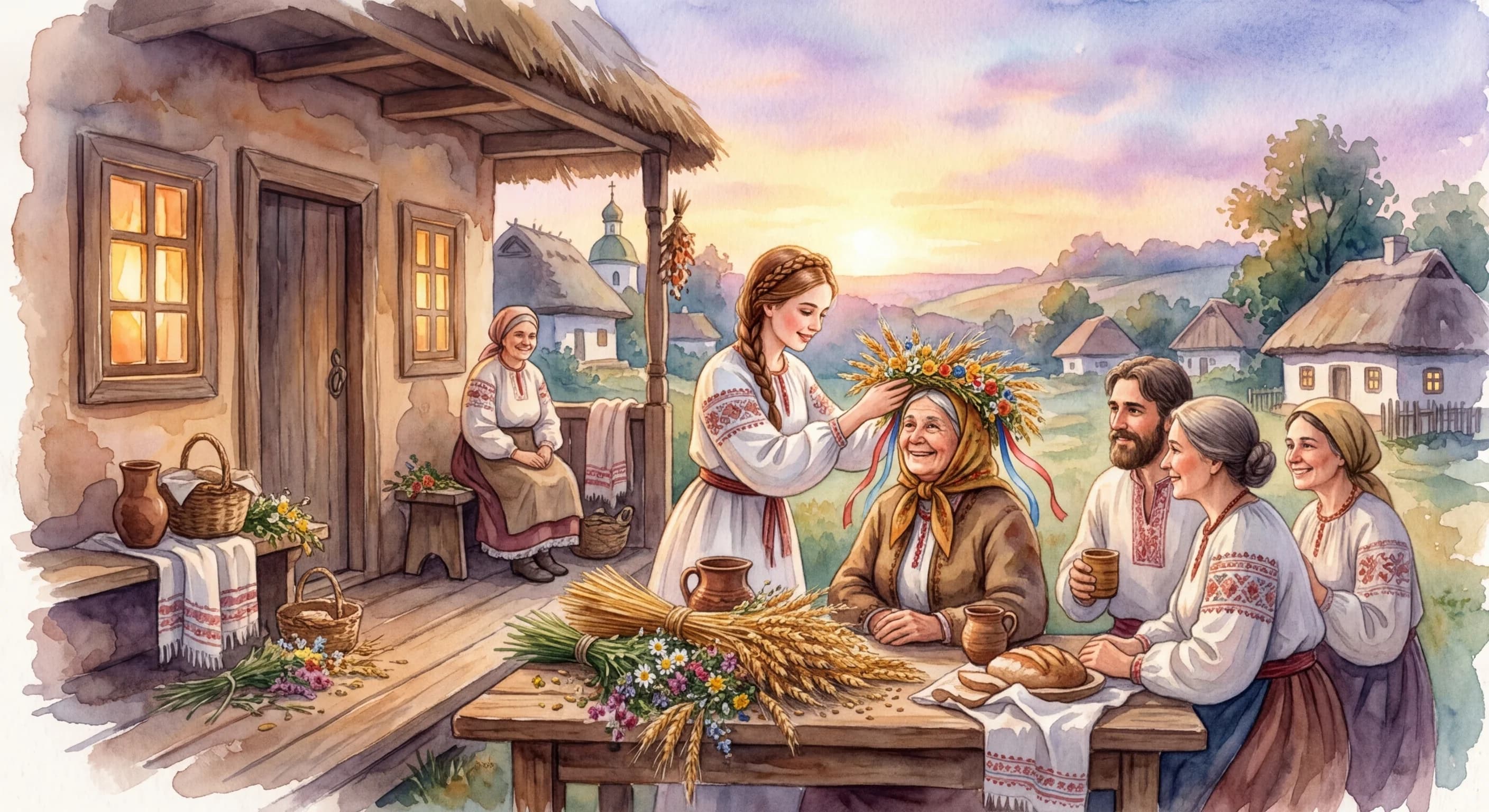
Obzhynky is the vibrant Ukrainian celebration marking the successful conclusion of the grain harvest, a profound expression of gratitude and communal joy. It transcends a mere agricultural task, embodying a spiritual connection to the earth's fertility and the cyclical rhythms of life. The heart of the festival is the creation of an ornate wreath, woven from the very last sheaves of grain and adorned with wildflowers and ribbons, symbolizing abundance, continuity, and the promise of future prosperity. This cherished offering is presented to elders or the household head, cementing bonds of tradition and collective well-being.
Literal Translation
harvest (plural)
The Story Behind the Word
Obzhynky is deeply rooted in Ukraine's agrarian past, reflecting a worldview where survival was intimately tied to the land's generosity. It's more than a festival; it's a ritualistic expression of respect for Mother Earth and the vital labor that sustains life. The tradition of crafting the 'didukh' (a decorative sheaf of wheat) or the harvest wreath speaks to a belief in the spiritual essence of the grain itself, seen as embodying the spirit of the harvest and ensuring future fertility. This celebration reinforces community solidarity, as families and villages historically relied on collective effort for a successful harvest. It reveals a culture that values hard work, recognizes the precariousness of existence, and celebrates resilience through shared feasting, music, and dance, reminding everyone of their interdependence and gratitude for nature's bounty.
Experience It
Village Harvest Feast
The sun dipped, casting golden light over the village square. Laughter and the scent of freshly baked bread filled the air as families gathered for Obzhynky. Young women, their fingers nimble, completed the intricate harvest wreath, its ribbons fluttering in the gentle breeze, ready to be presented to the starost.
Grandmother's Blessing
Little Olya watched, mesmerized, as her grandmother carefully placed the Obzhynky wreath above the hearth. 'This will protect our home and bless next year's fields,' she murmured, her voice soft with generations of tradition. It was a yearly ritual, a quiet moment of hope and continuity within their family.
The Deeper Meaning
Obzhynky reveals a profound philosophical understanding of humanity's place within the natural world. It underscores the cyclical nature of life, death, and rebirth, where the 'end' of one cycle (harvest) directly ensures the 'beginning' of the next. It speaks to a deep appreciation for collaborative effort, the spiritual essence of sustenance, and the intrinsic value of gratitude, humility, and hope in the face of nature's power.
Did You Know?
The Obzhynky wreath, made from the last grain, was often kept in the house until the next spring's planting, believed to ensure the fertility of the new seeds and bless the upcoming harvest.
How It's Used
Obzhynky is celebrated in late summer or early autumn, typically after the grain harvest is complete. It's a communal event involving feasting, traditional music, dancing, and the ceremonial creation and exchange of the harvest wreath.