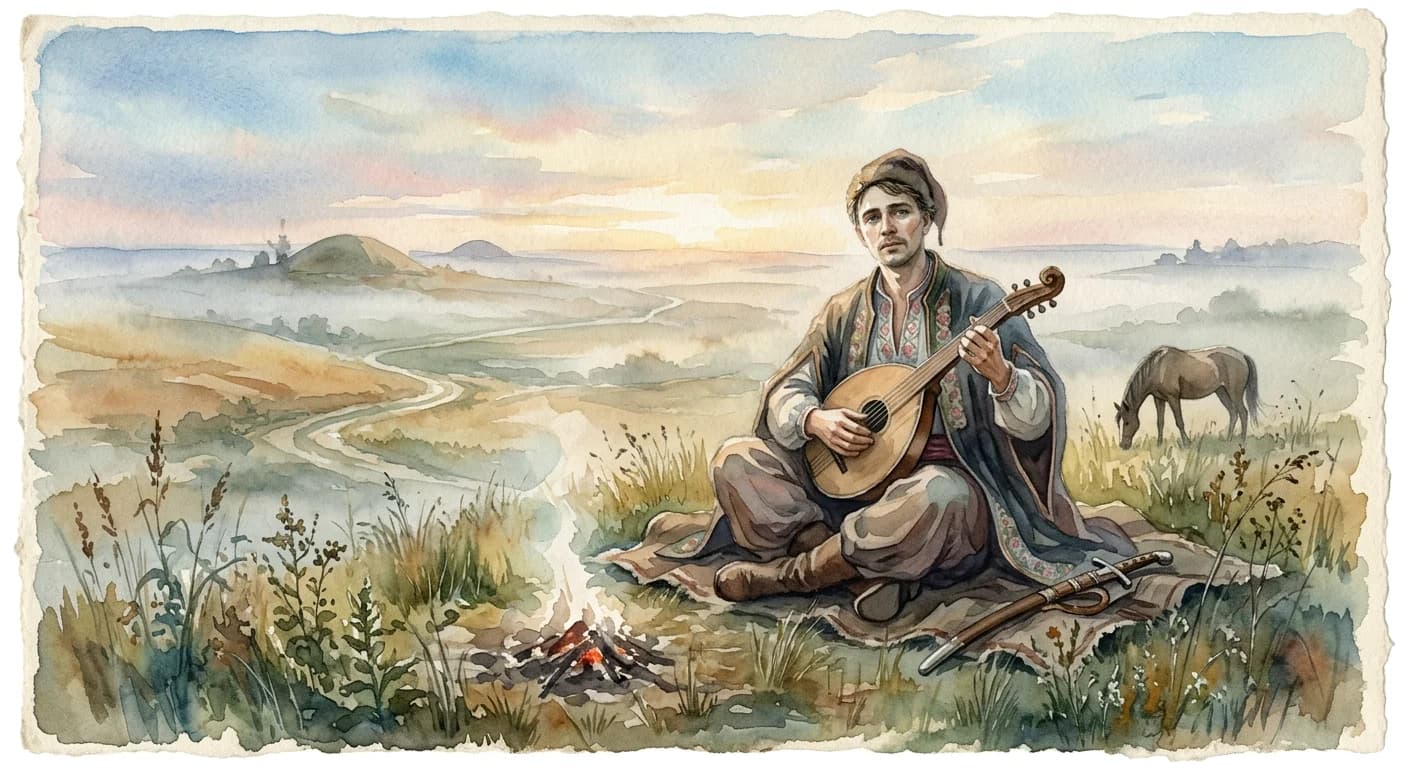
Kozak Mamay
/KO-zak mah-MY/
Meaning
Kozak Mamay is not merely a historical figure but a foundational archetype in Ukrainian culture: a legendary Cossack warrior, kobzar (lute player), and philosopher. He embodies the indomitable spirit of freedom, resilience, and wisdom, often depicted in a meditative pose with his horse, a symbol of loyalty and the Ukrainian steppe. This figure encapsulates the enduring soul of the Ukrainian nation, perpetually guarding its independence and cultural heritage, especially during times of adversity. He is a timeless symbol of national identity, a source of profound pride, and an inspiration for steadfast resistance.
Literal Translation
Cossack Mother
The Story Behind the Word
The Kozak Mamay emerged from the tumultuous history of Ukraine, particularly during the Cossack Hetmanate era (17th-18th centuries), a period marked by constant struggles for independence against various empires. He represents the ideal Cossack: a fierce warrior dedicated to defending his homeland, yet also a wise sage, a storyteller, and a musician who preserves the nation's memory and spirit through song. His image, often painted on household objects, became a ubiquitous folk icon, a silent guardian in Ukrainian homes. The 'Mamay' part of his name, while literally meaning 'mother' in some interpretations, also echoes the Kipchak Turkic 'Mamai,' a historical Golden Horde general, possibly reflecting the complex ethnic tapestry and military encounters of the era, or simply a common given name. His enduring presence reveals a deep cultural value placed on freedom, self-reliance, and the power of art and storytelling to sustain a nation's identity through hardship.
Experience It
Inspiring Resilience
During a particularly bleak period of occupation, an old woman would often look at the faded Kozak Mamay painting in her home. Its serene yet resolute gaze reminded her of the enduring spirit of her people, whispering hope that freedom would eventually return.
Folklore Storytelling
Around the campfire, a grandfather strummed his bandura, recounting tales of Kozak Mamay's legendary wisdom and bravery. The children listened intently, absorbing lessons of courage and the importance of their Ukrainian heritage, passed down through generations.
The Deeper Meaning
Kozak Mamay embodies the Ukrainian philosophical concept of 'volia' (will, freedom) and 'dolia' (fate/destiny), suggesting that while fate may present challenges, the human spirit, guided by wisdom and courage, can always strive for freedom. He represents the enduring power of cultural memory and the idea that true strength lies not just in physical might, but in spiritual resilience and the preservation of one's identity.
Did You Know?
Despite being a legendary figure, some historians believe Kozak Mamay might have been a composite character inspired by real Cossack leaders and the wandering kobzari who preserved oral history and traditions.
How It's Used
Used to refer to the legendary figure, often in folklore, art, and literature. It evokes a sense of national pride and historical continuity.