Jumis
/YOO-mis/
Meaning
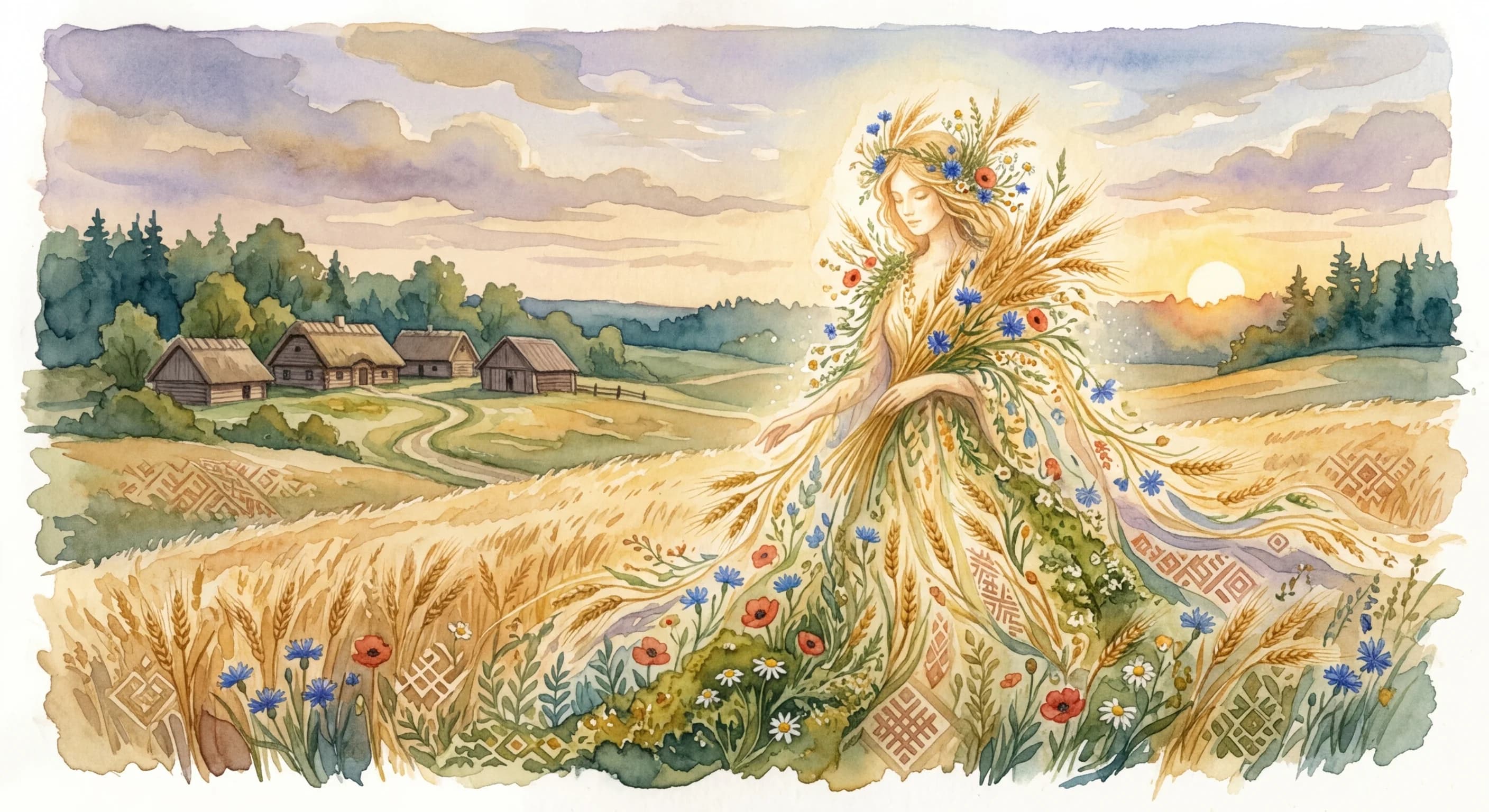
Jumis embodies the very essence of agricultural abundance and the life-giving power of the earth in Latvian tradition. More than just a bountiful harvest, it represents the spirit of fertility, prosperity, and the sacred cyclical renewal of nature. This revered concept is often personified as a protective deity or spirit, invoked through ancient rituals and celebrations to ensure the land's continued generosity and the community's well-being for the coming year.
Literal Translation
Jumis (often referring to the last sheaf of grain or the spirit of harvest)
The Story Behind the Word
The concept of Jumis is deeply rooted in Latvia's historical agrarian society, where survival and prosperity were inextricably linked to the success of the harvest. It reflects a worldview where humanity is not separate from nature but an integral part of its cycles, dependent on its benevolence. The reverence for Jumis reveals a profound respect for the land and the forces that govern life and death, growth and decay. It speaks to a time when spiritual beliefs were intimately woven into daily agricultural practices, providing comfort, meaning, and a sense of control over an often unpredictable world. The continuous invocation of Jumis through generations underscores the enduring value placed on sustainability, gratitude, and the communal bond fostered by shared labor and celebration.
Experience It
Harvest Festival Celebration
As the last sheaves of rye were gathered, old Mārtiņš carefully wove two stalks into a 'Jumis' symbol, placing it proudly on the table. 'May this Jumis bless our homes with plenty and our fields with bounty next year,' he declared, raising a toast to the rich earth.
Discussing Future Prosperity
During a village meeting, the elder spoke of the need for careful planning for the next planting season. 'We must honor Jumis with our diligence and hard work,' she urged, 'so that our children may never know hunger and our granaries always be full.'
The Deeper Meaning
Jumis encapsulates a profound philosophy of interconnectedness and cyclical existence. It highlights humanity's symbiotic relationship with nature, where mindful stewardship and gratitude are essential for sustained prosperity. This concept underscores the belief that abundance is not merely a material outcome but a spiritual blessing, earned through respect for the earth's rhythms and the diligent labor that aligns with them.
Did You Know?
The 'Jumis' symbol, often depicted as two crossed ears of grain, was traditionally placed in barns or homes to attract good fortune and ensure a double harvest.
How It's Used
The term 'Jumis' is primarily used in the context of traditional Latvian harvest festivals and agricultural celebrations. It's invoked when discussing the bounty of the harvest, the spirit of abundance, and the continuation of prosperity. It can refer to the harvest itself, a ritualistic representation of the harvest, or the spirit embodying these concepts.