U.
HomeRegionsLanguagesEmotionsCollections
Find Your Word

“The limits of my language mean the limits of my world.”

— Ludwig Wittgenstein, Philosopher

Untranslatable

A curated collection of the world's most beautiful expressions—words that remind us language is humanity's greatest invention.

  • Home
  • Collections
  • Regions
  • Countries
  • Emotions
  • Tags
  • Contexts
  • Finder
  • Europe
  • Asia
  • Americas
  • Africa
  • Middle East
  • About
  • Contact
  • Privacy Policy
  • Terms of Service

2026 © Untranslatable. All rights reserved.

    /
    /
    1. Home
    2. /
    3. Europe
    4. /
    5. Ugunskrusts
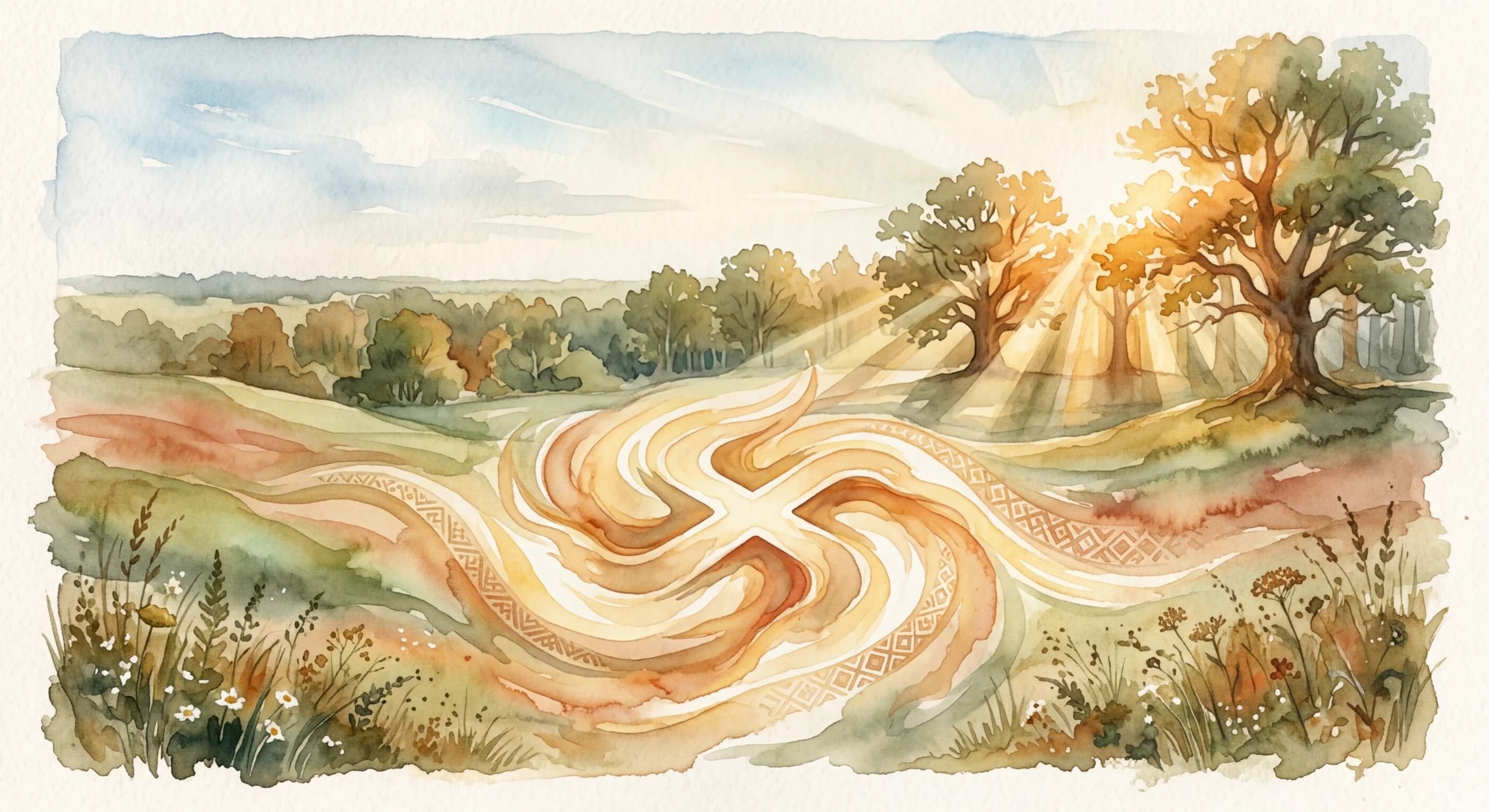
    Artistic representation of ugunskrusts
    Latvian•
    🇱🇻Latvia

    Ugunskrusts

    /OO-goon-skroosts/

    Meaning

    The ugunskrusts, literally 'fire cross,' is an ancient Latvian solar symbol, embodying the sun's life-giving energy and eternal motion. It signifies protection, good fortune, and the cyclical rhythm of existence, deeply woven into the fabric of traditional Latvian life. Far from its modern, hateful appropriation, it represents a profound connection to cosmic forces and a celebration of light and vitality in Latvian heritage.

    Literal Translation

    fire cross

    The Story Behind the Word

    The ugunskrusts is one of the oldest and most revered symbols in Latvian mythology and folk art, predating Christianity by millennia. Its prevalence reflects an animistic worldview where nature's forces, especially the sun, were seen as divine and integral to human well-being. It was not merely decorative but a potent charm, believed to ward off evil, ensure fertility, and bring prosperity. Its ubiquitous presence on clothing, jewelry, and homes underscores a cultural belief in the constant interplay between the spiritual and material worlds, with symbols acting as conduits for benevolent energies. The tragic appropriation by Nazi Germany represents not just a misunderstanding but a profound desecration of a sacred national emblem, creating a deep wound in Latvian cultural identity.

    Experience It

    Weaving Protection

    Elza carefully wove an ugunskrusts pattern into her daughter's mittens, each stitch a prayer for warmth and safety. She remembered her own grandmother teaching her, explaining that the 'fire cross' would guide and protect the wearer through life's journey.

    Harvest Festival

    During Jāņi, the summer solstice, Māris carved a small ugunskrusts into the wooden handle of his scythe. It was a centuries-old tradition, a silent plea to the sun for a bountiful harvest and to bless the fields with its enduring energy.

    The Deeper Meaning

    The ugunskrusts embodies a profound pre-Christian Latvian philosophy centered on the cyclical nature of life, death, and rebirth, and humanity's integral connection to the cosmos. It reveals a worldview where spiritual power is inherent in natural phenomena, and symbols serve as active channels for universal energies, offering protection and promoting harmony within the world.

    Did You Know?

    Archaeological findings show the ugunskrusts appearing on Latvian artifacts dating back over 2,000 years, long before any modern political connotations, highlighting its deep indigenous roots.

    How It's Used

    Historically, the ugunskrusts symbol was widely used in Latvian folk art, embroidery, and carvings as a protective and auspicious emblem. It was frequently incorporated into traditional clothing, jewelry, and household items, particularly during celebrations and important life events.

    Emotions
    belonging,gratitude,peace,warmth
    Contexts
    celebration,family,nature,seasons
    🇱🇻Latvia

    by Sofia Rossi·Written Mar 10, 2026·Updated Mar 27, 2026

    Related Words

    Explore more
    HyggeDanish

    Hygge is more than mere coziness; it's a holistic embrace of comfort, warmth, and belonging that nourishes the soul. It describes the intentional creation of an intimate atmosphere where simple pleasures, genuine connection, and mindful presence converge, fostering a profound sense of contentment and well-being. It's about finding joy and peace in the small, everyday moments, often shared with loved ones.

    SaudadePortuguese

    Saudade encapsulates a profound, melancholic longing for something or someone cherished that is absent, often with the bittersweet knowledge that it may never return. It's a deep emotional state tinged with nostalgia, evoking a sense of loss for past experiences, places, or people, yet also holding a tender appreciation for the beauty of what once was. This yearning is not merely sadness, but a complex tapestry of desire, memory, and a poignant acceptance of absence, holding the beloved in a warm, persistent embrace within the heart.

    GezelligDutch

    Gezellig encapsulates a profound sense of warmth, belonging, and convivial comfort, extending beyond mere coziness to embrace the social and emotional atmosphere. It's the feeling of being truly at ease, surrounded by good company, laughter, and a shared sense of contentment. This untranslatable term describes not just a physical space, but a holistic experience where time seems to slow down, fostering genuine connection and a deep sense of well-being.

    Dolce far nienteItalian

    Dolce far niente captures the profound joy and effortless pleasure derived from simply existing without obligation or purpose. It's the art of savoring moments of pure, unadulterated idleness – lying in the sun, watching the clouds drift, or enjoying a leisurely coffee – not as a break from work, but as a valuable state in itself. This 'sweetness of doing nothing' is a conscious embrace of stillness and contentment, allowing the soul to breathe and the senses to fully engage with the present.