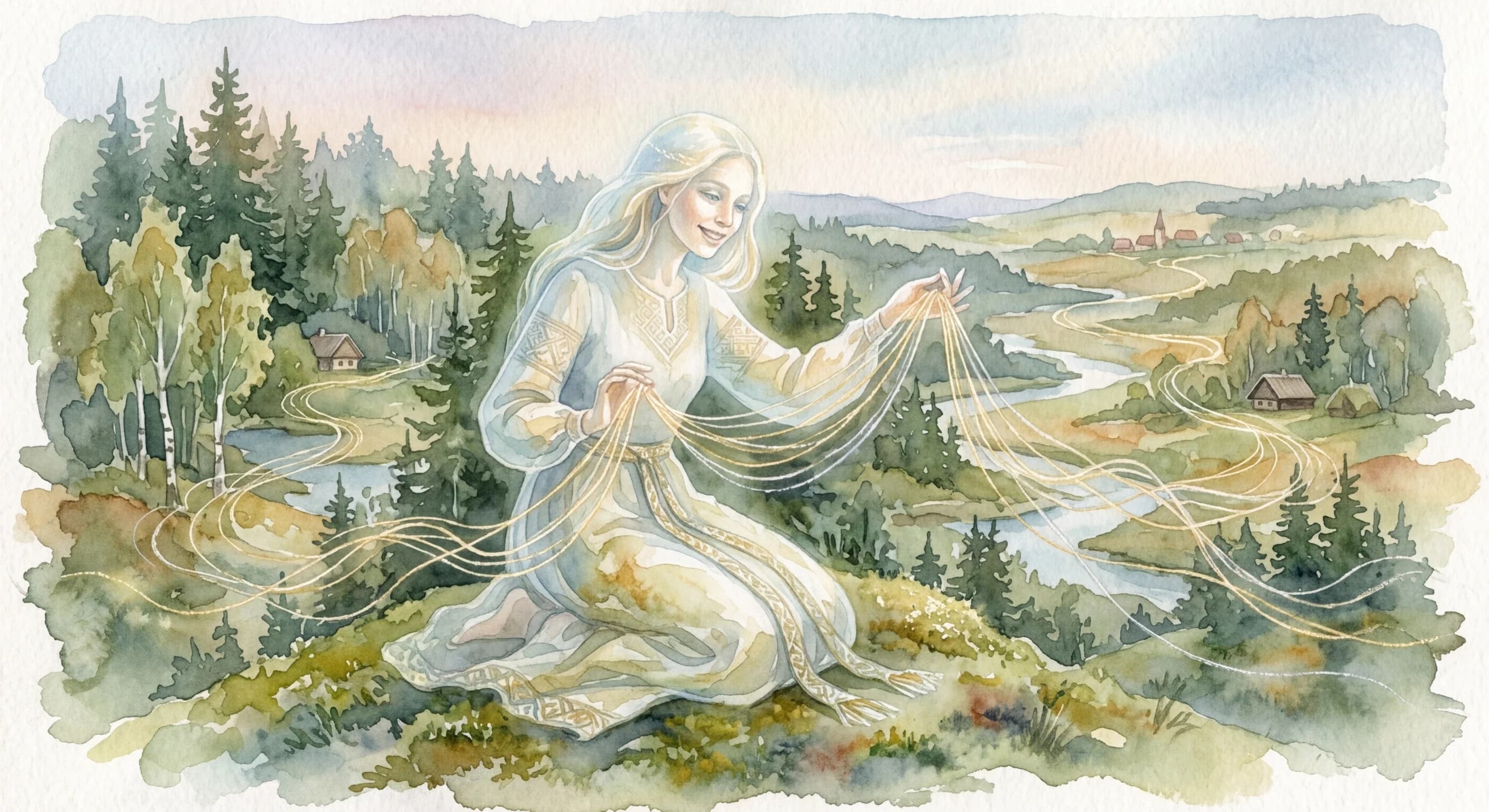
Laima
/LIE-mah/
Meaning
Laima embodies the very essence of fate, destiny, and fortune within Latvian mythology. She is revered as a powerful mother goddess, meticulously weaving the intricate threads of life for each individual from their first breath to their last, thereby shaping their fortune and future. Her pervasive influence spans crucial life events such as childbirth, marriage, and even the bounty of the harvest, establishing her as an indispensable figure in the spiritual fabric of Latvian existence. The concept of Laima encapsulates a profound reverence for the unseen cosmic forces that orchestrate life's journey and underscores the deep interconnectedness of all events.
Literal Translation
Fate, destiny, luck
The Story Behind the Word
Laima's enduring presence in Latvian culture reflects a worldview deeply rooted in animism and a profound connection to nature's cycles. Before Christianization, Laima was one of the most significant deities, representing not a distant, all-powerful ruler, but an ever-present force intricately involved in daily life. Her existence underscores a fatalistic yet resilient outlook, where individual agency operates within the framework of a pre-determined destiny woven by Laima. This belief system fostered a sense of acceptance and humility towards life's unpredictable turns, while also encouraging a respectful relationship with the natural world, as Laima's favor could influence agricultural success and personal well-being. Her continued presence in folklore, songs, and even as a popular girl's name demonstrates the deep-seated cultural memory and reverence for these ancient beliefs, highlighting a spiritual continuity that transcends centuries.
Experience It
A Mother's Prayer
A young mother, cradling her newborn, whispers a silent prayer to Laima. She asks for health, happiness, and a good fate for her child, believing that Laima is already meticulously weaving the tapestry of the baby's life.
Harvest's Bounty
After a bountiful harvest, a farmer offers a small portion of his yield to the earth, a gesture of gratitude to Laima. He knows that her benevolent hand guided the sun and rain, ensuring the prosperity of his fields.
The Deeper Meaning
Laima embodies a philosophical perspective where human life is not solely a product of individual will, but also deeply intertwined with cosmic forces and a pre-ordained destiny. This doesn't necessarily negate free will but suggests that choices are made within a framework woven by a higher power. It fosters a sense of interconnectedness with the universe and encourages an acceptance of life's inherent mysteries and cycles, emphasizing humility and a deep respect for the unseen architects of existence.
Did You Know?
The renowned Latvian chocolate factory, 'Laima,' is named after the goddess, symbolizing good fortune and the sweet things in life.
How It's Used
The word 'Laima' is used both as a proper name and to refer to the goddess of fate in Latvian culture, folklore, and mythology. It appears in traditional songs, proverbs, and stories.