Laulupidu
/LAU-loo-pee-doo/
Meaning
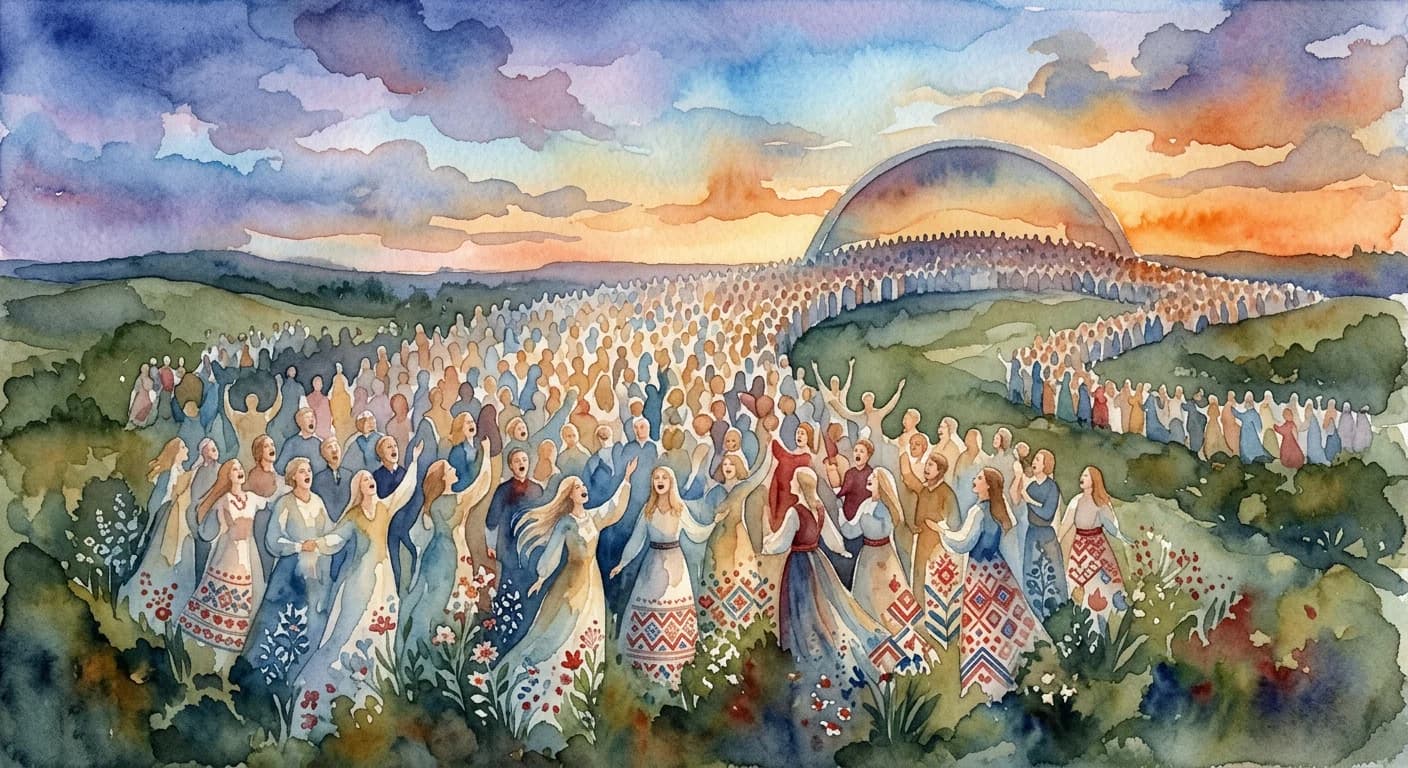
Laulupidu, literally 'song festival', transcends a mere musical gathering; it's the epic, five-yearly Estonian Song Festival, a profound national communion dating back to 1869. Thousands of voices, from children to elders, converge on the Tallinn Song Festival Grounds, their collective harmonies echoing a nation's soul. It is a powerful affirmation of identity, resilience, and cultural continuity, forging an unbreakable bond among Estonians and offering a breathtaking spectacle of shared heritage.
Literal Translation
song festival
The Story Behind the Word
The Laulupidu emerged during the Estonian National Awakening in the 19th century, serving as a pivotal force in solidifying a distinct Estonian identity under foreign rule. It provided a rare, sanctioned platform for collective expression, becoming a 'singing revolution' long before the term was coined. Through song, Estonians maintained their language, history, and spirit, transforming choral music into a symbol of defiance and hope. This tradition reveals a deep-seated belief in the power of collective cultural endeavor to preserve nationhood, viewing shared artistic expression not as entertainment, but as a vital, almost sacred act of self-preservation and unity. It underscores a worldview where culture is the bedrock of national existence.
Experience It
Generations Unite
A grandmother, her daughter, and her teenage granddaughter stand shoulder-to-shoulder in the choir, their voices blending with thousands of others. Tears stream down the grandmother's face as they sing a beloved folk tune, remembering the songs she sang during Soviet times, a silent act of resistance that now rings out freely.
First-Timer's Awe
A young Estonian living abroad returns home for the Laulupidu, never having experienced it live. As the mass choir begins to sing and the sound washes over the crowd, a shiver runs down their spine, a profound sense of belonging and pride swelling within them that they'd only ever heard described.
The Deeper Meaning
The Laulupidu embodies the philosophy that collective cultural expression is not just an aesthetic pursuit, but a fundamental act of nation-building and survival. It posits that identity, especially for smaller nations, can be forged and sustained through shared artistic experience, offering a powerful antidote to assimilation and oppression. It champions the idea that harmony, both musical and social, is achieved through unity in diversity, where individual voices contribute to a magnificent, overarching whole.
Did You Know?
The Tallinn Song Festival Grounds and the tradition of the Laulupidu are recognized by UNESCO as Masterpieces of the Oral and Intangible Heritage of Humanity, highlighting its global cultural significance.
How It's Used
Used to refer to the Estonian Song Festival and similar large-scale choral events.