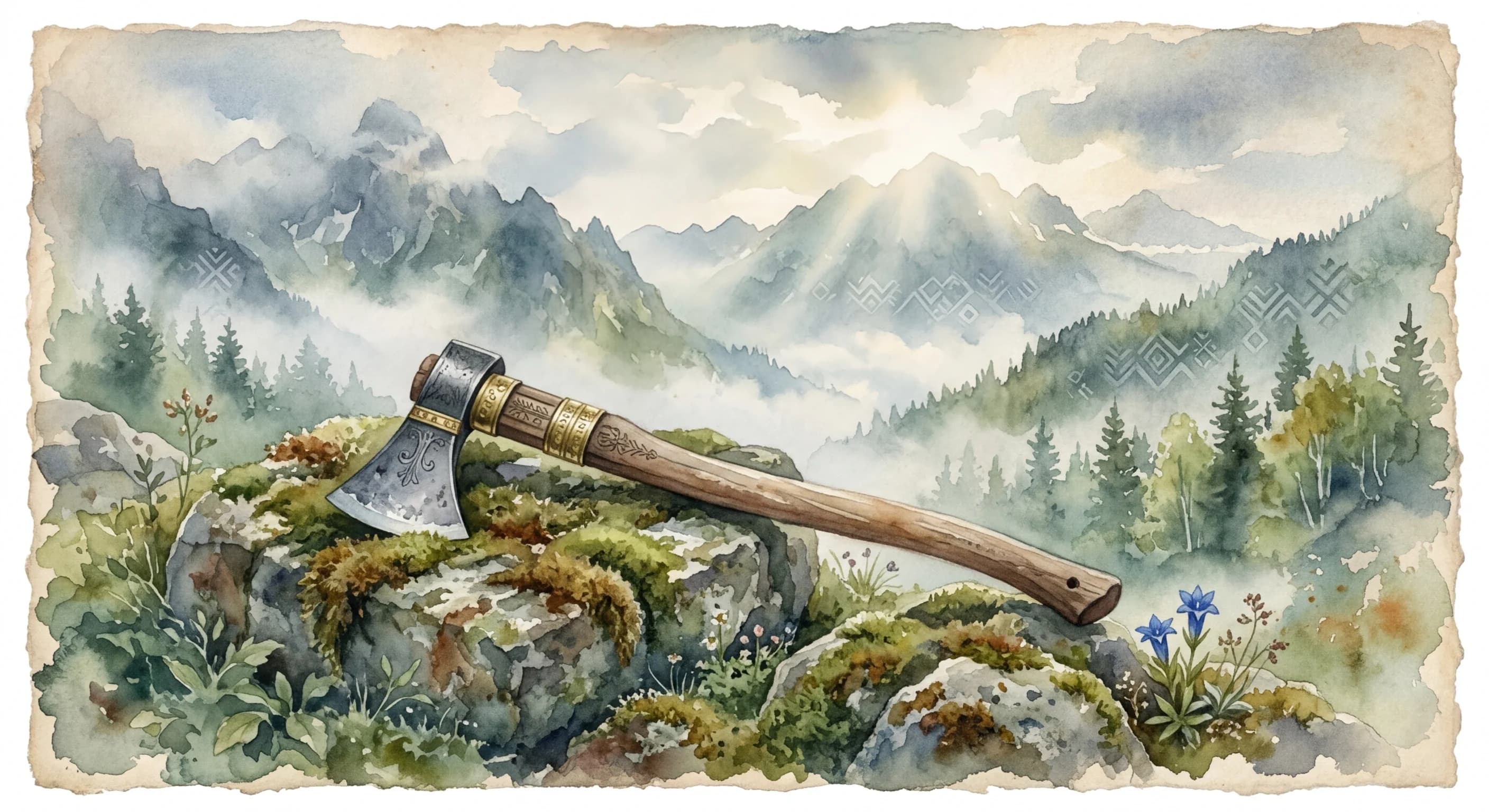
Valaška
/VAH-lahsh-kah/
Meaning
The Valaska is far more than a simple tool; it is a quintessential symbol of Slovak and Czech mountain culture, a shepherd's axe or hatchet imbued with deep historical and cultural resonance. Its elegant yet formidable design speaks to a life lived in rugged independence, embodying resilience, resourcefulness, and an unbreakable connection to the ancient pastoral traditions of the Carpathian mountains. This iconic implement is intimately woven into the fabric of national identity, often evoking the spirit of legendary figures like the outlaw Juraj Jánošík, making it a powerful emblem of heritage and defiance.
Literal Translation
Shepherd's axe/hatchet
The Story Behind the Word
The valaška's existence is deeply rooted in the historical reality of shepherd life in the Carpathian region. For centuries, shepherds were isolated, self-reliant figures who needed a versatile tool for protection against wolves, cutting firewood, clearing paths, and even as a walking stick. Its dual function as a practical implement and a weapon cemented its place in folklore, particularly through figures like Juraj Jánošík, the 'Slovak Robin Hood,' who famously wielded a valaška. This association transformed it from a mere utensil into a potent symbol of resistance against oppression, freedom, and the indomitable spirit of the common people. It represents a connection to a simpler, wilder past, a time when survival depended on strength, wit, and a trusty axe. The valaška thus embodies the Slovak and Czech appreciation for self-sufficiency, a respect for nature, and a quiet pride in their mountainous heritage.
Experience It
Folklore Festival Dance
At the annual folklore festival, dancers in traditional attire leap and twirl, each proudly holding a valaška. Their movements, mirroring ancient shepherd dances, tell stories of mountain life, their axes glinting as they symbolically fend off danger and celebrate their heritage.
Grandfather's Tale
Sitting by the fire, old Jozef recounts tales of his youth as a shepherd, gesturing with the worn valaška propped against the hearth. He describes how it was his constant companion, a testament to the hard but free life high in the Tatra mountains, connecting generations through its silent presence.
The Deeper Meaning
The valaška embodies a philosophy of self-reliance and harmonious coexistence with nature. It speaks to a worldview where individuals are capable of facing challenges head-on, drawing strength from both their own ingenuity and the land itself. It champions the spirit of the 'free man of the mountains' – resilient, resourceful, and deeply connected to their roots, valuing freedom above all else.
Did You Know?
Beyond its practical use, the valaška's handle was often hollowed out to secretly carry spirits or other small items, making it a true multi-purpose companion for isolated mountain dwellers.
How It's Used
The term 'Valaška' is used to refer to the actual tool itself, and also metaphorically in discussions of Slovak and Czech heritage, folklore, and national identity.