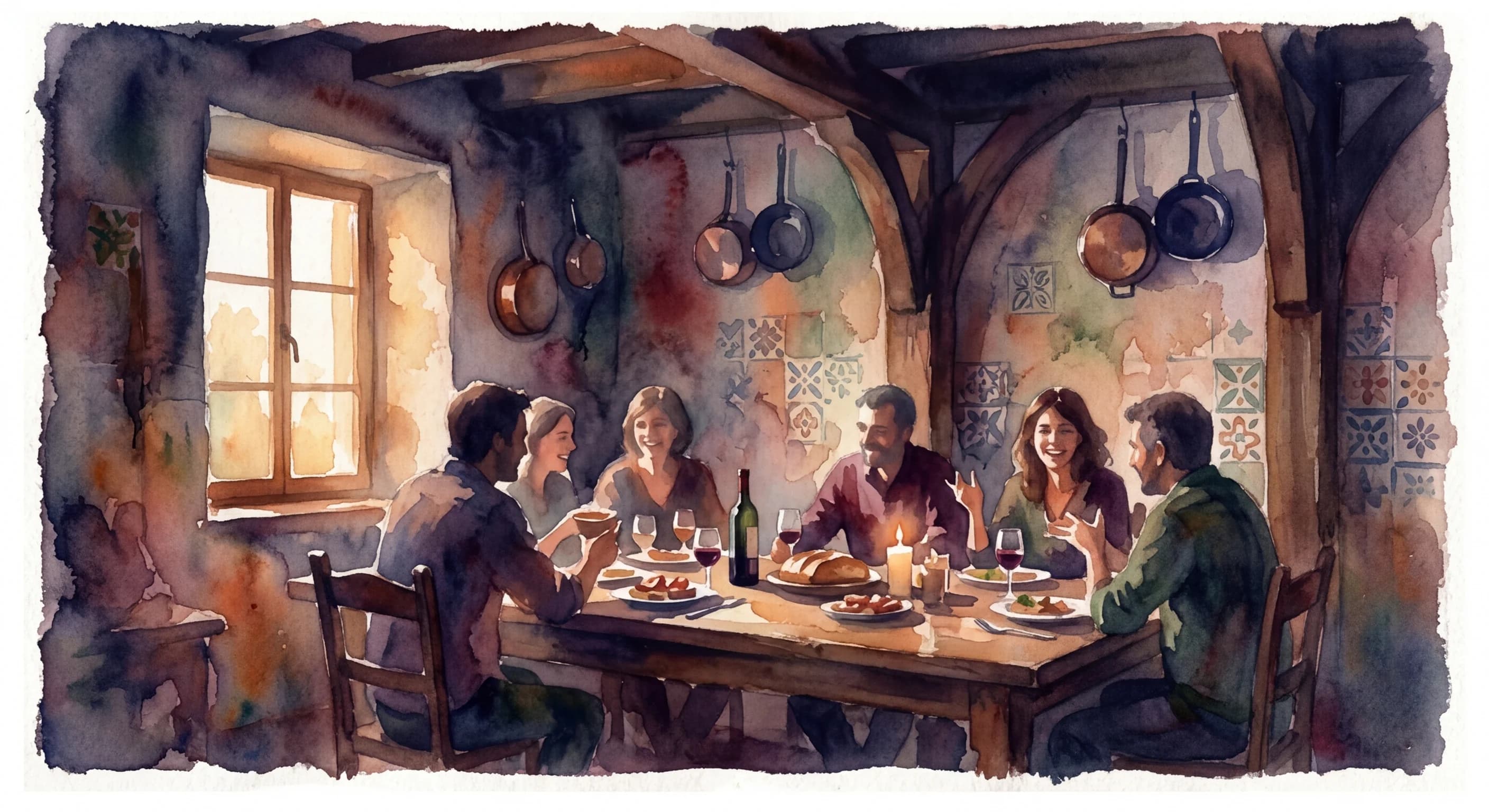
Txoko
/CHO-ko/
Meaning
A txoko is a cherished Basque gastronomic society, a private culinary sanctuary where members, traditionally men, gather to collaboratively cook, feast, and forge unbreakable bonds of friendship. Far more than a mere club, it is a vibrant crucible of shared passion for food and camaraderie, where the ritual of preparing and enjoying meals together elevates dining into a profound social experience. Within its walls, recipes are perfected, stories are exchanged, and the very essence of Basque conviviality flourishes amidst laughter and the aromas of traditional cuisine. It embodies a unique blend of culinary artistry, community spirit, and a deep-seated appreciation for life's simple, yet profound, pleasures.
Literal Translation
Hut or corner
The Story Behind the Word
The txoko emerged in the late 19th and early 20th centuries, rooted in a Basque society where public taverns were often seen as unsuitable for family men. These societies offered a private, respectable space for men to socialize, cook, and consume alcohol away from home. Beyond mere recreation, txokos became vital hubs for preserving Basque culture during periods of political repression, where the language and traditions could be freely expressed. They reflect the Basque people's profound connection to their culinary heritage, their strong communal values, and a practical ingenuity in creating self-sustaining social structures. The existence of txokos reveals a culture that values shared experiences, self-sufficiency in pleasure, and the strengthening of community ties through gastronomic ritual.
Experience It
Friday Night Feast
As dusk falls, the aroma of simmering marmitako wafts from the txoko. Xabier and his friends, aprons donned, banter loudly as they chop vegetables, each contributing to the communal meal. Later, around the long wooden table, laughter echoes, glasses clink, and the bonds of friendship deepen with every shared dish and story.
Generational Recipe Handover
A young Aitor watches intently as his uncle, Mikel, meticulously prepares bacalao al pil-pil in the txoko's kitchen. It's a family recipe, passed down through generations. Mikel recounts tales of his own father learning the dish, ensuring that the culinary heritage, along with the spirit of the txoko, lives on.
The Deeper Meaning
The txoko embodies a philosophy of communal self-reliance and the profound power of shared experience. It suggests that true joy and connection are found not in passive consumption, but in active participation – in the collective effort of creation, sustenance, and celebration. It reveals a worldview where gastronomy is not just about food, but a foundational pillar of social cohesion and cultural identity, fostering a sense of belonging and continuity.
Did You Know?
Many txokos operate on a strict honor system; members take what they need from the pantry and bar, meticulously recording their consumption to be billed later, trusting implicitly in each other's honesty.
How It's Used
Used to refer to a specific type of private gastronomic club or society, common in the Basque region of Spain.