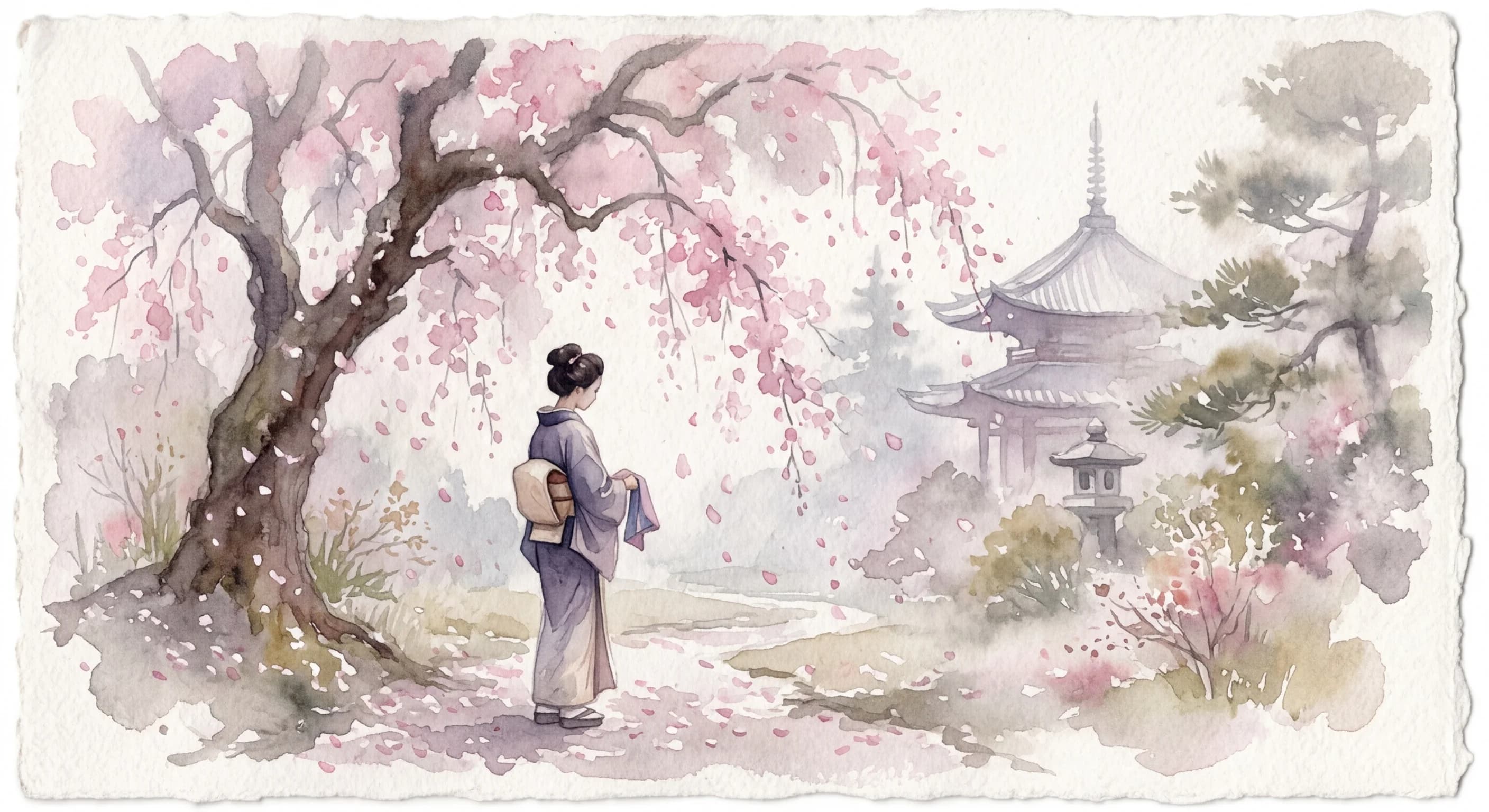
Mono no aware
/MOH-noh noh ah-WAH-reh/
Meaning
Mono no aware encapsulates the gentle, poignant sadness that arises from an acute awareness of life's fleeting beauty and inherent impermanence. It's not despair, but a bittersweet appreciation for the transient nature of all things – the delicate cherry blossoms, a fleeting season, or even the brief blossoming of human connection. This profound sensitivity to the ephemeral deepens one's connection to the present moment, allowing for a more profound experience of joy and sorrow intertwined, recognizing that beauty often carries the shadow of its inevitable passing.
Literal Translation
the pathos of things
The Story Behind the Word
The concept of mono no aware has roots in classical Japanese literature, particularly the Heian period (794-1185), and was famously theorized by the 18th-century literary scholar Motoori Norinaga. It emerged from a cultural landscape deeply attuned to the cycles of nature, influenced by Buddhist impermanence (mujō) and Shinto reverence for the natural world. This aesthetic sensibility is woven into the fabric of Japanese art, poetry (like haiku), garden design, and even daily rituals, reflecting a worldview where harmony is found not in conquering change, but in embracing its inevitability. It highlights a cultural preference for subtle emotion, indirect expression, and a deep, empathetic connection to the world's natural rhythms, revealing a society that values the delicate balance between joy and melancholy in the face of time's relentless flow.
Experience It
Cherry Blossom Viewing
A group gathers under the full bloom of sakura trees, admiring their delicate pink petals. As a gentle breeze scatters some petals to the ground, a quiet sigh passes through the crowd, a shared understanding of the fleeting beauty that will soon be gone, yet is cherished all the more for its brevity.
Old Childhood Photo
An elderly woman looks at a faded photograph from her youth, seeing her vibrant, younger self surrounded by friends who are now long gone. A soft smile plays on her lips, tinged with a gentle ache for the past, yet grateful for the beautiful memories that remain, even as time has marched on.
The Deeper Meaning
Mono no aware embodies a profound acceptance of impermanence, not as a cause for despair, but as a catalyst for deeper appreciation and empathy. It suggests that true beauty often lies in its transience, urging one to live fully in the present and cherish each moment, knowing it will pass. This worldview fosters a gentle melancholia that enriches life's experiences, revealing a wisdom that finds beauty in the cycle of growth, decay, and renewal.
Did You Know?
Motoori Norinaga, the scholar who popularized "mono no aware," believed that truly appreciating it was key to understanding the essence of Japanese literature and the human heart.
How It's Used
This phrase is often used to describe the feeling evoked by observing the fleeting beauty of nature, the poignant moments in literature or art, or the inevitable passage of time and relationships.