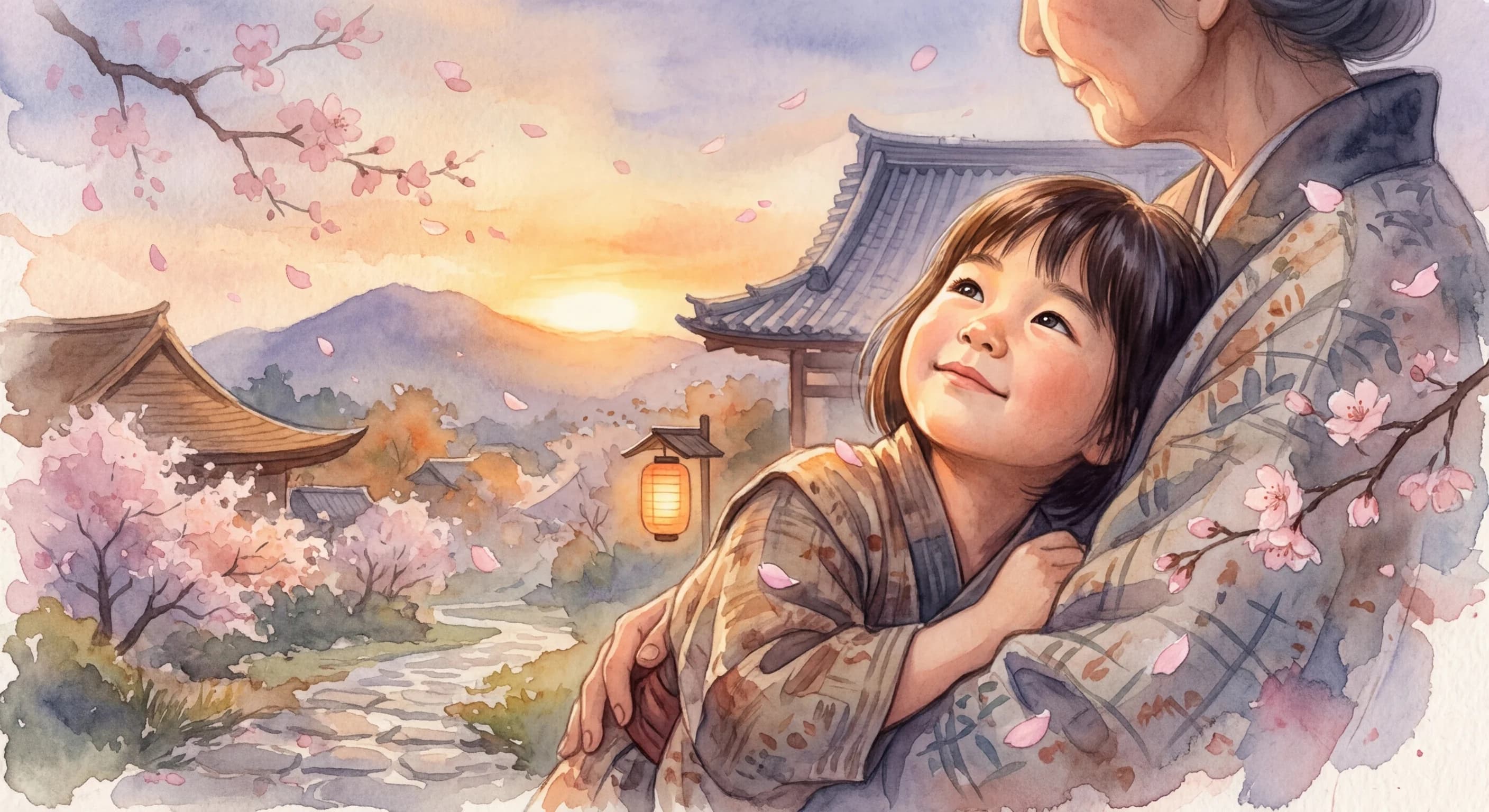
Amae
/AH-mah-eh/
Meaning
Amae encapsulates the sweet, almost childlike expectation of being loved and indulged by another, particularly someone in a superior or nurturing position. It's the delightful feeling of being able to comfortably lean on someone, knowing they will accept your vulnerability and care for your needs without question. This deep-seated reliance fosters a profound sense of security and belonging, illustrating a unique form of interpersonal dependence that strengthens bonds rather than weakening them, allowing for a comfortable surrender to another's benevolence.
Literal Translation
There isn't a direct literal translation of 'amae' as a single word in English, but it's related to the verb 'amaeru' (甘える), which can mean 'to spoil' or 'to be spoiled'.
The Story Behind the Word
The concept of amae is deeply rooted in Japanese society, often traced back to the psychoanalyst Takeo Doi. It reflects a cultural emphasis on interdependence (tate shakai - vertical society) over rugged individualism. Unlike Western ideals that often champion self-reliance from an early age, amae suggests that a healthy individual recognizes and embraces their need for connection and the comfort of being cared for. This word exists because Japanese culture historically values harmony, group cohesion, and the intricate web of reciprocal obligations and emotional support. It reveals a worldview where human relationships are central, and vulnerability, when expressed within trusted bounds, is seen as a way to deepen connection, not a sign of weakness. It underpins everything from family dynamics to corporate relationships, shaping expectations of care and loyalty.
Experience It
Child's Sweet Plea
A young child, after a long day at school, runs to their mother and buries their face in her side, softly asking for a treat. This isn't a demand, but a gentle expectation of indulgence, relying on their mother's unconditional love and willingness to 'spoil' them a little.
Subordinate's Gentle Request
A junior employee, facing a tight deadline, approaches their senior colleague with a slightly hesitant, almost apologetic demeanor, subtly hinting at their struggle and hoping for guidance or a helping hand. They are 'amaeru-ing,' trusting in their senior's benevolence and understanding.
The Deeper Meaning
Amae offers a profound counter-narrative to Western individualistic philosophies. It suggests that true strength and well-being might not lie in absolute independence, but in the secure knowledge that one can be vulnerable and dependent within a supportive social structure. It highlights a worldview where the self is intrinsically linked to others, and emotional reliance is not a deficit but a fundamental aspect of human connection and communal harmony.
Did You Know?
While often associated with childhood, amae can manifest in adult romantic relationships, where partners might 'amaeru' on each other for emotional support or small indulgences, fostering intimacy and trust.
How It's Used
Amae is used to describe the psychological state of expecting others to indulge one's desires, and the social dynamic of allowing oneself to be dependent on another's benevolence. It's often observed in parent-child relationships but extends to other social bonds, influencing social interactions and expectations.