U.
HomeRegionsLanguagesEmotionsCollections
Find Your Word

“The limits of my language mean the limits of my world.”

— Ludwig Wittgenstein, Philosopher

Untranslatable

A curated collection of the world's most beautiful expressions—words that remind us language is humanity's greatest invention.

  • Home
  • Collections
  • Regions
  • Countries
  • Emotions
  • Tags
  • Contexts
  • Finder
  • Europe
  • Asia
  • Americas
  • Africa
  • Middle East
  • About
  • Contact
  • Privacy Policy
  • Terms of Service

2026 © Untranslatable. All rights reserved.

    /
    /
    1. Home
    2. /
    3. Asia
    4. /
    5. Kintsugi
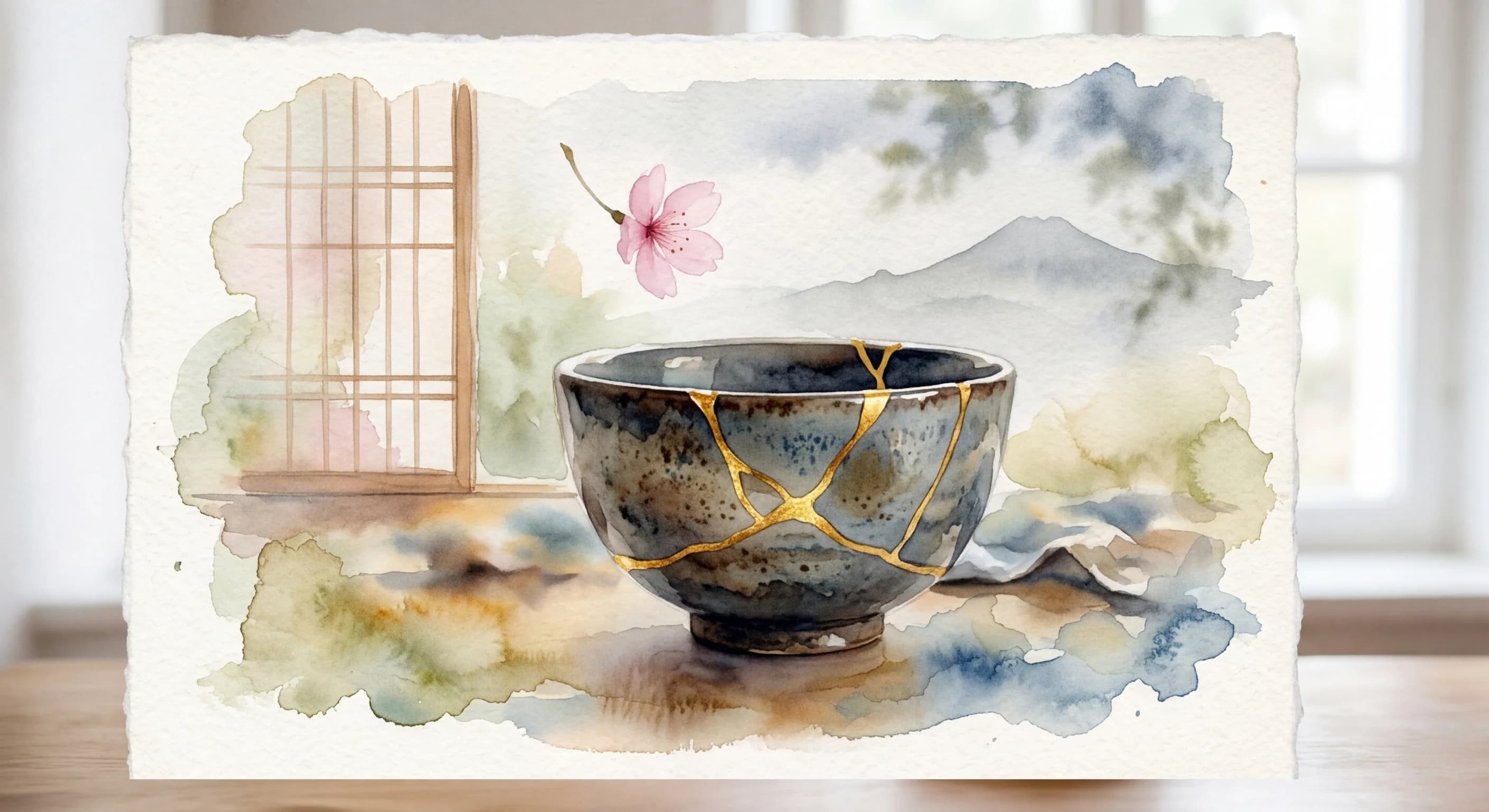
    Artistic representation of Kintsugi
    Japanese•
    🇯🇵Japan

    Kintsugi

    /KEEN-tsoo-gee/

    Meaning

    Kintsugi, literally 'golden joinery,' is the exquisite Japanese art of meticulously repairing broken pottery. Instead of concealing the damage, it highlights the fractures with lacquer dusted or mixed with precious metals like gold, silver, or platinum. This transforms the object, celebrating its history of breakage and repair as an integral, beautiful part of its journey. It elevates imperfection into a unique mark of resilience, making the mended piece even more precious and storied than its original, pristine form.

    Literal Translation

    golden joinery

    The Story Behind the Word

    Kintsugi emerged from the Japanese aesthetic and philosophical principles of Wabi-sabi, which finds beauty in imperfection, impermanence, and incompleteness, and mushin, the acceptance of change. Legend suggests its origins trace back to the 15th century when Shogun Ashikaga Yoshimasa sent a damaged tea bowl back to China for repair and was displeased with the unsightly metal staples used. This dissatisfaction spurred Japanese craftsmen to develop a more artistic, respectful method. Kintsugi thus reflects a profound cultural emphasis on valuing an object's life cycle, embracing its flaws, and seeing wisdom and beauty in the marks of time and experience rather than discarding what is broken. It underscores a worldview where scars tell a story of survival and transformation.

    Experience It

    Mended Teacup, Cherished Memories

    A grandmother accidentally drops her cherished porcelain teacup, a gift from her late husband. Instead of discarding it, she decides to have it repaired using kintsugi. The golden lines tracing its cracks now tell a story of its history and her enduring love, making it even more special during her morning tea.

    Life's Scars, New Strength

    After a difficult period of personal struggle, Maria reflects on her journey. She realizes that like kintsugi, her experiences, though painful, have mended her in new ways, leaving 'golden' lines of resilience and wisdom. She now views her past not as brokenness to hide, but as a unique pattern that makes her stronger and more profound.

    The Deeper Meaning

    Kintsugi embodies a profound philosophy of embracing the transient and imperfect nature of existence. It teaches that damage is not the end, but an opportunity for transformation and enhanced beauty. By highlighting rather than hiding flaws, it encourages a mindset of acceptance, resilience, and finding value and unique character in what has been broken, suggesting that true beauty often lies in our lived experiences and the marks they leave.

    Did You Know?

    Kintsugi repairs were once so popular that some collectors were accused of deliberately smashing valuable pottery just to have it repaired with the golden seams, increasing its aesthetic and monetary value!

    How It's Used

    Kintsugi is primarily used to refer to the specific art form of repairing ceramics, but it is also often used metaphorically to describe a philosophy of embracing imperfections and finding beauty in scars or flaws in life.

    Emotions
    acceptance,gratitude,resilience,wonder
    Contexts
    art,philosophy,work
    🇯🇵Japan

    by Annelise Dubois·Written Mar 10, 2026·Updated Apr 3, 2026

    Related Words

    Explore more
    Wabi-sabiJapanese

    Wabi-sabi is the profound appreciation for the ephemeral, the imperfect, and the incomplete aspects of existence. It is about discovering beauty in the subtle textures of age, the unique character of flaws, and the gentle decay that marks the passage of time. This philosophy encourages a quiet acceptance of impermanence and a mindful connection to the natural world, finding elegance in simplicity and authenticity.

    IkigaiJapanese

    Ikigai is more than just a reason to get out of bed; it's a deeply personal and evolving sense of purpose that brings genuine fulfillment and joy to one's life. It represents the sweet spot where your passions, talents, needs of the world, and what you can be paid for beautifully converge. Discovering your ikigai often leads to a life lived with intentionality, resilience, and a profound connection to one's contributions. It's the intrinsic motivation that fuels a meaningful existence, regardless of external circumstances.

    NunchiKorean

    Nunchi is the sophisticated, almost telepathic, ability to instantly grasp the unspoken dynamics of any social situation, anticipating others' thoughts and feelings, and then responding with impeccable grace and timing. It's an acute form of social intuition, allowing one to navigate complex interpersonal landscapes by reading subtle cues like body language, tone, and context. Possessing good nunchi means effortlessly understanding the underlying emotional currents and adjusting one's behavior to maintain harmony and effectiveness, often without a single word exchanged.

    JugaadHindi

    Jugaad is more than just a quick fix; it embodies the spirit of resourceful, ingenious improvisation in the face of scarcity or systemic challenges. It's the art of bending rules, repurposing materials, and thinking outside the box to achieve a desired outcome, often with limited financial or technological resources. This approach celebrates clever workarounds and innovative adaptations, turning constraints into catalysts for creative problem-solving. It's about making do and making something work, brilliantly.

    Featured in 2 collections

    🎌Japanese Philosophy🎨Creative Soul