U.
HomeRegionsLanguagesEmotionsCollections
Find Your Word

“The limits of my language mean the limits of my world.”

— Ludwig Wittgenstein, Philosopher

Untranslatable

A curated collection of the world's most beautiful expressions—words that remind us language is humanity's greatest invention.

  • Home
  • Collections
  • Regions
  • Countries
  • Emotions
  • Tags
  • Contexts
  • Finder
  • Europe
  • Asia
  • Americas
  • Africa
  • Middle East
  • About
  • Contact
  • Privacy Policy
  • Terms of Service

2026 © Untranslatable. All rights reserved.

    /
    /
    1. Home
    2. /
    3. Asia
    4. /
    5. Omoiyari
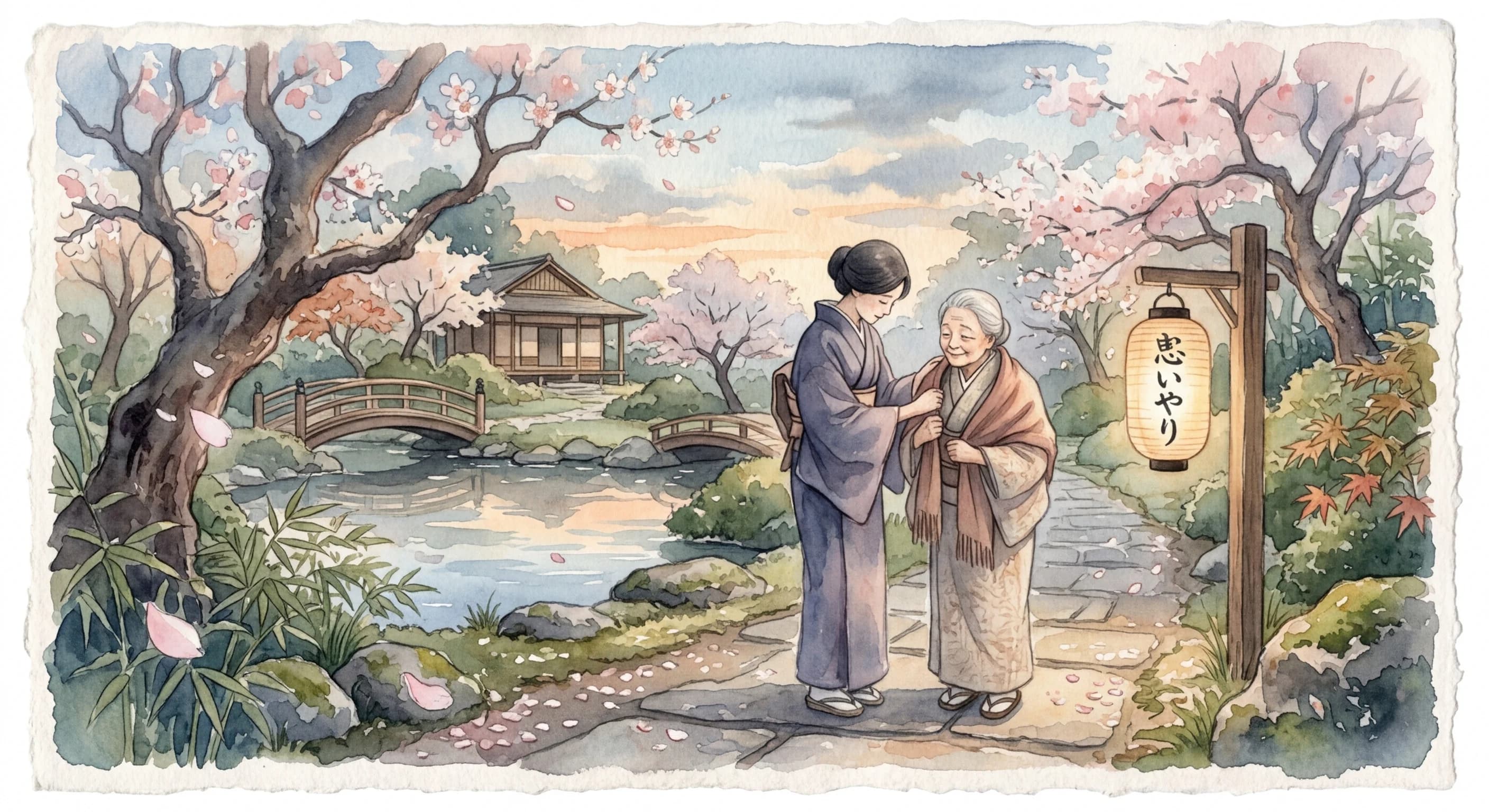
    Artistic representation of Omoiyari
    Japanese•
    🇯🇵Japan

    Omoiyari

    /oh-moh-ee-yah-ree/

    Meaning

    Omoiyari is the profound Japanese art of empathetic foresight, a practice of intuitively anticipating another's needs and feelings, often before they are even aware of them themselves. It goes beyond simple kindness, manifesting as a proactive, selfless consideration that seeks to alleviate potential discomfort or enhance well-being without being asked. This deeply ingrained social virtue cultivates harmony and mutual respect, acting as an invisible thread that strengthens bonds within families, communities, and professional relationships by prioritizing the collective good.

    Literal Translation

    To be considerate / To care for

    The Story Behind the Word

    Omoiyari is deeply rooted in Japan's collectivist culture and its emphasis on group harmony (wa). Historically, in a society where direct communication could be seen as confrontational or impolite, the ability to read the atmosphere (kūki wo yomu) and act with unspoken consideration became paramount. It's influenced by Buddhist principles of compassion and interconnectedness, and Shinto values of purity and respect. The word reveals a worldview where individual actions are constantly considered in relation to their impact on others, fostering a sense of shared responsibility for collective well-being and a nuanced understanding of non-verbal cues. This proactive empathy is essential for maintaining social order and deep human connections.

    Experience It

    The Silent Tea Ceremony

    During a quiet tea ceremony, a guest shifts slightly, subtly trying to get comfortable. The host, without a word, almost imperceptibly adjusts a cushion or offers a small shawl, anticipating the guest's unspoken need for greater ease and comfort, demonstrating omoiyari not through words but through attentive action.

    Morning Commute Kindness

    On a crowded train, an elderly person struggles to balance. A younger commuter, noticing their difficulty, discreetly moves their bag from an empty seat, creating space for them to sit, even before any request is made. This thoughtful, unprompted act of consideration is a perfect example of omoiyari.

    The Deeper Meaning

    Omoiyari embodies a philosophy of relational being, where individual identity is deeply intertwined with one's role within a community. It suggests that true compassion lies not just in reacting to expressed needs, but in proactively sensing and addressing unarticulated ones, fostering a profound sense of interconnectedness. This worldview prioritizes harmony and the collective emotional landscape over individual assertion, leading to a subtle yet powerful form of social cohesion.

    Did You Know?

    Omoiyari is often taught in Japanese schools as a fundamental social skill, encouraging children from a young age to consider others' feelings and anticipate their needs, fostering a culture of collective empathy.

    How It's Used

    Used to describe a thoughtful or considerate action, or the general quality of being considerate towards others, especially in anticipating their unspoken needs.

    Emotions
    belonging,compassion,gratitude,warmth
    Contexts
    family,friendship,social interaction,work
    🇯🇵Japan

    by Annelise Dubois·Written Mar 10, 2026·Updated Apr 3, 2026

    Related Words

    Explore more
    GezelligDutch

    Gezellig encapsulates a profound sense of warmth, belonging, and convivial comfort, extending beyond mere coziness to embrace the social and emotional atmosphere. It's the feeling of being truly at ease, surrounded by good company, laughter, and a shared sense of contentment. This untranslatable term describes not just a physical space, but a holistic experience where time seems to slow down, fostering genuine connection and a deep sense of well-being.

    SobremesaSpanish

    Sobremesa is the cherished, often extended period immediately following a meal, particularly lunch or dinner, where diners remain seated at the table to enjoy conversation, coffee, and digest not just the food, but the company itself. It’s a dedicated time for unhurried social bonding, storytelling, and shared laughter, transforming a simple meal into a profound communal experience. Far from just clearing the dishes, sobremesa is an integral part of Spanish social life, often lasting for hours.

    Wabi-sabiJapanese

    Wabi-sabi is the profound appreciation for the ephemeral, the imperfect, and the incomplete aspects of existence. It is about discovering beauty in the subtle textures of age, the unique character of flaws, and the gentle decay that marks the passage of time. This philosophy encourages a quiet acceptance of impermanence and a mindful connection to the natural world, finding elegance in simplicity and authenticity.

    IkigaiJapanese

    Ikigai is more than just a reason to get out of bed; it's a deeply personal and evolving sense of purpose that brings genuine fulfillment and joy to one's life. It represents the sweet spot where your passions, talents, needs of the world, and what you can be paid for beautifully converge. Discovering your ikigai often leads to a life lived with intentionality, resilience, and a profound connection to one's contributions. It's the intrinsic motivation that fuels a meaningful existence, regardless of external circumstances.

    Featured in 1 collection

    🧠Social Intelligence