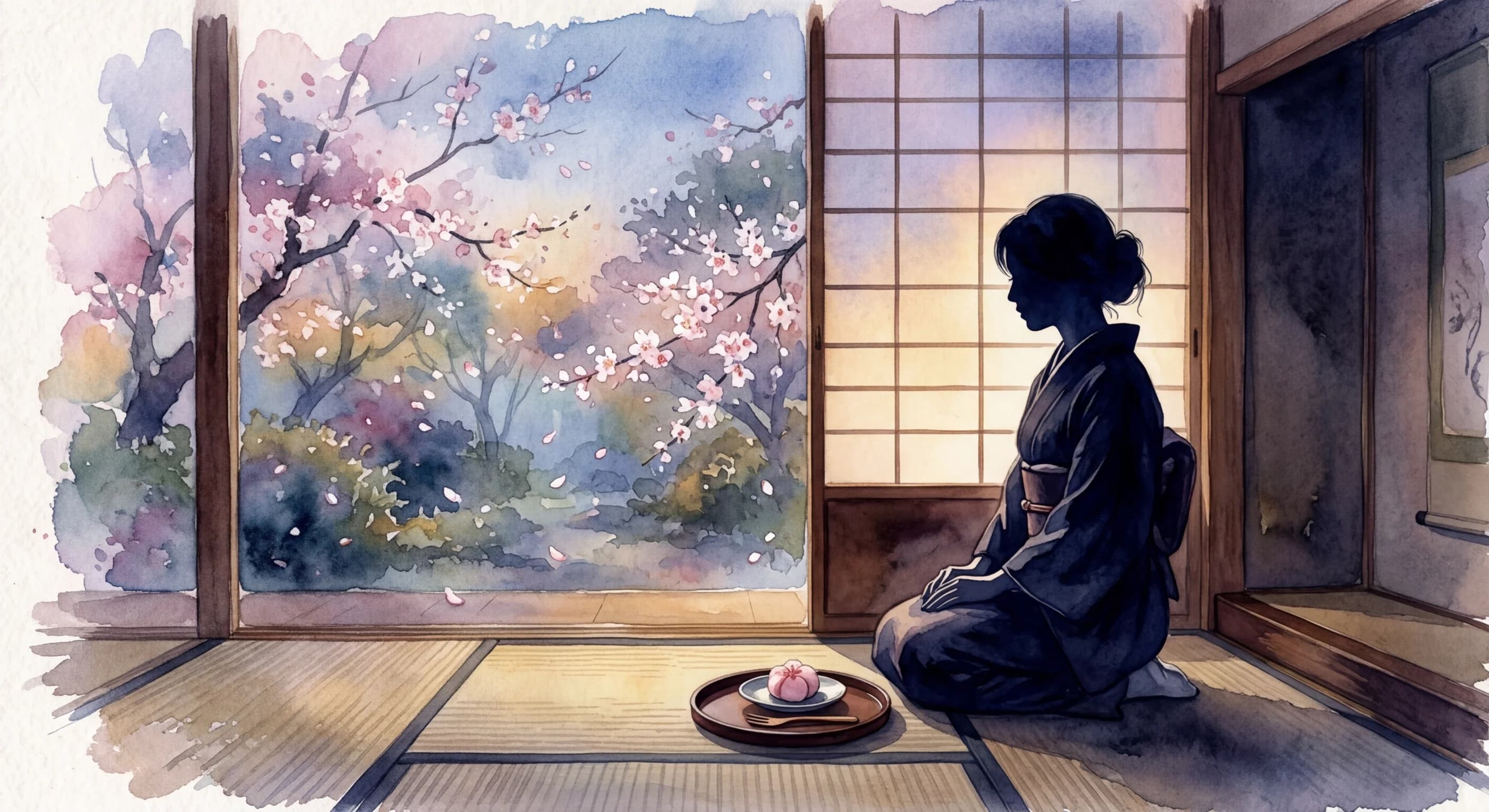
Kuchi sabishii
/KOO-chee sah-BEE-shee/
Meaning
"Kuchi sabishii" captures the subtle, often subconscious, yearning to eat something, not due to physical hunger, but as a response to an emotional void or sensory deprivation. It describes that specific pang of 'mouth loneliness' where one's palate feels unoccupied, seeking interaction, texture, or flavor as a form of comfort, distraction, or ritual. This feeling frequently emerges during periods of idleness, stress, or emotional quietude, where the act of eating serves as a gentle balm for the mind rather than fuel for the body. It speaks to a deep cultural awareness of the intricate connection between our emotional states and our sensory experiences.
Literal Translation
Mouth lonely
The Story Behind the Word
The existence of "kuchi sabishii" in the Japanese lexicon highlights a sophisticated cultural understanding of human emotional and sensory needs beyond basic physiological drives. Japan's rich culinary traditions, where food is deeply intertwined with aesthetics, seasonality, social rituals, and emotional expression, provide fertile ground for such a concept. From the meticulous preparation of bento boxes to the ceremonial nature of tea, eating in Japan is often elevated beyond mere sustenance, becoming an experience that engages multiple senses and emotions. This word reflects a society that pays close attention to subtle internal states, acknowledging that even the mouth can feel 'lonely' when not engaged in the comforting act of consuming, revealing a holistic view of well-being where emotional and physical comforts are intricately linked. It also subtly points to a culture that values self-control and often internalizes discomfort, seeking small, permissible outlets like a snack.
Experience It
Evening News Snack
After a long day, Kenji settles down to watch the evening news. He's not hungry, having eaten dinner, but the quiet drone of the television makes his mouth feel a bit empty. He finds himself reaching for a bag of rice crackers, a perfect case of kuchi sabishii.
Study Break Craving
Midori is deep into studying for her final exams. Her stomach isn't rumbling, but the intense focus and mental strain make her feel a distinct kuchi sabishii. She grabs a piece of chocolate, finding the small indulgence helps clear her mind for a moment.
The Deeper Meaning
This term offers a profound insight into the Japanese perception of self and sensation, suggesting that even parts of the body can possess emotional states. It underscores a holistic view where the mouth is not just an organ for consumption but a sensory gateway deeply connected to emotional well-being. It subtly advocates for mindful awareness of these nuanced feelings, recognizing that comfort often lies in small, intentional acts rather than grand gestures, reflecting a culture attuned to subtlety and introspection.
Did You Know?
The concept of "kuchi sabishii" is so ingrained that many Japanese snack companies subtly market their products as perfect for these moments, offering small, flavorful bites designed to satisfy this specific emotional craving.
How It's Used
Used to describe the feeling of wanting to eat something, not out of physical hunger, but out of boredom, loneliness, or emotional need.