U.
HomeRegionsLanguagesEmotionsCollections
Find Your Word

“The limits of my language mean the limits of my world.”

— Ludwig Wittgenstein, Philosopher

Untranslatable

A curated collection of the world's most beautiful expressions—words that remind us language is humanity's greatest invention.

  • Home
  • Collections
  • Regions
  • Countries
  • Emotions
  • Tags
  • Contexts
  • Finder
  • Europe
  • Asia
  • Americas
  • Africa
  • Middle East
  • About
  • Contact
  • Privacy Policy
  • Terms of Service

2026 © Untranslatable. All rights reserved.

    /
    /
    1. Home
    2. /
    3. Europe
    4. /
    5. Dugnad
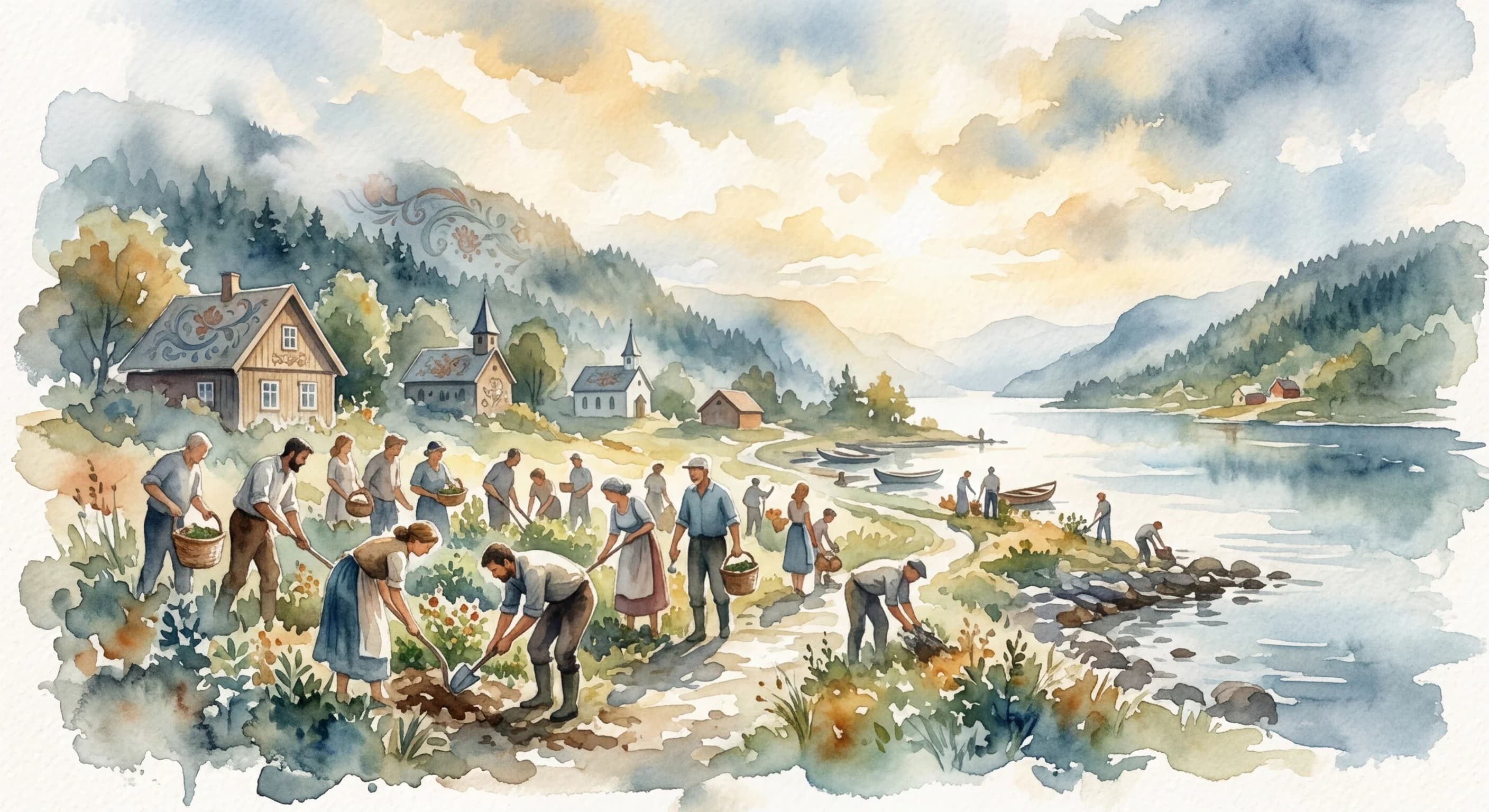
    Artistic representation of Dugnad
    Norwegian•
    🇳🇴Norway

    Dugnad

    /DOOG-nahd/

    Meaning

    Dugnad encapsulates the quintessential Norwegian spirit of communal voluntary work for the collective good. It's a practice where neighbors, friends, and community members unite, sleeves rolled up, to tackle shared tasks like cleaning public spaces, maintaining common property, or assisting a fellow resident. Far more than just labor, dugnad forges robust social ties, cultivates a profound sense of shared ownership, and reinforces the bedrock of mutual support that underpins Norwegian society.

    Literal Translation

    Dug

    The Story Behind the Word

    The concept of dugnad is deeply rooted in Norway's history, particularly its agrarian past and the necessity for collective survival in often harsh conditions. Farmers would routinely band together for demanding tasks like barn raising or harvesting, understanding that mutual aid was essential for success and resilience. This tradition evolved, becoming a cornerstone of modern Norwegian society, reflecting a fundamental belief in egalitarianism and the importance of community over individualistic pursuits. It reveals a worldview where collective welfare is paramount, and active participation in improving one's surroundings is not just expected but celebrated as a civic virtue, fostering a cohesive and trusting social fabric.

    Experience It

    Spring Cleaning the Neighborhood

    On a crisp Saturday morning, residents of a Bergen neighborhood gather, armed with rakes and paintbrushes. Children help pick up litter while adults repaint the community playground fence, all fueled by coffee and homemade cakes. This annual dugnad transforms shared spaces and strengthens neighborly bonds.

    Apartment Building Maintenance

    The board of a housing cooperative announces a dugnad to tidy up the common garden and clean the stairwells. Tenants, from students to retirees, spend a few hours weeding, planting flowers, and polishing railings, ensuring their shared living environment remains pleasant and well-maintained for everyone.

    The Deeper Meaning

    Dugnad embodies a profound philosophy of collective responsibility and pre-emptive care for the community. It reflects a societal understanding that individual well-being is intrinsically linked to the health and vitality of the collective. This practice underscores the belief that active participation and self-organization are pivotal for maintaining social cohesion and a high quality of life, demonstrating a pragmatic idealism where shared effort directly translates into shared prosperity and belonging.

    Did You Know?

    During the COVID-19 pandemic, the Norwegian Prime Minister famously urged the nation to engage in a 'national dugnad' against the virus, highlighting its deep resonance as a call to collective action.

    How It's Used

    Used to describe a communal work session, often organized for a specific neighborhood, apartment building, or community project. It can also refer to the general concept of participating in such voluntary work.

    Emotions
    belonging,gratitude,warmth
    Contexts
    community,friendship,seasons,work
    🇳🇴Norway

    by Annelise Dubois·Written Mar 10, 2026·Updated Apr 3, 2026

    Related Words

    Explore more
    HyggeDanish

    Hygge is more than mere coziness; it's a holistic embrace of comfort, warmth, and belonging that nourishes the soul. It describes the intentional creation of an intimate atmosphere where simple pleasures, genuine connection, and mindful presence converge, fostering a profound sense of contentment and well-being. It's about finding joy and peace in the small, everyday moments, often shared with loved ones.

    SaudadePortuguese

    Saudade encapsulates a profound, melancholic longing for something or someone cherished that is absent, often with the bittersweet knowledge that it may never return. It's a deep emotional state tinged with nostalgia, evoking a sense of loss for past experiences, places, or people, yet also holding a tender appreciation for the beauty of what once was. This yearning is not merely sadness, but a complex tapestry of desire, memory, and a poignant acceptance of absence, holding the beloved in a warm, persistent embrace within the heart.

    GezelligDutch

    Gezellig encapsulates a profound sense of warmth, belonging, and convivial comfort, extending beyond mere coziness to embrace the social and emotional atmosphere. It's the feeling of being truly at ease, surrounded by good company, laughter, and a shared sense of contentment. This untranslatable term describes not just a physical space, but a holistic experience where time seems to slow down, fostering genuine connection and a deep sense of well-being.

    Dolce far nienteItalian

    Dolce far niente captures the profound joy and effortless pleasure derived from simply existing without obligation or purpose. It's the art of savoring moments of pure, unadulterated idleness – lying in the sun, watching the clouds drift, or enjoying a leisurely coffee – not as a break from work, but as a valuable state in itself. This 'sweetness of doing nothing' is a conscious embrace of stillness and contentment, allowing the soul to breathe and the senses to fully engage with the present.