Aigakasa
/EYE-gah-kah-sah/
Meaning
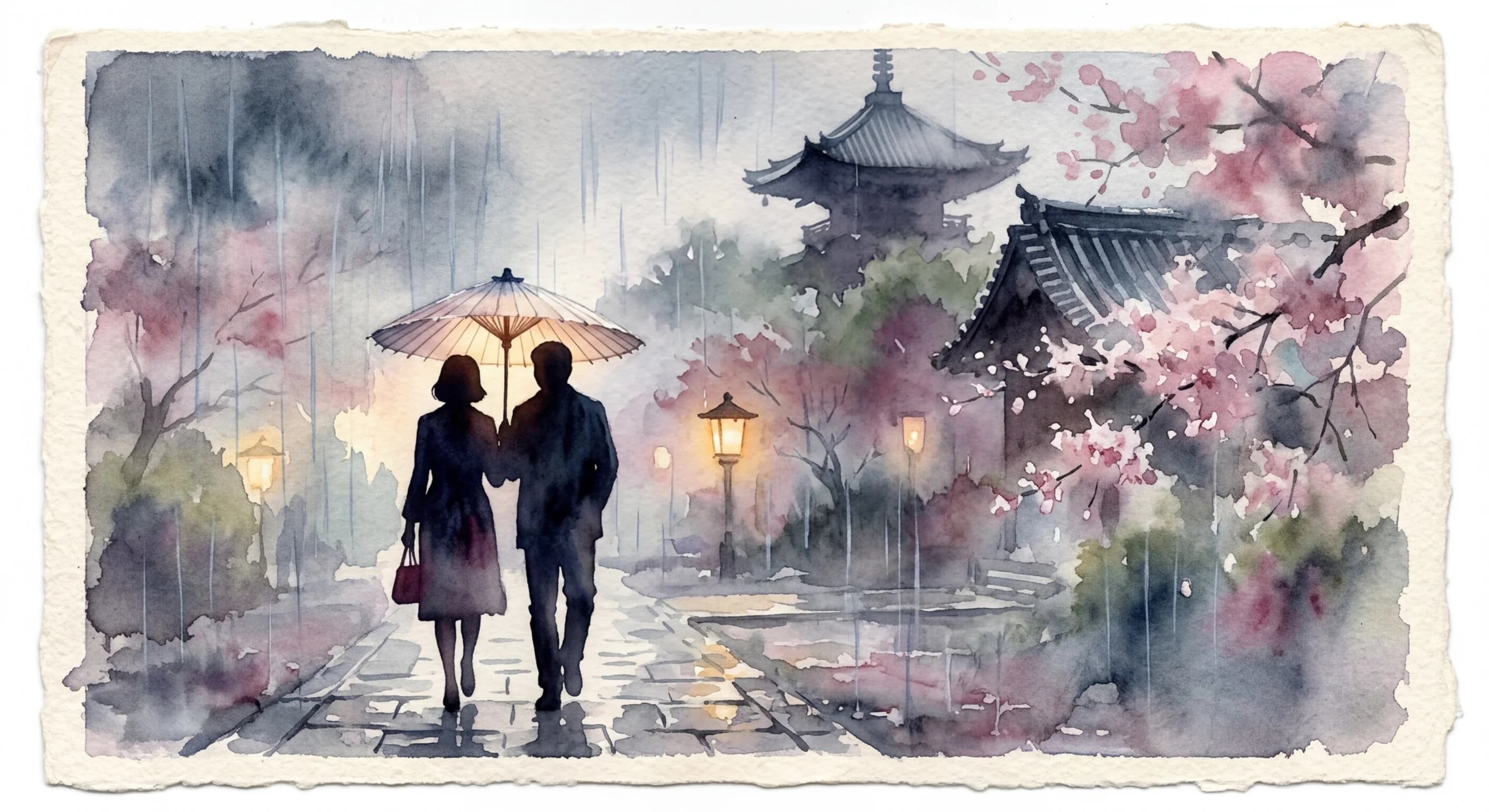
Aigakasa describes the serendipitous moment when two individuals, often strangers, find themselves sharing a single umbrella against the rain. This shared shelter creates a fleeting, almost tender intimacy, a silent acknowledgment of mutual vulnerability and shared fate under the elements. It's a delicate dance of proximity and personal space, fostering an understated connection that, though brief, leaves a resonant emotional imprint, embodying a uniquely Japanese appreciation for transient, unscripted encounters.
Literal Translation
Love umbrella
The Story Behind the Word
The existence of 'aigakasa' is deeply rooted in Japanese aesthetics and social norms. It reflects 'wabi-sabi' in its appreciation for transient beauty and 'ma' in the deliberate spacing and unspoken communication between people. In a society that values indirectness and subtle emotional expression, 'aigakasa' provides a culturally sanctioned space for a brief, non-verbal intimacy that might otherwise be considered too forward. It speaks to a cultural understanding that profound connections can arise from mundane, unplanned circumstances, highlighting the beauty of human connection amidst shared vulnerability and the respect for personal boundaries even in close proximity. This word reveals a worldview that finds poetry and meaning in the ephemeral.
Experience It
Station Platform Encounter
A sudden downpour trapped them on the platform. He, noticing her drenched, silently extended his umbrella. Under the 'aigakasa,' a shy smile was exchanged, a silent acknowledgment of shared predicament and unexpected kindness before their trains arrived.
Evening Stroll Home
Walking home from work, a young woman found herself under the 'aigakasa' of a classmate she barely knew. The rhythmic patter of rain on the canopy created a peaceful, shared bubble, an unspoken camaraderie forming in the quiet intimacy of the moment.
What Gets Lost in Translation
English speakers might misunderstand 'aigakasa' purely as a practical act of sharing an umbrella, missing the deep cultural layer of unspoken intimacy and connection. It's not just about staying dry; it's about the subtle emotional resonance and the shared, momentary vulnerability that transcends mere politeness, often hinting at a nascent romantic possibility or a profound, fleeting human bond.
Across Cultures
While many cultures might share an umbrella, few have a specific word to encapsulate the unique emotional and relational nuances of 'aigakasa.' The German word 'Schirmherr' (patron) relates to the umbrella as a symbol of protection but lacks the spontaneous, intimate connection. Spanish 'paraguas' simply means umbrella. The concept's depth is often conveyed through descriptive phrases in other languages rather than a single, evocative term.
The Deeper Meaning
Aigakasa embodies the Japanese philosophical appreciation for 'ichi-go ichi-e' – the idea that every encounter is a unique, unrepeatable moment that should be cherished. It underscores the beauty in transient connections and the profound impact of small, unplanned acts of kindness. This word reveals a worldview that finds deep meaning and emotional resonance in the fleeting, often unarticulated experiences of daily life, emphasizing human interconnectedness even in anonymity.
Did You Know?
The 'aigakasa' symbol (an umbrella with two names written on either side of the handle) is a common doodle in Japan, often drawn by young people to signify a crush or budding romance, literally putting two people 'under the same umbrella' in their minds.
How It's Used
This term is used to describe the specific scenario of two people sharing an umbrella, implying a gentle, often unspoken connection that arises from this situation. It's frequently used in literature, manga, and everyday conversation to add a touch of romantic or poignant imagery to a common occurrence.