Han
/HAHN/
Meaning
Han is a profound, deeply ingrained Korean sentiment, a complex tapestry woven from collective sorrow, simmering resentment, and unfulfilled yearning. It's a lingering ache born from centuries of historical oppression, devastating injustices, and the weight of unrequited desires. This isn't mere sadness, but a gnawing, existential burden that paradoxically fuels both a resilient spirit and an insistent longing for ultimate catharsis, binding the Korean people through shared experience.
Literal Translation
Han (한)
The Story Behind the Word
The concept of Han is inextricably linked to Korea's turbulent history, marked by numerous invasions, colonial rule, division, and civil war. For centuries, the Korean people endured a cycle of subjugation and hardship, fostering a deep-seated sense of injustice and collective trauma. This historical suffering, coupled with a philosophical emphasis on endurance and resilience, allowed Han to crystallize into a core cultural identifier. It reveals a worldview where suffering is not just individual but a shared legacy, and true healing often requires collective acknowledgment and expression. Han is thus not just an emotion, but a historical consciousness, shaping national identity and artistic expression, from traditional folk songs (Arirang) to modern cinema, as a means of processing and transcending hardship.
Experience It
Elder's Silent Tears
An elderly woman watches news of ongoing geopolitical tensions, her eyes welling up. She doesn't cry out, but a deep sigh escapes her lips. Her grandchildren understand it's the Han of a divided nation, a lifetime of longing for reunification, echoing through her quiet grief.
Artist's Passionate Brush
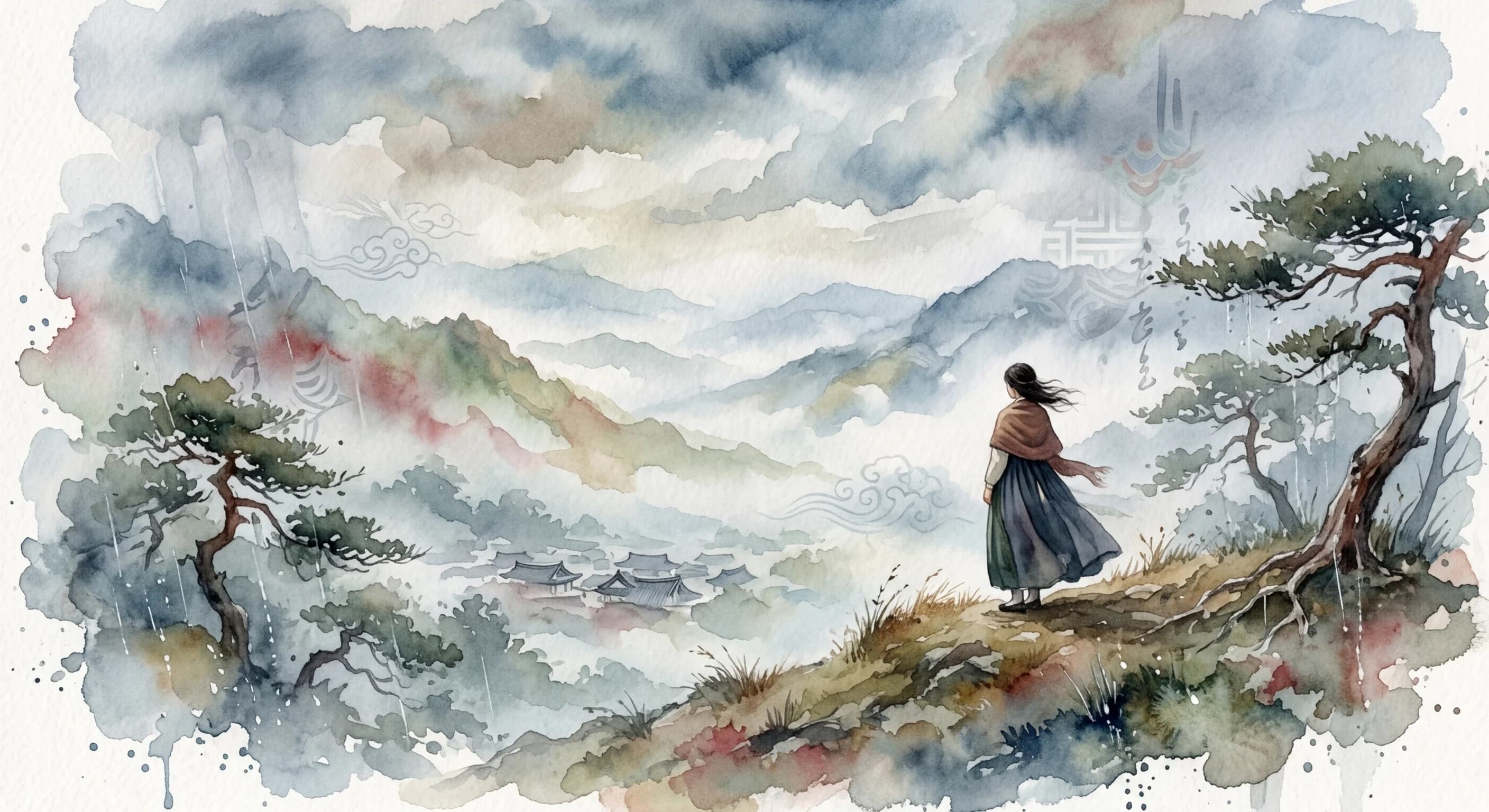
A contemporary Korean artist paints a stark, powerful landscape in muted tones, depicting a barren field under a stormy sky. When asked about its meaning, they explain it's an expression of the Han felt for environmental destruction and the loss of traditional ways, a call for remembrance and healing.
The Deeper Meaning
Han reveals a philosophical understanding of suffering not as an individual failing, but as a collective, inherited condition that shapes identity and purpose. It suggests that profound emotional burdens can paradoxically be a source of strength and cultural cohesion, driving a persistent quest for justice, reconciliation, and a future free from past grievances. This perspective highlights the enduring human capacity to transform pain into a shared narrative of resilience and hope.
Did You Know?
The Korean traditional musical genre 'Pansori' is often described as a vocal art form dedicated to expressing 'Han,' with singers embodying centuries of collective sorrow and resilience in their powerful performances.
How It's Used
Han is used to describe a collective feeling of sorrow, injustice, and unfulfilled desires, often stemming from historical hardships and oppression. It can be expressed in moments of shared lament or as a driving force for cultural expression.